
How to undertake a Risk Assessment (Risk Assessment Evaluation System - Working Intergration)
-
1Identify the scope and objectives of the risk assessment
Purpose and Boundaries
Determine the purpose and boundaries of the risk assessment. Define the scope of the assessment, including the systems, processes, or activities to be assessed. Clearly establish the objectives you want to achieve through the risk assessment.
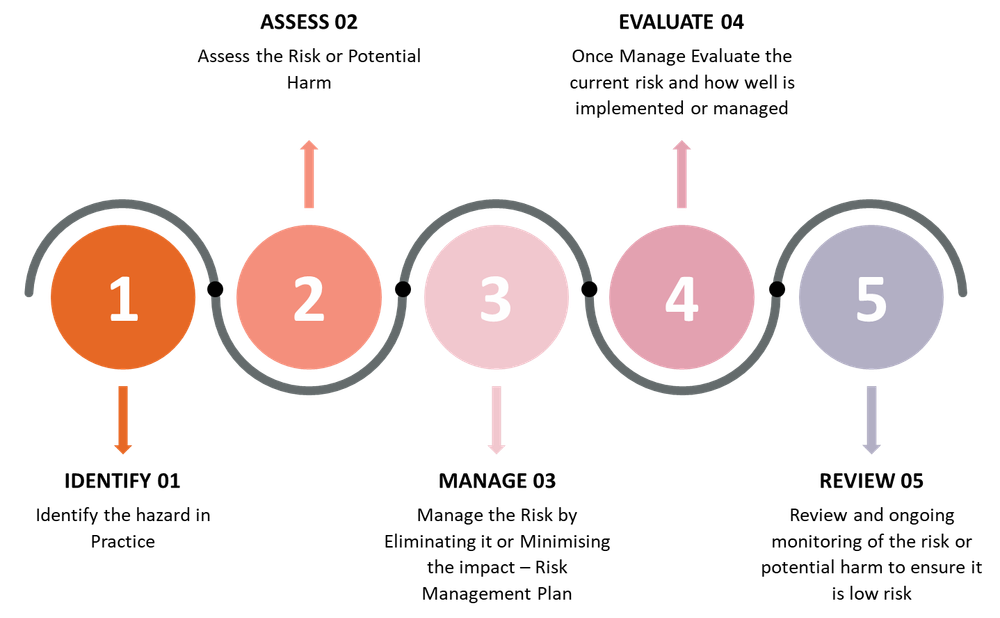
Gather relevant information about the project, task, or environment being assessed.The school has identified a group of key risks that comply with the ACECQA key high-risk areas outlined in the NQF, regulations, and associated laws.Risk Management Process
Key Risk Areas
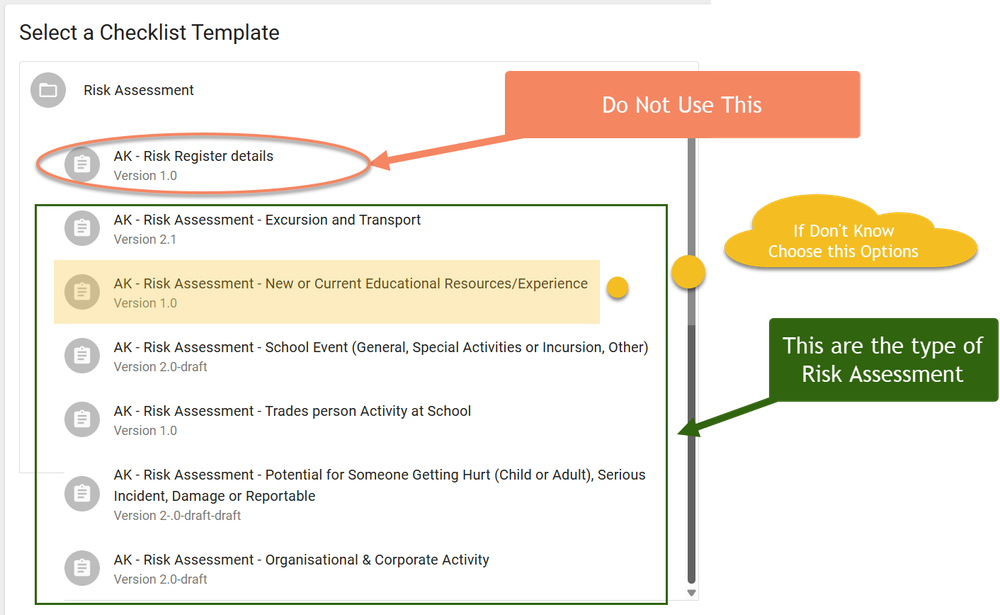
The following is the location of all risk assessment templates: You are given a choice from the following templates:- Educational Experience
- Potential for Someone Getting Hurt (Child or Adult)
- New or Current Resource
- Trade Person Doing Work at the School
- General or Special Event
- Transportation and Excursion
- Risk Register (Organisational or Corporate Activity)
See the link for the School Risk Assessment Policy -
2Identify and assess potential risks
Identification
Identify all potential risks associated with the scope of the assessment. Review historical data, industry standards, and best practices to identify common risks.
Analyse the identified risks and assess their potential impact and likelihood of occurrence. Consider factors such as financial, operational, legal, and reputational impacts.Collect all relevant information related to the risk that needs to be documented. This includes:- General Overview Activities, Details, Excursion Details and Experience
- Classification of Event
- Rationale and links to children’s outcomes?
- What value does this experience have for the child(ren)’s learning and development?
- Which studios will be participating?
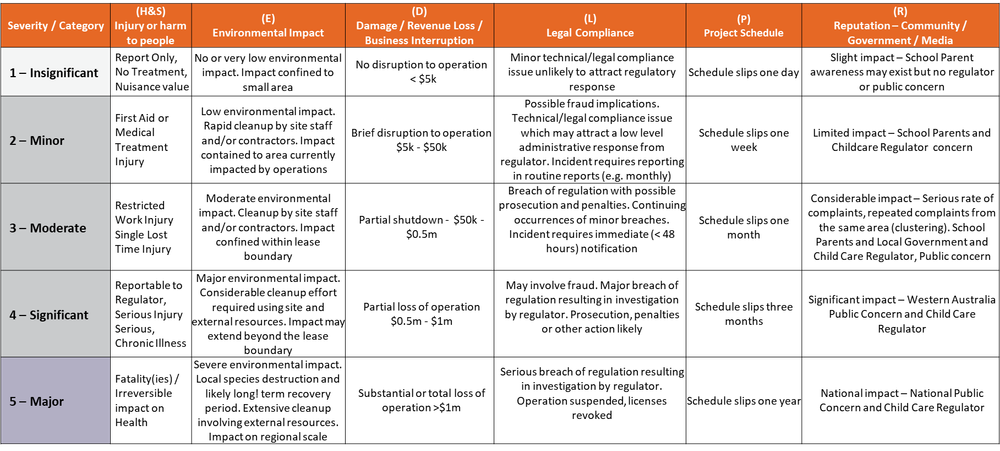
Types of Different Risk Areas
-
3Where do I Undertake Risk Assessments
Goto 1Place APP
Navigate to app.1placeonline.com/#/overview, the main portal for your 1Place interface. This is where you will begin. The interface is designed to give you a comprehensive overview and management control of your early learning responsibilities for The Akidamy School.
Affiliated with child care and day care institutions in Australia, 1Place provides a platform for managing core operations, including compliance checks, risk assessments, and general procedures. From the overview page, you can access the different modules based on your needs.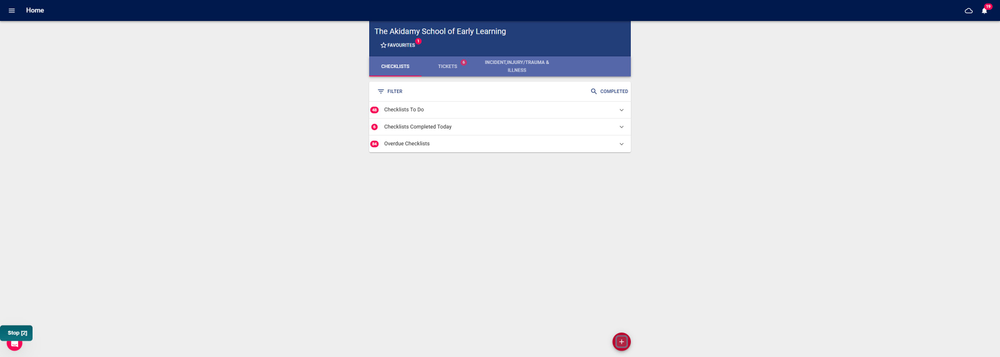
-
4Select Checklists
Select the Checklist Icon For Risk Assessments

To perform risk assessments, start by locating and clicking on the Checklist icon located at the bottom of your screen. This will open up the risk assessment area for you. -
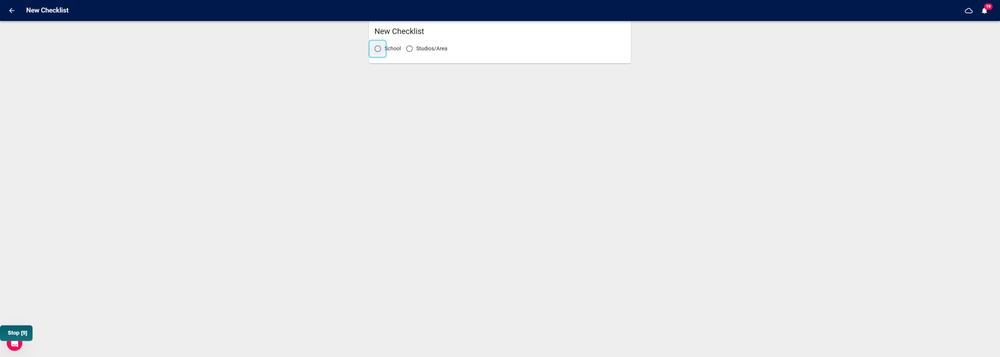
5Checklists - Select School (Not Studio)
Using the School Checklist Selection (Example: Perth or Fremantle School) - Studios Selection is Not Advised.You wil pick the location of the Activity with in the Risk Assessment Form.
-
6Select the Correct Risk Assessment Activity
These are the Main Risk Assessment Activities you undertake evaluation in 1Place
-
7What type of risk activity is being undertaken?
Risk Templates
What type of risk activity is being undertaken?- Educational Experience:
- Experiences: What are we doing? Educational activity in an environment (inside or outside) with children
- A new experience is introduced
- Policies and procedures that require risk assessments, such as the emergency and evacuation policy and procedures, are updated
- Potential for Someone Getting Hurt (Child or Adult):
- Someone Getting Hurt: That could be a child, staff member, or parent or an accident or serious incident has occurred; or a complaint has been received.
- New or Current Resource:
- A new resource or piece of equipment
- Trade Person Doing Work at the School
- A Trade Person undertaking work at the School during operational hours
- General Repairs to the School (tradespeople)
- General or Special Event
- Mother or Fathers Day, celebration, graduation, education evening, staff event, etc.
- Transportation and Excursion:
- Taking some transport (bus, train, or walking) to an outside activity
- Children are transported by the School (i.e. using a school bus to pick up)
- Organisational or Corporate Activity (Risk Register Items):
- the school environment and practices are reviewed, changed or renovated
- Changes in government legislation, new Laws / or compliance
- Insolvency, Tax Compliance, Parent Payments, Staff payments, industrial compliance, etc.
- Security and Confidential Information, Fraud and Corruption, Infrastructure
- People, capability and organisational culture
- Infrastructure, information and technology
- Strategic priorities
- Service delivery (IT, Cleaning, contractors, etc.)
It is critical that you choose the correct group or risk because this will help with your application and approval of that activity / task.Note: No task or activity can be undertaken unless approved. - Educational Experience:
-
8Assess, Prioritise and Risks
Assess and Prioritise Risks
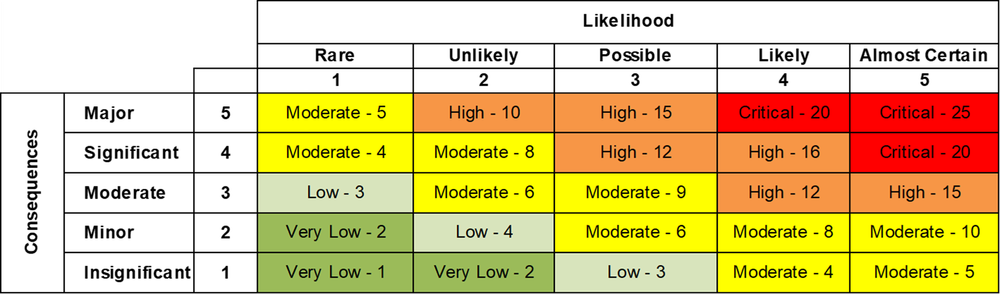
Evaluate the assessed risks based on their level of severity, potential consequences, and likelihood of occurrence. Use a risk matrix or scoring system to assign priority levels to the risks. Consider the acceptability of each identified risk and the organization's risk tolerance level to determine which risks require immediate attention.
Process
Review the collected information and evaluate the significance of the risk.Consider the following:- What type of hazard
- Activity Identification
- Hazard Identification
- Risk Assessment (No Controls)
- Elimination or Control Measures
- Risk Assessment (With Controls)
- Severity of potential consequences
- Risk Register
- Who Responsible
- When and what data
Risk Matrix
Definitions of Key Activities
Outline the Activity
Its important to outline the key activities being undertaken that pose a risk. If possible, group them together to maximum of 7 key areas or activities.Hazard Definitions
What type of hazard is being considered with respect to outline activity?
The following is summary of the hazard types:
Biological- Bodily fluids
- Blood
- faeces, Virus/diesase, vomit or urine
- Discharge from the nose, eyes or ears
- Sewage
- Stinging insects
- Harmful plants
- Animal or bird droppings
- Mould or fungi
- Infectious diseases
See relevant factsheets from Staying healthy: Preventing infectious disease in early childhood education and care services (5th Edition)- Food
- Food handling
- Preparing food
- Preparing, storing and heating bottles
- Children’s cooking experiences
- Medical
- Allergies
- Anaphylaxis
- Medication dosage
- Non-hazardous chemicals
- Any liquid, solid or gas that does not pose a risk to children
- Eco-friendly dishwashing liquid
- Hazardous chemicals or products
- Any product that has ‘keep out of reach of children’ or first aid instructions on the label
- A lockdown/lockout
- An evacuation – due to fire, flood, structural damage, or other reasons
- An accident – involving anyone at the service
- Any time an emergency service is required to attend the service
- Electricity
- LP Gas (Liquefied petroleum)
- Gas and pressurised containers
- Water systems – water tanks, flooding indoors, lack of water etc.
- Sun exposure
- Water
- Sound and noise
- Animals and insects
- Plants
- Weather conditions and events
- Temperature (hot/cold)
- Extreme Pollution – eg, from bushfire smoke
- Buildings and fixtures
- Driveways, car parks or paths
- Fixed equipment
- Furniture
- Non-fixed equipment
- Play and learning resources
- Cars
- Buses, trains and trams
- Excavator
- Hand tools
- Kitchen Equipment
- Manual handling of equipment
- Lifting children
- Transitions to and from the school or service, between rooms or play spaces
- Social interactions
- Conflict or bullying
- Changes in a child’s family structure eg, the arrival of a new baby or the separation of parents
- Experience of death or other loss
- Inadequate staffing, Parents, and Children
- Visitors and • Guests
- Inconsistent staffing arrangements
- Behaviours displayed by staff, children and families
Assess the Risk with the current controls in place or known
To undertake this we apply Likelihood and Consequence assessment of determining the Risk Level with No Controls (refer to Risk Matrix).Likelihood
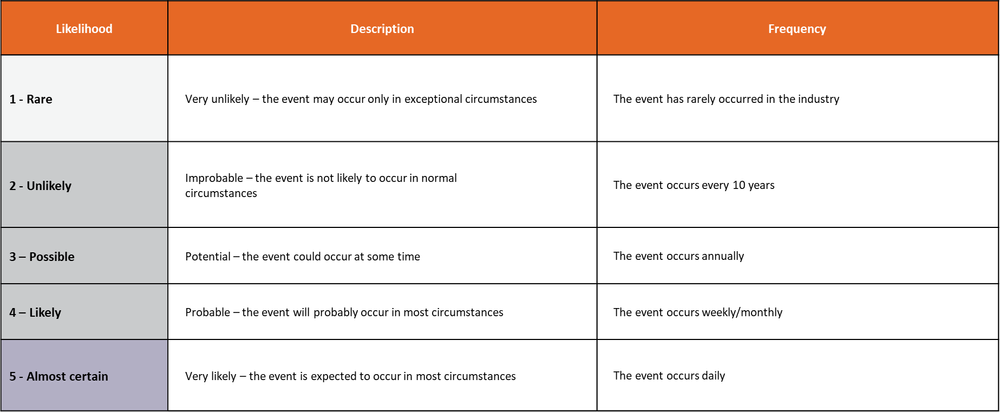
When thinking about likelihood, the approved provider and service leaders should prioritise actions based on ensuring compliance with the minimum legislative standards, particularly those relating to the safety, health, and wellbeing of children.
Rare- Very unlikely; the event may occur only in exceptional circumstances. Possibility of occurrence less than 5% - may never occur.
- Unlikely
- Improbable; the event is not likely to occur in normal circumstances. Possibility of occurrence between 5% - 25% - could occur at some time.
- Potential; the event could occur at some time. Possibility of occurrence between 25% - 50% - may occur at some time.
- the event will probably occur in most circumstances. The possibility of occurrence between 50% - 75% - probably will occur at sometime.
- Very likely; the event is expected to occur in most circumstances. Possibility of occurrence of more than 75% expected to occur.
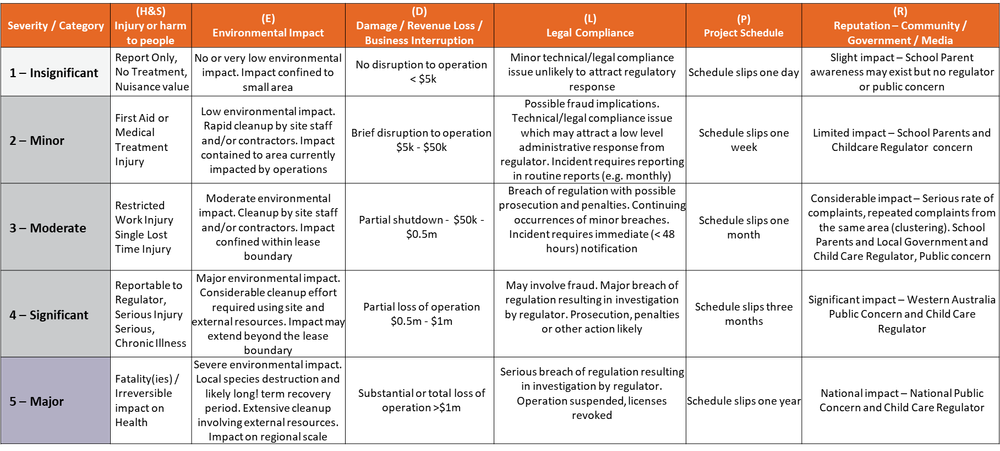
ConsequenceThis takes into account the potential impact of an event and how it might affect the safety and wellbeing of children, families, staff and the wider community. When analysing the consequences of a potential event occurring, it is important to consider the vulnerability of individuals who might be affected. For example, very young children or children with a disability may be particularly vulnerable as they are less able to act to protect their safety, health and wellbeing.
Insignificant:
no treatment required.
Minor:
Minor first aid or minor occupational health safety & welfare liability incident / issue (e.g. minor cuts, bruises, bumps).
Moderate:
Serious injuries and/or illness.
Complex welfare and/or healthcare issue.
Serious disruption or incident, resulting in distress to children and adults.
Major (Critical):
Critical incident. (e.g. Death or permanent disability of adult or child; high level of distress to other parties).
Sustained negative publicity or damage to reputation from a national perspective or from the community welfare perspective
- Multiple injuries requiring specialist medical treatment or hospitalisation; and/or major occupational health safety & welfare liability incident / issue.
- Major incident which damages public or parent confidence.
Risk Matrix
Risk Level Guidelines
Low to Very Low:- Risk Level - If an incident were to occur, there would be little likelihood that an injury would result.
- Action: - Undertake the activity with the existing controls in place (regular planning processes).
Moderate:- Risk Level - If an incident were to occur, there would be some chance that an injury requiring first aid would result.
- Action - Additional controls may be needed (Document controls in planning documents). Consider obtaining parental or carer permission. Approval is required from the School Director or a nominated representative.
High:- Risk Level - If an incident were to occur, it would be likely that an injury requiring medical treatment would result.
- Action - Controls will need to be in place before the activity is undertaken. School Director approval prior to conducting this activity is required. Once approved, activity details are to be entered into the Risk Assessment Register. Parental/Carer permission must be obtained for children's participation.
Critical (Extreme):- Risk Level - If an incident were to occur, it would be likely that a permanent, debilitating injury or death would result.
- Action - Consider alternatives to doing the activity. Significant control measures will need to be implemented to ensure safety and reviewed and approved once the mitigation plan is completed to reduce risk levels.
School Director and Approved Provider will not approval this activity unless mitigation plan reduces the risk level from critical (extreme) to high or medium. -
9Develop risk mitigation strategies
Re-evaluate the Risk Levels
Re-evaluate the risk levels with the proposed control measures and assess the applied risk level using the risk matrix mentioned previously.
Plans to reduce, minimise, or eliminate activity risks using the appropriate elimination control measure. For each high-priority and critical (extreme) risk, identify and develop appropriate risk mitigation strategies. Determine actions, controls, or measures to reduce the likelihood or impact of the identified risks.
Carefully consider the feasibility, cost-effectiveness, and practicality of each mitigation strategy before finalising them. Provide detail to support these controls.Elimination Controls
Level 1 - Elimination & Substitution (Most effective control measure)- Remove the hazard - Broken toy or damaged resources to be disposed of
- Change the practice - Request food delivery to be taken directly to the kitchen to eliminate manual handling of bulky deliveries to the kitchen by educators
- Separate unwell children from others
- Barricade off a wet floor until dry to avoid slipping hazards, display a ‘wet floor’ sign
- Use ergonomic cots with a higher base height to reduce manual handling and back injuries for educators
- Provide adult-sized chairs for educators
- Rotate educators between different tasks to avoid repetitive strain
- Arrange workflows to avoid peak physical and mental demands towards the end of a shift
- Use gloves while changing a nappy or when cleaning bodily fluids
- Wear closed-in shoes to avoid injury
- Wear hats and sunscreen outside
Risk Register
All risk with above moderate should entire into the school risk register. See link need to setup -
10Re-assess Risk Level with Controls
Re-assess Risk Level with Controls
Using the information proposed to minimise and eliminate risk with the proposed control measure, it is important to assess the associated risk levels again.Risk Matrix
Risk Level Guidelines
Low to Very Low:- Risk Level - If an incident were to occur, there would be little likelihood that an injury would result.
- Action: - Undertake the activity with the existing controls in place (regular planning processes).
- Risk Level - If an incident were to occur, there would be some chance that an injury requiring first aid would result.
- Action - Additional controls may be needed (Document controls in planning documents). Consider obtaining parental or carer permission. Approval is required from the School Director or a Nominated Supervisor.
- Risk Level - If an incident were to occur, it would be likely that an injury requiring medical treatment would result.
- Action - Controls will need to be in place before the activity is undertaken. School Director approval prior to conducting this activity is required. Once approved, activity details are to be entered into the Risk Assessment Register. Parental or carer permission must be obtained for children's participation.
- Risk Level - If an incident were to occur, it would be likely that a permanent, debilitating injury or death would result.
- Action - Do not undertake this proposed activity. Please communicate this to the School Director (or the Nominated Supervisor if the School Director is absent) and Approved Provider.
School Director and Approved Provider will not approved for this activity which has Critical (Extreme) level risk.Do not undertake any Activity without approval being provided and a finalised plan signed off. -
11Implement and monitor risk mitigation measures
Implement the selected risk mitigation strategies. Ensure that all necessary actions and controls are put in place to minimize the identified risks.
Establish monitoring mechanisms to regularly review and assess the effectiveness of the implemented risk mitigation measures.
-
12Review and update the risk assessment
Regularly review and update the risk assessment to accommodate changes in the organization, project, or task. Monitor changes in the external environment, industry regulations, and emerging risks, and modify the risk assessment accordingly.
Engage relevant stakeholders and obtain feedback to make necessary improvements to the risk assessment process. -
13Communicate and document the risk assessment findings
Prepare a comprehensive report documenting the findings of the risk assessment process. Include details about identified risks, their severity, recommended mitigation strategies, and any other relevant information.
Communicate the risk assessment findings to relevant stakeholders, such as management, project teams, or regulatory bodies.