Tool: NQS Compliance Checklist
LONG DAYCARE COMPLIANCE MONITORING CHECKLIST
| Service Name | The Akidamy School of Early Learning - Fremantle The Akidamy School of Early Learning - Perth | |||
| Service address | The Akidamy School of Early Learning - Fremantle Level 2, 28 Cantonment St, Fremantle, WA 6160 The Akidamy School of Early Learning - Perth 105 Summers Street, Perth 6000 | |||
| Service Phone | 08 9227 1409 (ext 1 for Perth and ext 2 for Fremantle) | Service number | SE- | |
| Service email | office.freo@theakidamy.wa.edu.au office.perth@theakidamy.wa.edu.au | Service Rating | ||
| Service type | Long Day Care | Approved places | ||
| Waivers | Nil | |||
| Conditions | ||||
| Nominated supervisor/s | Laura Johnson - Perth Kim Marie Grant - Fremantle | |||
| Responsible Person at the time of the visit | ||||
Desktop Review Review the service summary report from the NQA ITS and complete a desktop review of the information available about the service to determine the focus for your visit. | ||||
Previous monitoring visit Compliance actions since last visit Notifications (patterns &/or non-reporting) Conditions Alerts | Print off a record of the responsible persons and ensure they are accessible if the NS is not there (Actioned) | |||
| Visit the focus based on the desktop preview.w | ||||
OBSERVATIONS OF SUPERVISION PRACTICES& INTERACTIONS WITH CHILDREN Spend at least 10 minutes in each room of the service, observing and documenting the practice. Supervision must consider:
Interactions with Children must consider:
| |||||||||||||||||||
| ADD NOTES BELOW | |||||||||||||||||||
Sleep and rest
Transition
Toileting
Meal Times
Rhythm of the day
Interactions with Children
| |||||||||||||||||||
| |||||||||||||||||||
Sweetprocess – Policies, Procedures – Parent and staff handbooks and key information about the school and operations. Working lunches and meetings are logged here. Uploaded feedback from the Educational Matrix. 1Place – Risk assessments – Checklist – register – risk assessments, safety checklists including indoor andoutdoor. Maintenance logging and jobs. Education matrix is logged here. WHSmatrix logged here. Smartcentral – All bookings and rolls, children's details, parents' details, ccs, casual days and process ofweekly/fortnightly payments. Headcounts and paper rolls. Medical clearance letters and allergy updates, allergy plans uploaded documents section, including risk minimisation plans (that are created in Canva) Childcare easy pay – A Platform that shows records of payments from parents, including failed payments and records of manual payments. Provides reference ID for proof of payment (ref needs to go into Smartcentral when payment is recorded). Smartsheet – List of contractors and suppliers' information, school occupancy information, Educational Matrix, and RSVP information for events. Air child - School tours booking (information stored for follow-ups), CRM, Friday newsletter and family newsletter. Smart list of families. Following the enrolment process. Interviews and calendars, parent interviews – sync with calendars. Feedback from parent interviews can be seen here. Canva) - This is a creative platform used for creating documentation (following brand guidelines), Wellness plans, and IEPs are here. School Calendar and certificates. Early works – Location of all educational matters, observations, programming and curricula. Evacuation drills are located under 'Online Forms'> 'Evacuations'. (these are printed as a hard copy and put in the compliance file.) Parent communication between studios and parents. Logging of daily comms, including meals, nappies, etc. SharePoint – is accessible via Teams or through “OneDrive.” This contains photos, documents and any reportable incident reviews. Brand guidelines. Childcare desktop – A website that we have membership with has templates of policies. Procedures and riskassessments - lots of templates and educator resources. Employment Hero – Is where records of staff are kept, including documentation of certifications and performance reviews.Payroll and payslips, timesheets are logged here for overtime, and leave requests are made through this platform. Ispring – Is where the training modules, | |||||||||||||||||||
Law/ Reg | Item | Yes | No | N/A | Comments | ||||||||||||||||||||||||||||||||||||
|---|---|---|---|---|---|---|---|---|---|---|---|---|---|---|---|---|---|---|---|---|---|---|---|---|---|---|---|---|---|---|---|---|---|---|---|---|---|---|---|---|---|
| Premises walk-through observations | AO to complete upon arrival. | ||||||||||||||||||||||||||||||||||||||||
| S.165 | Offence to inadequately supervise children. Does the service have processes in place to ensure that all children being educated and cared for by the service are adequately supervised at all times that the children are in the care? AO to observe, discuss or sight and record notes:
| ☐ ☐ ☐ ☐ ☐ | ☐ ☐ ☐ ☐ ☐ | ☐ ☐ ☐ ☐ | Add notes here for 10–15-minute observations of supervision practices in all rooms. Yes, there are supervision plans displayed on the walls of each studio. Supervision policy: Policy on SweetProcess Children are never left on their own; there will always be a staff member supervising toileting, sleep/rest & transitions Educators follow supervision plan to understand supervision zones how to adjust their practice based on where the children are, the ages of the children, etc. Supervision plan. Headcounts are down after each transitional period throughout the day. This is logged on Smart Central. | ||||||||||||||||||||||||||||||||||||
| S.167 | Offences relating to protection of children from harm andhazards. Every reasonable precaution taken to protect children being educatedand cared for by the service from harm and any hazards likely to causeinjury Surface temperatures and equipment are below 40 degrees Celsius (AOto use heat gun to check – record temperature & take photo) Hot liquids are not consumed or accessible to children Chemicals, poisons and other dangerous items are inaccessible children. | ☐ ☐ ☐ ☐ | ☐ ☐ ☐ ☐ | ☐ ☐ ☐ ☐ | Physical environment safety checks are done every morning/afternoon& evening as part of checklists. If a hazard is identified, it immediately reported via the checklist and addressed. Checklist on1place. Temperature gun in each studio; temperatures are taken throughout the day to ensure the safety of equipment. Boiling water for bottles is kept in the bottle prep room only; this room is not accessible by children. A hot tap is in the N2 now. All chemicals are stored in locations that are inaccessible to children, either up high or in a locked cupboard. Cupboards with chemicals are labelled and out of reach of children. Chemical data sheets are kept in each studio – these are sourced from the products' websites, i.e., Glen 20. | ||||||||||||||||||||||||||||||||||||
R.155 S. 166 | Interactions with Children Education and care is provided to children in a way that – (c) the dignity and rights of each child are maintained at all times; and (d) educators give each child positive guidance and encouragementtowards acceptable behaviour; and (e) educators have regard to family and cultural values, age andphysical and intellectual development and abilities of each child Offence to use inappropriate discipline No child is subjected to - (a) any form of corporal punishment; or (b) any discipline that is unreasonable in the circumstances | ☐ ☐ ☐ ☐ ☐ | ☐ ☐ ☐ ☐ ☐ | ☐ ☐ ☐ ☐ ☐ | AO to complete the notes along with supervision observations pages 2-3 UN rights of the child are displayed and embedded throughout practice. Link to poster here: UNrights of a child. Educators follow Akidamy approach to positive behaviour Following Akidamy approach to positive behaviour. | ||||||||||||||||||||||||||||||||||||
| S.51(8) | Conditions on service approval Are the conditions on the service approval being followed?
| ☐ | ☐ | ☐ | The school does not exceed the number of children noted on the service approval. | ||||||||||||||||||||||||||||||||||||
R.89 CD – AP INF - AP |
| ☐ ☐ ☐ ☐ | ☐ ☐ ☐ ☐ | ☐ ☐ ☐ ☐ | First aid kit in each studio and reception area. Cupboards are labelled to identify where they are. There is a list on sweetprocess that identifies what needs to be checked and logged how often. | ||||||||||||||||||||||||||||||||||||
R.97 R.97(4) INF - AP |
| ☐ | ☐ | ☐ | All evacuation maps are located at the doors. Plans made by Heng at EMT. Contact details on Smartsheet | ||||||||||||||||||||||||||||||||||||
R.103 CD – AP |
| ☐ | ☐ | ☐ | AOs to take photos and record details on the comments/discussions page. Maintenance is reported immediately, and unsafe furniture is removed from children’s environment. | ||||||||||||||||||||||||||||||||||||
R.104 CD – AP INF – AP |
| ☐ | ☐ | ☐ | AOs to take photos of fencing RA’s record keeping. Yes, in line with standards and building regulations | ||||||||||||||||||||||||||||||||||||
R.105 CD – AP |
Is there sufficient furniture, materials and developmentally appropriate equipment for children? | ☐ | ☐ | ☐ | Yes, all ordered from MTA/Grocare etc. | ||||||||||||||||||||||||||||||||||||
R.114 CD – AP |
| ☐ | ☐ | ☐ | AOs to take photos of shade for RA’srecord keeping. Yes. | ||||||||||||||||||||||||||||||||||||
R.115 CD – AP |
| ☐ ☐ ☐ | ☐ ☐ ☐ | ☐ ☐ ☐ | AOs are to take photos or videos of any areas of the premises that present a supervision concern. Yes, transparent windows and doors that allow for no blind spots but still maintain the rights and dignity of the child. Educators display a sign on the door when they are changing a child, so their privacy Is respected. Facilities are appropriately designed for the children so they can maintain developmentally appropriate independence and autonomy when using these facilities. (doors for kindy children's toilets, steps nappy changes so children can climb up) Suppliers' and fitters' information Smartsheet | ||||||||||||||||||||||||||||||||||||
| S.169(1) |
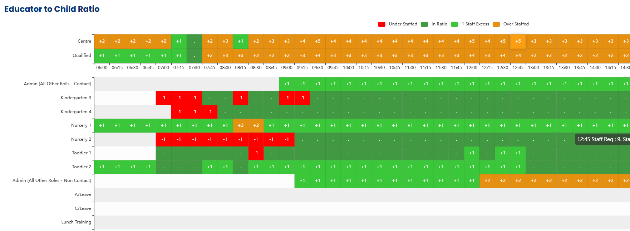
0-2 years = 1:4 2-3 years = 1:5 3+ years = 1:10 | ☒ | ☐ | ☐ | Please note how many children are in attendance each age group Smart central.
A) Enrolment information on smart central B) Daily rolls on smart central C) family/guardian signs the child in/out with their pin. The nominated supervisor/educator can sign the child in with their unique pin if the parent has forgotten. | ||||||||||||||||||||||||||||||||||||
R.158 Prescribed record | Children’s attendance records Is there a record of children’s attendance including: (a) full name of each child attending the service (b) date and time each child arrives and departs (c) is signed by either the person who delivers/ collects the childor a nominated supervisor/ educator. | ☐ ☐ ☐ | ☐ ☐ ☐ | ☐ ☐ ☐ | |||||||||||||||||||||||||||||||||||||
S.172
| Prescribed information to be displayed as per Regulation173 Is this information visible from the main entrance?
| ☐ ☐ ☐ ☐ ☐ ☐ ☐ ☐ ☐ ☐ ☒ ☐ ☒ ☒ ☐ ☒ ☒ | ☐ ☐ ☐ ☐ ☐ ☐ ☐ ☐ ☐ ☐ ☐ ☐ ☐ ☐ ☐ ☐ ☐ | ☐ ☐ ☐ ☐ ☐ ☐ ☐ ☐ ☐ ☐ ☐ ☒ ☐ ☐ ☐ ☐ ☐ | Front notice board | ||||||||||||||||||||||||||||||||||||
| Discussions and review of documents | |||||||||||||||||||||||||||||||||||||||||
S.167 contd. Prescribed record (R.162) | Offences relating to protection of children from harm andhazards. Procedures are in place to check that environments are free fromhazards (safety/hazard checks) Children with medical conditions have medical management, riskminimisation and communication plans in place | ☒ ☒ | ☐ ☐ | ☐ ☐ | The open/close checklist is used for daily safety checks. Procedure for reporting hazards. Checklists on1place. Copies are in the studio, kitchen and reception area. Families are reminded when plans are due for review. Stored on Smartcentral and created on Canva | ||||||||||||||||||||||||||||||||||||
S.165 contd. Prescribed record | Offence to inadequately supervise children. Child Safe Environment (or specific supervision) policy includesspecific information relating to supervision Supervision plans &/or headcounts | ☒ ☒ | ☐ ☐ | ☐ ☐ | Supervision policy; includes supervision plan andheadcounts (completed on Smartcentral). | ||||||||||||||||||||||||||||||||||||
R.84 CD - AP | Awareness of child protection law. Has the approved advised the NS, staff members (educators),volunteers and students of:
In WA this refers to the mandatory reporting obligation of childsexual abuse from 1 November 2024. AOs to sight evidence of how the AP has advised of the childprotection law and obligations (i.e. induction records, policy, code ofconduct, staff/student handbook). | ☐ ☐ | ☐ ☐ | ☐ ☐ | Receive information from child care desktop, ECRUand ECA when policies have changed/laws updated. All staff members dochild protection during onboarding and annual updates. Child protection reporting policy – child protectioncapo. | ||||||||||||||||||||||||||||||||||||
R.87 Prescribed record | (3) The incident, injury, trauma and illness record mustinclude — (a) details of any incident or injury received by a child or trauma to which a child has been subjectedincluding - (i) the name and age of the child; and (ii) the circumstances leading to the incident, injury or trauma;and (iii) the time and date the incident occurred, the injury wasreceived, or the child was subjected to the trauma. (b) details of any illness which becomes apparent while the child isbeing educated and cared for including - (i) the name and age of the child; and (ii) the relevant circumstances surrounding the child becoming illand any apparent symptoms; and (iii) the time and date of the apparent onset of the illness. (c) details of the action taken in relation to any incident, injury,trauma or illness which a child has suffered including - (i) any medication administered, or first aid provided; and
(d) details of any person who witnessed the incident, injury ortrauma; (e) the name of any person - (i) whom the education and care service notified or attempted tonotify, of any incident, injury, trauma or illness which a child hassuffered (ii) the time and date of the notifications or attemptednotifications; (f) the name and signature of the person making an entry in therecord, and the time and date that the entry was made. | ☐ ☐ ☐ ☐ ☐ ☐ ☐ ☐ ☐ ☐ ☐ ☐ ☐ ☐ ☐ | ☐ ☐ ☐ ☐ ☐ ☐ ☐ ☐ ☐ ☐ ☐ ☐ ☐ ☐ ☐ | ☐ ☐ ☐ ☐ ☐ ☐ ☐ ☐ ☐ ☐ ☐ ☐ ☐ ☐ ☐ | AO to review the record and sample completed records from thepast 6 months to assess the AP’s compliance re reportableincidents/serious incidents. This can be assessed post visit. Any serious incidents are on the portal NQAITIS and the follow upfrom them are in our akidamy share point undercompliance documents. Incident reports via Early works. Incident report via early works. | ||||||||||||||||||||||||||||||||||||
R.97 R.97 (2), (2A), (3), (4) CD - AP | Emergency evacuation procedures The service must:
| ☐ ☐ | ☐ ☐ | ☐ ☐ | Record of the dates of the last rehearsals is in the folder in the office named 'compliance'; they are logged on Earlyworks under 'online forms' – 'evacuation drills'. Evacuation, Lockdown and Medical – all have risk assessments on1place Evacuation, Lockdown and Medical – all have procedures on Sweetprocess Completed once a month, rotating through evacuation, lockdown and medical emergency. | ||||||||||||||||||||||||||||||||||||
S.169(2) Prescribed record |
*50% of educators required to meet ratios must hold or beactively working towards at least a diploma levelqualification. *All remaining educators required to meet ratios must hold or beactively working towards at least a Cert III levelqualification. *An educator may be employed for up to 3 months with an AP beforeneeding to be enrolled in a relevant qualification. AO to sight thequalifications. *If issues are identified regarding ratios &/orqualifications the AO must gather evidence of all qualifications(including working towards a qualification), working directly withchildren record and a record of children’s attendance (sign in and ourrecord) to complete a thorough assessment post visit. | ☐ | ☐ | ☐ | AO to sight a sample of educator qualifications
Qualifications are available on employment hero; certifications. On a daily observation the staff clock in on SmartCentral and this says what qualification they are. Qualification ratio is available through the ratio on smart central. Ratio record on smart central, including staff who have worked directly with children. | ||||||||||||||||||||||||||||||||||||
R.136 CD – AP Prescribed record |
CPR is completed within the last 12 months AO sighted qualifications for at least the opening and closing staffon the day of the visit. | ☐ ☐ ☐ ☐ ☐ | ☐ ☐ ☐ ☐ ☐ | ☐ ☐ ☐ ☐ ☐ | Opening Educator name: On front desk and logged on Smartcentral Qualification code: CPR code: All staff have up to date first aid and CPR training, ARTHREX and anaphylaxis training. Logged on Employment Hero | ||||||||||||||||||||||||||||||||||||
Closing Educator name: Always a responsible person that is diploma qualified. | |||||||||||||||||||||||||||||||||||||||||
Prescribed record | Placing a person in day-to-day charge Has the person consented to the placement in writing? *AO to review the consent for Responsible Persons on the day ofthe visit *If concerns are identified regarding the appointment of aresponsible person or the nominated supervisor the AO must considerR117B or R117C and obtain evidence. *If no responsible person is in charge at the time of the visit,this should be recorded as a breach of: S.162 Offence to operateeducation and care service unless responsible person ispresent | ☐ | ☐ | ☐ | Responsible person declaration on employment hero;certifications. Copy in file also. Morning person opening is responsible This then changes over to the close at 2:45pm. Daily logged on Smart Central | ||||||||||||||||||||||||||||||||||||
R.150 Prescribed record | Records of responsible persons Does the staff record include the name of the responsible person atthe service for each time that children are being educated and caredfor? *Prescribed record under R.177 If the document is not available,a breach of S.175 | ☐ | ☐ | ☐ | Staff sign in as responsible via smart central ratio. Displayed in the reception each day. | ||||||||||||||||||||||||||||||||||||
R.151 Prescribed record | Record of educators working directly withchildren
Does this record reflect observed staffing arrangements? *Prescribed record under R.177 If the document is not available,a breach of S.175 | ☐ ☐ | ☐ ☐ | ☐ ☐ | AO to obtain a copy of the current staff roster and any other record of educators working directly with children at the time of the visit. Ratio; smart central. Educators sign in for programming lunch.** | ||||||||||||||||||||||||||||||||||||
Prescribed record | Offence relating to required programs Program being delivered to children is: (a) based on an approved learning framework (EYLF or MTOP) (b) is delivered in a manner that accords with the ALF (c) is based on the developmental needs, interests and experiences ofeach child (d) is designed to take into account the individual differences ofeach child | ☐ ☐ ☐ ☐ | ☐ ☐ ☐ ☐ | ☐ ☐ ☐ ☐ | AO to add notes Early Works; programs In line with EYLF; early works Early works; milestones, EYLF | ||||||||||||||||||||||||||||||||||||
| Information about educational program to be keptavailable. (a) information about the contents and operation of the educationalprogram for the service displayed at the education and care servicepremises at a place accessible to family members of children beingeducated and cared for by the service; and (b) a copy of the educational program available for inspection onrequest (c) (i) at the education and care services premises. *Whilst the program is not required to be displayed informationabout the program must be displayed i.e. if a digital/online platform isused, information about what this is and how it can be accessed shouldbe displayed. | ☐ ☐ ☐ | ☐ ☐ ☐ | ☐ ☐ ☐ | Communicated with families and printed in each studio. (Early works) Early works – It's printed and displayed. | ||||||||||||||||||||||||||||||||||||
| S. 175 |
*Prescribed records are noted in the left-hand column of thischecklist | ☐ ☐ ☐ | ☐ ☐ ☐ | ☐ ☐ ☐ | All in Compliance file. Anything older than 2 years is on a memory stick located in the Key Cupboard - Store room. | ||||||||||||||||||||||||||||||||||||
| *Transport does not include walking transportation. *Transport is for REGULAR transport NOT for an excursion DOES NOT APPLY | ||||||||||||||||||||||||||||||||||||||||
| DOES NOT APPLY | ||||||||||||||||||||||||||||||||||||||||
| R.102E |
(4)(a) a staff member or nominated supervisor of the service, who isnot driving the means of transport, is present when the children embarkthe means of transport at the education and care service premises;and
|
|
|
| AO to review embarking and disembarking documents, discuss this practice and, where possible, observe the practice. DOES NOT APPLY | ||||||||||||||||||||||||||||||||||||
| R.102F |
|
|
|
| DOES NOT APPLY |