We believe that each and every child should experience a space to flourish. One that inspires their young hearts and minds to grow and develop within a loving, educational and nurturing environment.
We believe that each and every parent should be supported with the growth and development of their child within a thriving, positive and inspired environment.
We believe in the importance of being actively involved within our community, as a source of connection, awareness and purpose.
We have a responsibility as industry leaders to demonstrate a higher standard in early childhood education. ‘We believe it takes a village to raise a child.’
Through our high service culture, where our children and families’ needs come first, and we strive to exceed their expectations.
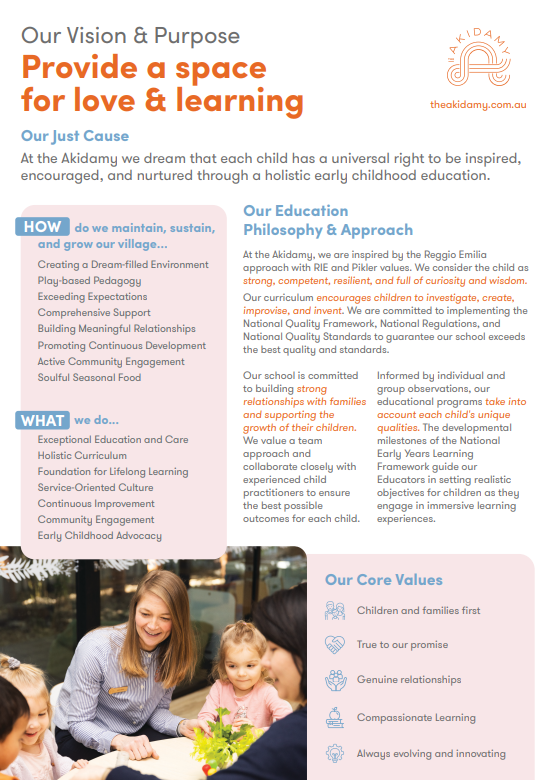
At The Akidamy we dream of a world where an outstanding holistic early childhood education that supports, encourages, inspires and nurtures children, is a universal right. Children are given a solid foundation, where they are empowered to reach their full potential by acquiring lifelong skills to contribute meaningfully to society – leading lives of joy; accomplishment; connection and contribution.
Our aim is to inspire a lifelong love of learning by focusing on providing everything that is essential to their journey of blossoming into wonderful humans.
The Akidamy is a place where children are at the very center of the learning environment.
Our school vision is based on providing ‘a space for love and learning’, with a commitment to understanding each child.
We are driven by five core values to guide our practices:
Children first
True to our promise
Genuine relationships
A place that feels special
Always evolving and innovating
We encourage children’s learning through the creation of a loving, nurturing environment. We employ a holistic approach, whereby children are supported to explore, use their initiative, problem solve and learn to assess risks.
As a team we strive to provide care of the highest standard in a secure, nurturing, and joyful environment. We aim to provide a wonderful atmosphere which incorporates realistic, natural, and culturally rich environments for our children and team.
We believe warm, sensitive, and responsive caregiving gives a child a sense of security and encourages emotional and intellectual development.
Our studios are designed for the unique needs of each age group for play, learning, meals, toileting and rest. Each room has natural light, fresh air, timber furniture and home-like soft furnishings. From our Nursery Studio to our Kindergarten Studio, love and care is consistent throughout.
Akidamy School of Early Learning considers eco choices and sustainability in all its practices:
We look to our local community first, employing local tradespeople and suppliers for our building and maintenance needs. It means sourcing what we need close to home, including toys from community groups or buying locally grown fruit and vegetables. It includes choosing from local skilled professionals in education, IT, security, clothing suppliers and communication.
Not a “daycare” - the Akidamy School of Early Learning believes in supporting the needs of the whole family, while providing high quality service. To this end we provide a ‘one stop shop’ approach to childcare and early education, supplying everything our babies or children need so our family’s day is a little easier. This includes nappies, care products, all meals and snacks, hats and clothing.The Akidamy School of Early Learning has its own catering kitchen (La Cucina) providing meals to the children and all educators. Healthy home-style meals and snacks are prepared daily, guided by our onsite School Chef. Children and their educators share meals together in a home like setting always in an outdoor environment (weather permitting). Menus are provided to families each season (ie. 4 times per year) and family feedback into the menu is welcomed and actioned upon where appropriate.
It has always been the ethos of the Akidamy to serve a purely Vegetarian menu. This is because, firstly, it ensures inclusivity of children of all faiths, backgrounds and beliefs and secondly Australian studies show that only 6% of children met both their fruit and vegetable recommendations, making it important to supplement this area of their diet.
The School chef shares a monthly recipe in the Pensieri for families to enjoy.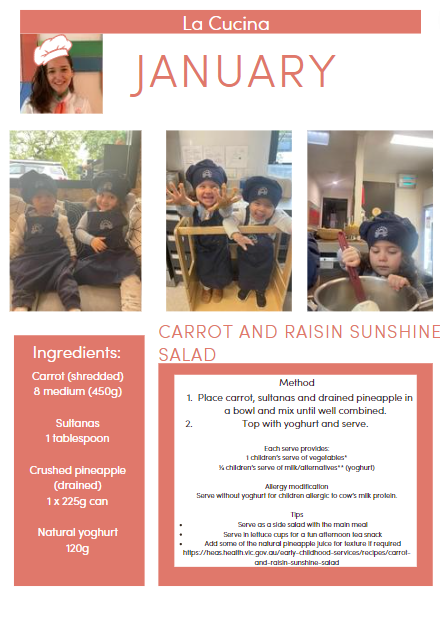
To create a ‘circle of communication’ with families we use Early Works, a secure communication App that allows us to share each child’s day with their families – instantly. Families can give feedback and provide messages in real time to their child's educators, helping us build on each child’s learning and care. Families can digitally check-in using our Smart Central attendance app by scanning a QR code, this provides ease of administrative tasks during drop off and pick up times.
Our team ethics includeAll team members are encouraged to attend all School run or sponsored activities, including social occasions. This is considered an important area of team building as well as offering your support to the notion that we are members of a community. However, your attendance at some activities will be unpaid (eg. the family end-of-year celebration event). The Director will tell you whether the activity attracts payment.
Alcohol and Drugs Tobacco, Drug and Alcohol - Free PolicyThe planning of annual leave needs to be done in consultation with the Director. It is recommended that a minimum of 4-weeks’ notice in advance of Annual Leave be provided. **You apply through Employment Hero (SWAG app).
If the School Director is on annual leave for more than two weeks (three weeks or more) then then Mrs Natalie Sebbag (Co-Founder and CFO) can be contacted via email and ask for approval if the School Director is not returning within a two week time frame. This is only in an emergency and should not be done when the School Director is present at the School.If you are not familiar with someone who is trying to pick up a child in your care, you should communicate with another team member or the Director to clarify if they know them (or of any special arrangements) – but know that you will be supported by Akidamy School of Early Learning in approaching anyone in our environment to seek information about who they are and why they are here. You should always ask for photo identification if you are concerned.
It is important to always be aware of adults entering the Studios or reception area to make sure that you greet them. This will help build your relationships with family members, ensure the children feel secure and/or allow you to ask for additional information if needed.If you are sick (or are going to be late), please contact the School by telephone as close to 7am as possible. This will allow time for a replacement team member to be organised, if necessary. You will need to call the school by 3pm latest to confirm if you will be attending the following day.
If you are rostered to open or close the School but will not be attending for your shift, you should contact the Director as soon as this is known. The Director will provide their mobile phone number to ensure that this contact can occur. Texting in sick is not appropriate, as you may not know if the person has received the text and covered the shift. Sick Staff Policy
fairwork.gov.au/employment-conditions/awards/...
Once a team roster has been posted, changes may only be made with the Director’s approval.
Wherever possible, the team roster will be made available to team members with a week’s notice to allow for team members to make any necessary personal arrangements.
Team members are expected to display flexibility and understanding when changes are necessary as this is usually to accommodate the personal circumstances of a team member or meet the needs of the School – and therefore our children and families. The opening hours of the School are from 7am to 6:00pm and team members are usually expected to be available for shifts during those hours.
Team members also understand that shift finish times can be a ‘moveable feast’ as team members will only be released from duty when Educator: child ratios are at the correct level. Again, this is to satisfy the regulatory requirements of the School and ensure our duty of care is maintained. We ask all team members who are having to work beyond their regular shift to do so with a positive attitude.
All opening and closing procedures are documented daily. The checklists are provided on Sweet Process Opening Checklist Closing checklist and must be completed and signed off by the Educators on the open and close of shifts.
Each Studio team is responsible for the equipment, preparation areas, toilets etc. in their space. There are cleaning checklists that must be followed and completed each day. Our School cleaner will drive this.
Cleaning Checklist Procedure wherever possible include children in the routines associated with cleaning and hygiene – this will allow the children to develop a sense of ownership and belonging to their space/s, build their social membership skills and allow them to gain a sense of achievement. Build it into your room routines and transitions – particularly the hygiene practices. When coming inside from outside – wash your hands. Before eating, wash your hands. After cleaning – wash your hands etc.We take influence from the Japanese practice of Osoji - Osoji Video this helps to create a welcoming environment is what we seek to do at The Akidamy School of Early Learning and cleanliness and maintaining an inviting space is an important part of this.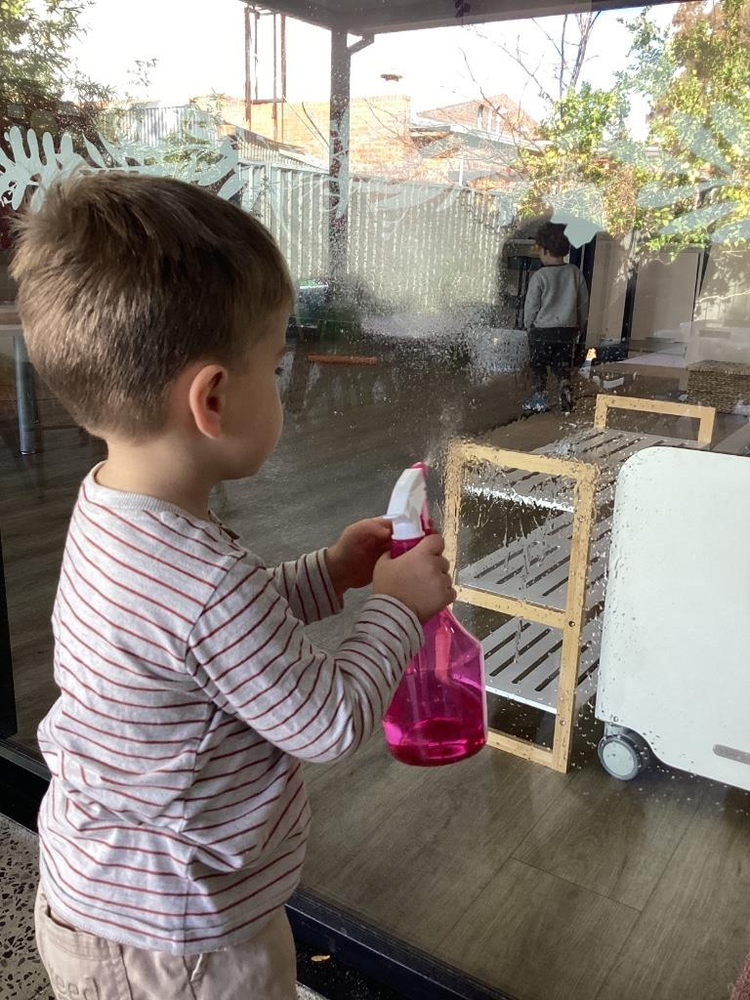
Only authorised team members (School Director and Pedagogista) have access to the School’s computer in the office. Each Studio will have their own iPad to access. We also have laptops for the team to use for their programming. Each Studio, and ECT has their own laptop to use for programming time.
Information relating to both families and the School is to remain totally confidential and should be maintained in a secure manner. Absolutely no information about the School, its families, its children or any of its team members may be divulged without the express permission of the School.
This applies to all team members during the tenure of employment and is also binding should you leave the School. Team members must understand that to give out confidential information may be a criminal offence and may be reported to the Police for further action.
You should not discuss any family or child with other families of the School.
Upon departure from the School, all records developed or written during employment or that relate to any of the School’s children must be returned to the school for appropriate storage.
All team members and child records are stored in locked filing cabinets in the office area and may only be accessed with an appropriate level of permission.
Positive encouragement from our Educators allows our children to develop positive self-image, this in turn allows them to become confident participants in their own learning.
Our educational programs are based on making meaningful observations of each child both as an individual and in group situations. The programs are designed to set goals for each child based on the detailed observations recorded by our dedicated team of Educators.
These goals take a holistic approach, covering social and emotional, gross and fine motor, cognitive, and speech and language development. Using the Developmental Milestones as prescribed by the Early Years Learning Framework, our educators set authentic, realistic goals which the children are then encouraged to achieve through the implementation of age appropriate experiences and activities.
Our curriculum incorporates an array of play-based learning opportunities which allow children to discover, create, improvise and imagine.
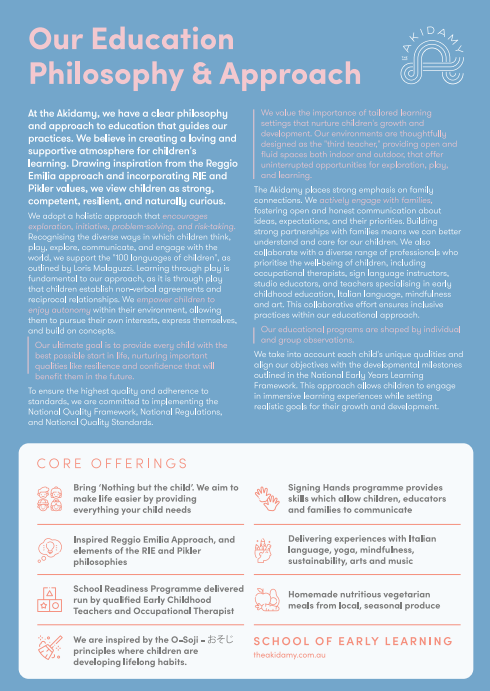
At the Akidamy our educational philosophy is inspired by the Reggio Emilia approach with the values of RIE and Pikler. Through the Reggio Emilia approach we place a strong emphasis on the child being viewed as strong, capable, resilient, rich with wonder and knowledge. Through the ‘100 languages of children’ we recognise that children have multiple ways of thinking, playing, exploring, speaking, and doing, therefore, we encourage children to embrace the environment around them.
We encourage children to pursue their own interests and revisit and build upon ideas at their own pace. Through the ‘100 languages of children’ we recognise that children have multiple ways of thinking, playing, exploring, speaking and doing. We encourage children to use every tool they have to express themselves. We endeavor to give every child the best possible start in life and foster skills such as resilience and confidence which will support their journey long into the future.
As an overarching Akidamy School of Early Learning principle – “learning is visible”.
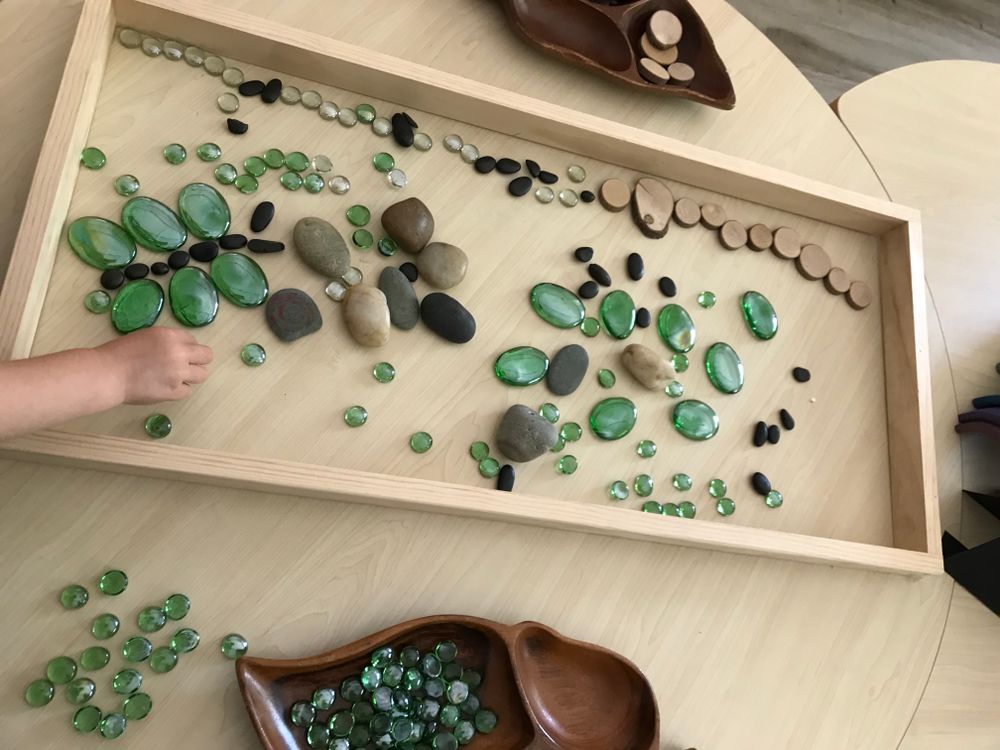
Each Studio has a curriculum display space. This will include a copy of the curriculum and additional information for families that will allow them to understand the Early Years Learning Framework
Each studio should always have a Curriculum. This should be kept up to date based on the children’s significant learnings. You will also need to display your floor book weekly. An Early Works post must be posted to families based on curriculums each day with a summative at the end of the week.
Scaffolding, extension and/or planned activities should also be included – as should a record of spontaneous learning opportunities.
The curriculum is always reflective of professional practices and the Early Years Planning Cycle. Documentation (or at least discussions surrounding curriculum between the room educator team, the Pedagogista and the Director) should capture or include;
Programming should occur for both the indoor and outdoor environments and documentation should reflect and capture this. Curriculums will be reflective of the Akidamy School of Early Learning Ethos and reflective of the individual child.
Individual children’s observations and learning stories must be accessible to families.
All records are to be available at the School every day.
The Pedagogista will review the Curriculum/Program display and documentation. The Pedagogista will review Studio programs once a month and give educators feedback in relation to the curriculum, learning stories, observations, reflections and evaluations.
Permanent team members are provided with regular programming time. This will be fairly allocated to all ECT's, studio leads and educators. You must remember to sign in/out of programming on Smart Central, this allows us to ensure everyone has received their programming time and also helps us to manage on the floor ratios.
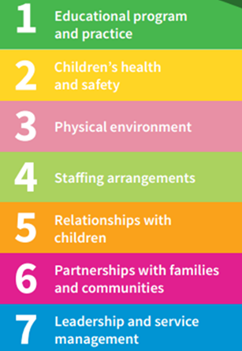
In accordance with regulatory requirements, each Studio must have a daily routine. This is designed as a guide for children and families to understand the usual order of the routine of the Studio and this must be displayed to allow all families to see.
This will also assist in relieving or support staff to understand the usual course of events when providing coverage in a Studio during a team member's absence.
This should never get in the way of our children’s spontaneous learning opportunities but offer a sound guide which ensures that the service operates effectively and efficiently. Routine and predictability make for a more relaxed environment for the educator team, the children and their families.
All team members working in a new/different space are responsible for reading the routine and becoming familiar with it.
The purpose of any disciplinary action is not to dismiss a team member; rather to provide an environment for discussion and learning, which will result in improved performance. Dismissal will always be a last resort and all efforts must be made to support and encourage improvement and development first.
In support of this approach, we have developed a policy that provides a series of clear discussions around the issue/s associated with the lack of performance, this ensures all steps are documented and provides for clear improvement expectations/goal, strategies to achieve success and associated timeframes.
Please refer to the following policy for more information: Staff Disiplinary & Termination Policy
All team members in both speech and action should demonstrate a commitment to equity in all situations. This includes sex, race, age etc. This School supports legislation that does not allow harassment or bullying of any kind in the workplace. Any instances of harassment will be dealt with severely.The Akidamy School of Early Learning will supply you with all uniforms including a hat, jacket, scarf, belt and apron on commencement of employment and these must be worn whilst you are on your shift.


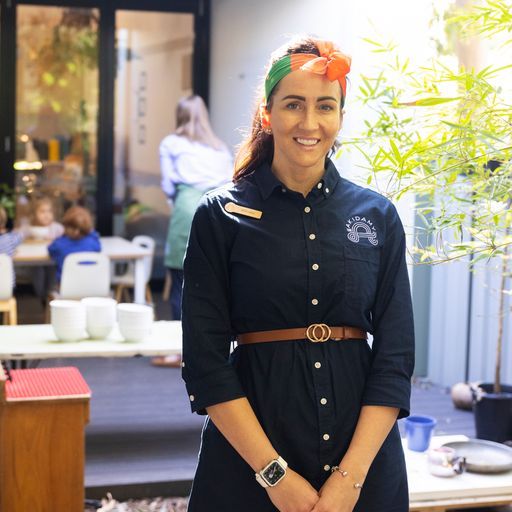 Please see policy for more information Dress Code
Team members are all responsible for ensuring that they are aware of the emergency procedures that we have in place. This includes a bomb threat, hostage situation, disturbed person incident, an evacuation and/or lock-down procedures.
Team members must ensure fire escapes routes remain clear and free of any obstructions at all times.
Emergency drills will be conducted every three months and will be held at different times and on different days. All team members, volunteers, students and family members present at the time for the drill are required, by law, to participate.
Team members must be aware of the School evacuation procedures and note where evacuation plans are posted throughout the School. A record of all fire and evacuation drills are kept on Early Works.
It is important when working with children to be able to recognise symptoms and/or signs of a sick child. In response, always ensure that the child is kept comfortable and act in a caring and compassionate manner towards the child. Please see policy here Sick Children Policy
Infectious/Communicable Diseases
Within any School the spread of infectious or communicable diseases can create problems for team members, children attending the centre and possibly their immediate families. You need to be aware of the ways to minimise spread of disease within the centre and amongst the attending children. Cleanliness and hygiene practices are a critical element to this.
Control of Infectious Disease PolicyIn the event of an accident or a child’s falling ill, first aid requirements and expertise must be available.
A record is kept citing each child’s medical conditions and known allergic reactions to any form of medication or any other stimulants. Educators need to be aware of the need for confidentiality of information regarding the health and treatment of any person. All team members will be required to familiarise themselves with children’s medical conditions.
It is stated by Western Australia Health that team members working in Early Childhood Education and Care Services can be exposed to infectious diseases through contact with infectious children and their blood and body substances.
Recommended vaccinations for non-immune staff who work with young children include:
Outbreaks of these diseases in a childcare setting can result in serious illness in staff, children attending the School and family members. Some of these diseases, such as rubella, chickenpox and influenza can cause severe disease in pregnant women and/or harm their baby.
The Akidamy will generally provide the annual flu vaccination on site once a year for staff free of charge. You should consult the Director should you not want to receive this vaccinationFor information on immunisation of children, please refer to your doctor, or Western Australia Health.
The 5th edition of Staying Healthy in Childcare has a dedicated section on CMV, which discusses the risks posed to pregnant workers.
Control of Infectious Disease PolicyThe School maintains all the necessary business insurances. Any incident, which you think may be the subject of an insurance claim should be immediately reported to the Director.
Please note time, date, and names of people present, all details of what happened and sign your note detailing the events.
Team members Incidents / Accident / Trauma / Near miss situations must be recorded on Employment Hero.
All team members are expected to model appropriate language whilst at the School and are to encourage parents to do the same. Correct grammar is to be used and swearing is prohibited. If we are to teach our children positive language skills, we need to use them at all times. Be aware of what language you use in communal areas such as foyers and team member break rooms, particularly if family members may hear you.
Educators should encourage children to be responsible for their own belongings. Any lost property should be placed in the appropriate box located in each Studio or returned to the family directly if the owner is known.
It may be necessary, from time to time, to organise a centralised lost property presentation. It is usual for any items not claimed after this practice to either be used as spare clothes within the School or, donated to a local charity. This will be advised directly to families when it occurs.
Team meetings are generally held monthly. Team members must attend all meetings unless they have prior commitments or other circumstances preventing them from attending. Team members are also expected to contribute in a positive, professional manner. Behaviour, which trivializes the contributions of others, is not appropriate. Some professional development takes place in educators meetings—these meetings are designed to assist in the provision of high-quality care.
Team meetings dates are determined as soon as they are known (usually min. 4 weeks in advance). This is to allow for all team members to know well in advance when the meetings will be held and to make any necessary arrangements to attend.
As required by the Work Health and Safety Act 2011, the School will as far as practical provide a work environment which is safe and without risk to your health and safety.
You as an employee have an obligation within the meaning of the Act to maintain safe and healthy conduct. This means:
If you become aware of any equipment or procedure, which could result in an accident, please report it immediately to the Director. All team members must demonstrate 100% commitment to the correct use of and adherence to workplace health and safety practices. Failure to use the safety equipment provided or failure to maintain safe work practices may result in disciplinary action. The Akidamy School of Early Learning aims to:
Team members are to ensure;
All team members are to ensure that there are no hazards in the outdoor play areas. The morning team must go through the daily outdoor checklist for each playground. All equipment should be checked for any issues as set up occurs each morning. All hazards need to be reported to the Director and equipment should not be used if there are potential safety issues with it.
Personal Mobile phones and personal iPads are not to be taken out of the staff room, used or switched on whilst you are working (excluding lunch breaks). Where an exceptional circumstance arises, Educators may be permitted to access their mobile phone/personal iPad for medical or safety reasons with prior permission from the Director.
It should be noted that any emergency can be directed to the School's main number.
The School phone is not for private use, if on an occasion you need to make a short private call please check with the Director first. At no time should a private call cause detriment to the School, Educators or families, contacts trying to call through. Any inappropriate use of or misuse of phones will be subject to disciplinary action.
Policies & ProceduresAkidamy School of Early Learning has an extensive Policy and Procedure manual located on the Sweet Process platform which reflects the Philosophy and Goals of our School.
In this Team Member Handbook we provide a snapshot of policies, which will affect you during your time with us. Details in this manual are correct at the time of printing.
Please be advised that there are QR codes at the front of the School displayed for parents to access our Akidamy Family Handbook and School policies. These are also attached below:| Area | Link | QR Code |
|---|---|---|
| Knowledge Platform | sweetprocess.com/kb/qZ5qHx8dqiPNw/ |  |
| Family Handbook | sweetprocess.com/policy/x2VLsG2Y/family-handbo... |  |
As a new employee you will serve a probationary period of six (6) months, during which time you will be assessed by the Director as to your capabilities and suitability for the position. You may receive confirmation of your appointment in writing at the completion of your probationary period.
All business records must be kept maintained in accordance with procedures and must remain strictly confidential. There is an ethical obligation to do so and there may also be a legal obligation – any breaches may result in disciplinary action and/or legal action.
Records are not to be removed from the School. Accident/incident reports must be completed and given to the Director to sign where possible before the parent. Medication forms must be completed for all medications even if parents administers the medication on the premises. Administration of Medication Policy
Any records developed or completed on behalf of The Akidamy, whilst you are in employment, remain the property of Akidamy School of Early Learning at all times. If you would like to use any records for any purpose other than that required in your role, you must refer to the Director for her/him to seek authorisation to do so.
At The Akidamy, we see relationships as critical in achieving our Philosophy, and the key to all learning opportunities. The relationships that are formed between the child, their family and the Educators plays a significant role in allowing children to feel like they truly 'belong'.
We want the children to be confident and involved learners who can take charge of their interests and build something meaningful to them. Our ability as Educators to seek and hear what others see and know informs our practice and how we see ourselves as learners and teachers.
As the School has been issued with a “Service Supervisor Certificate” we can invite who we consider to be suitably qualified and responsible individuals to take up the role of “Responsible Person In Charge” (RPIC) throughout the course of the day.
There will always be a minimum of two team members rostered at the School, one of whom will be the delegated RPIC and one other. The allocation of this status will usually relate to qualification level, for example studio lead would be the RPIC rather than an educator – although it may be necessary, for example, for two studio lead's to be rostered together, and one of them will be the RPIC during that period. Wherever possible, this detail will be included in the staff roster and where clarity is needed regarding a role, you should refer to the Director.
This allows our families and team members to know at any time who the most senior member of the team is on site at any time.
Refer to the Responsible Person Policy: Responsible Persons PolicyTeam members must ensure rubbish is removed daily or more often if needed.
From an early age, children need to be aware of the correct procedure for disposal of rubbish. It is essential that team members model the appropriate procedure.
Refer to the Akidamy Waste Management Plan: Waste Management Plan - PerthThe Akidamy School of Early Learning makes use of digital security for access and security. Staff will be given a unique pin code to gain entry during our opening hours. Access outside of these hours will not be permitted through this system.
There are CCVT cameras installed in all Studios and in the outside playground. These are to assist with visibility in Studios and outdoor playground and for security and safety purposes. The Director and the Founders have accesses to the camera footage for safety purposes.
Smoking is not permitted anywhere within School premises or around the School surroudings. You will need replace your work top before you smoke. It is inappropriate for team members to leave the premises for a ‘smoke break’ unless on your lunch break. You are not allowed at any time to smoke in your work uniform top.
Smoking is also not permitted when accompanying children on excursions.
The Centre has introduced a program whereby all Educators will be a School “Champion” for a specific area of ‘specialty’. The current ‘specialty areas’ include;
All team members are encouraged to identify with a ‘speciality area’ that they may be passionate about. Doing this will allow the team member to further develop their knowledge and capabilities, it may aid them in further studies they are undertaking as well as provide an opportunity to work with different team members.
Where appropriate / necessary time ‘off the floor’ may be granted to allow team members to fulfil this responsibility. The ‘champion’ of this specialty area will be responsible for putting together a case/submission to allow the director to understand the intention behind this additional time.
It is very important that all team members role model suitable sun protection practices. Team members and children must wear hats and appropriate clothing when outdoors. Children and team members must apply sunscreen at regular intervals (prior to morning play and afternoon play). A sunscreen register is to be kept up to date.
Supervision is of paramount concern. Educators are ultimately responsible for the supervision of the children in their care. You are not covered under the workplace liability insurance if you are found to be negligent towards your duty of care.
Team member responsibilities:As a School, we acknowledge that we are, in fact, a community. The culture within is largely shaped by our educators and staff (the team members).
We commit to creating a culture that we want to belong to, one that is supportive, positive, inclusive and respectful. We want to be able to be open, positive, fun, encouraging, professional, helpful and supportive.
We don’t talk behind other’s backs, be negative, discouraging, disrespectful or mean.
We also recognise that team members can ‘have a bad day’- but we can recognise when we’re wrong and apologise if necessary. We can and should all help to create an optimistic, progressive and exciting workplace where we can’t help but succeed.
As part of the team, we are also given an opportunity to participate in a “Professional Achievement Plan, which includes, Performance Appraisal processes and may include Performance Improvement processes. We commit to participating in these processes actively as they are designed to allow us to achieve our full potential and deliver an amazing service to our children and their families.
As team members, we should also actively contribute to and participate in Team Meetings and the processes around Continuous Improvement. We should all be regularly examining what we do and how we do it – through our professional reflection processes, through surveys and through professional conversations.
The director (and any other support team members), will make every effort to answer the phone first, however, all team members are responsible for answering the phone. The phone should be answered within 3 rings (where possible). The phone should be answered in a friendly and courteous way. “Good morning/Good afternoon you’ve reached The Akidamy School of Early Learning– this is Sally speaking”.
Please write down all messages and advise the relevant person as soon as possible.
100% honesty is expected of all team members. Any incident of proven theft, no matter how small, will be subject to instant dismissal. This applies to theft from the School and/or other team members, the children or our families.
In-school and external training possibilities/professional development opportunities are an integral part of on-going team member development. The Director is responsible for informing all team members of upcoming in-school training and workshops that are to take place. It is part of the team member’s responsibility to attend in school training throughout the year to further develop their skills and knowledge base.
Working With Children Cards, First Aid and CPR Certificates
Working With Children Cards, First Aid and CPR are your own responsibility and need to be sourced and paid for by the individual team member.
Educator team members must provide a current CPR certificate on a yearly basis, a First Aid Certificate must be obtained every three years and a working with children card as needed. It is your responsibility to ensure that a copy of each of these certifications is uploaded to your Employment Hero file.
Failure to provide the necessary documentation required for your role may subject you to further action.
Visitors, students & volunteers are a part of our involvement with the wider community and should be treated in a professional and friendly manner at all times. They are required to complete a sign in and out process when on the premises using the visitor QR code on the Smart Central app– this is to ensure that they are accounted for in case of an emergency.
They are expected to adhere to School policies and procedures when attending the School.
The Director and team members are responsible for ensuring that this information is given to the visitors, students or volunteers. Visitors, students and volunteers are never to be left alone with the children, nor are they to administer medication. They should follow the School's dress and behaviour code.
The Director and team members should, in accordance with the ECA Code of Ethics, provide support and guidance to them wherever possible. Students should be supported in their learning and educator teams should discuss their curriculum with them - allowing them the opportunity to learn from the centre programs and practices. Educator teams should be available to share resource materials and programming ideas with the students.
The School supports involvement from the community, including visitors sharing their time and talent, and should make every effort to incorporate this into the children’s learning program/s.
Wages are paid each fortnight and by direct deposit into your nominated account, subject to the provision of an appropriately complete timesheet being received in the timeframe/s required.
It is a team member’s responsibility to ensure that they complete and submit their timesheet. They must also provide updated bank account information if and when needed.
All team members are provided with a pay slip detailing gross earnings, deductions and net earnings. Any enquiries regarding information on a pay slip should be directed to the CFO using the following email address: payroll@theakidamy.com.au. The turnaround time for an email response will be 24 hours.
The School contributes to the Workers Compensation Board on behalf of all paid team members.
If you suffer an injury, no matter how minor, whilst on duty or on your way to or from work, (by the usual route), report it immediately to your Director and complete an Team Member Incident/Accident Report.
In order to protect any claim you may have, the fully completed Team Member Incident/Accident Report should be completed as soon as possible. Failure to provide adequate information may result in the claim being rejected or may delay the payment of benefits.
Should you claim compensation, a medical certificate and a Worker’s Compensation Claim Form must be lodged with the Director if work time is lost or medical costs incurred.
Should an injury be sustained at work, you must contact a doctor within 24 hrs.