Scope
This policy applies to all employees of the Akidamy and is aimed at ensuring a proper and comprehensive risk assessment process is followed across all departments and projects.
Audience
This policy applies to all employees, contractors, and representatives of the Akidamy (School)
who are involved in the planning, execution, and evaluation of business activities.
Policy Statement
The Akidamy is committed to systematically identifying, analysing, and managing risks associated with its operations. A comprehensive risk assessment process will be followed to identify potential risks, assess their impact and likelihood, and develop appropriate risk mitigation measures.
Risk Assessment Process
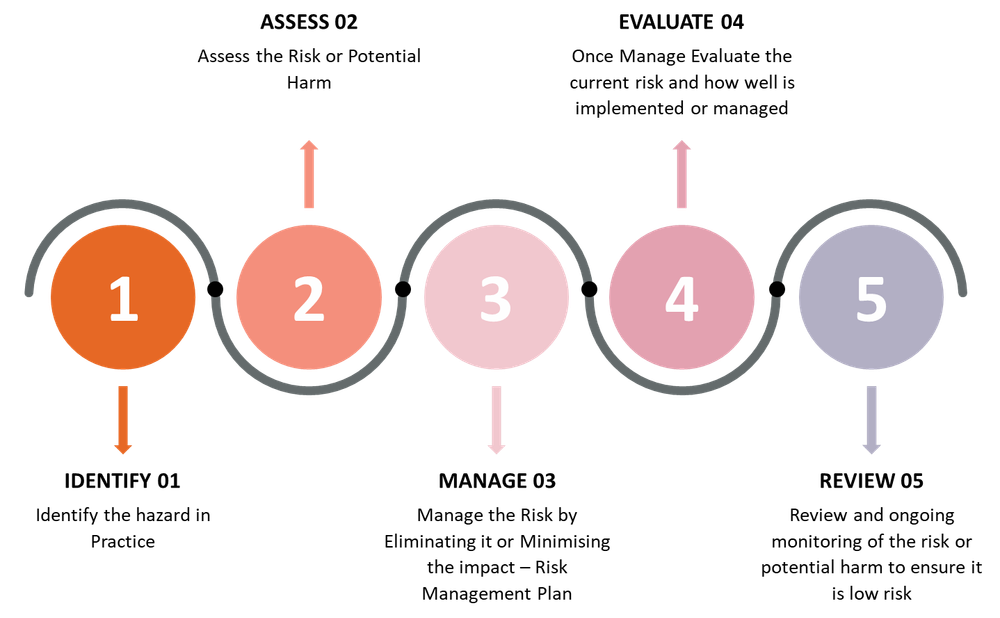
The risk assessment process includes the following steps:
- Identification: All potential risks related to the School operations, projects, and activities shall be identified, including but not limited to financial, operational, legal, reputational, and strategic risks.
- Analysis: The identified risks shall be analysed to determine their potential impact, likelihood, and level of exposure to the School. A risk matrix or similar tool shall be used to assess the severity of each risk.
- Evaluation: The assessed risks shall be evaluated based on their severity and priority in terms of addressing them. Risks that pose higher threats or have significant potential impact shall be given greater attention in the risk management process.
- Management: Appropriate risk mitigation measures shall be developed and implemented to minimise the impact and likelihood of the identified risks. These measures may include risk avoidance, risk transfer, risk reduction, risk acceptance, or a combination thereof. The responsibility for implementing and monitoring these measures shall be assigned to relevant individuals or teams.
- Monitoring and Review: The effectiveness of risk mitigation measures shall be regularly monitored, and the risk assessment process shall be reviewed periodically to ensure its relevance and adequacy in addressing emerging risks or changing circumstances.
Types of Risk Assessments
The following is the location of all key risk assessment templates. You are given a choice from the following templates:
- Educational Experience:
- Experiences: What are we doing? Educational activity in an environment (inside or outside) with children
- A new experience is introduced
- Policies and procedures that require risk assessments, such as the emergency and evacuation policy and procedures, are updated
- Potential for Someone Getting Hurt (Child or Adult):
- Someone Getting Hurt: That could be a child, staff member, or parent or an accident or serious incident has occurred; or a complaint has been received.
- New or Current Resource:
- A new resource or piece of equipment
- New chemicals were introduced, etc.
- Trade Person Doing Work at the School
- A Trade Person undertaking work at the School during operational hours
- General Repairs to the School (tradespeople)
- General or Special Event
- Mother's or Fathers Day, celebration, graduation, education evening, staff event, etc.
- Incursion
- Transportation and Excursion:
- Taking some transport (bus, train, or walking) to an outside activity
- Children are transported by the School (i.e. using a school bus to pick up)
- Risk Register (Organisational or Corporate Activity):
- the school environment and practices are reviewed, changed or renovated
- Change in government legislation or new Laws / or compliance
- Insolvency, Tax Compliance, Parent Payments, Staff payments, industrial compliance, etc.
- Security and Confidential Information, Fraud and Corruption, Infrastructure
- People, capability and organisational culture
- Infrastructure, information and technology
- Strategic priorities
- Service delivery
We need to add a link for Risk Register
Responsibilities
All employees, contractors, and representatives of the School have the following responsibilities:
- Cooperating in the risk assessment process by providing accurate and timely information regarding potential risks and their impact.
- Adhering to the risk mitigation measures and guidelines provided by the risk management team.
- Reporting any new risks or changes in the risk landscape to the risk management team promptly.
- Participating in relevant training and awareness programmes to enhance risk management capabilities.
- Supporting the continuous improvement of the risk assessment process by providing feedback and suggestions for enhancement.
Analysing and Assessing the Risk
Review the collected information and evaluate the significance of the risk. Consider the following:
- Activity Identification - Break the event up into stages or activities
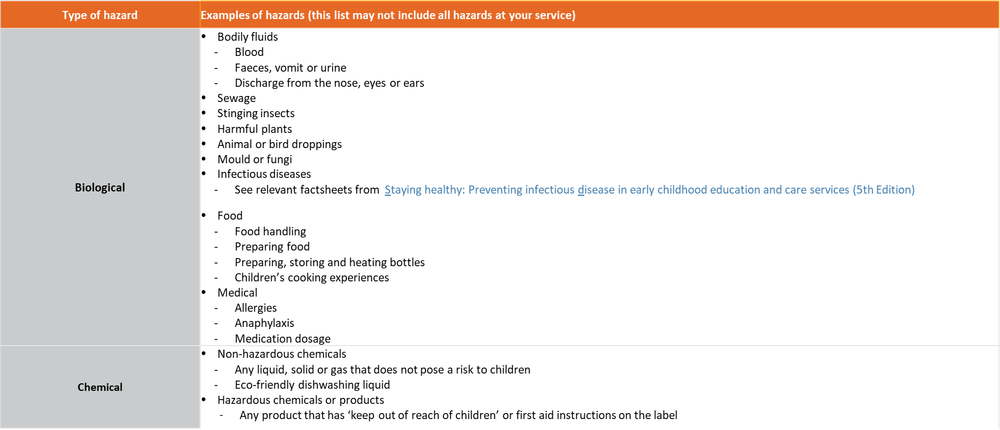
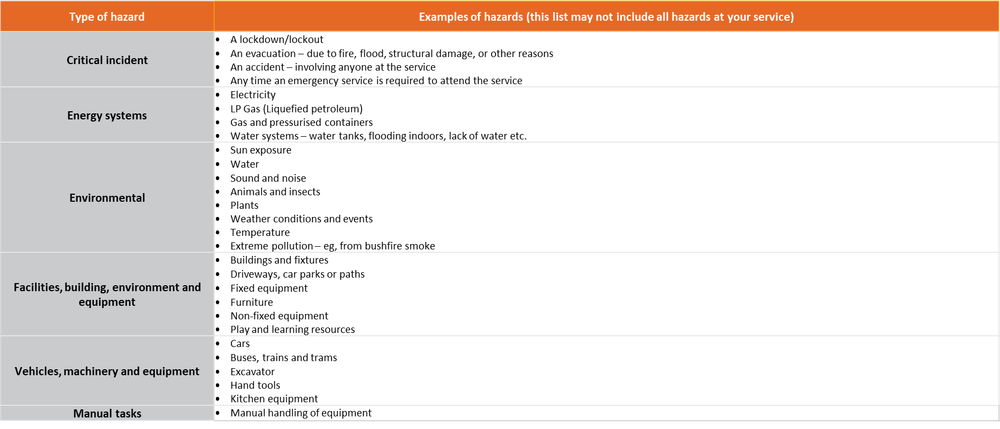
- Hazard Identification - Identify and document potential risks and situations to be managed in each stage (hazard identification)
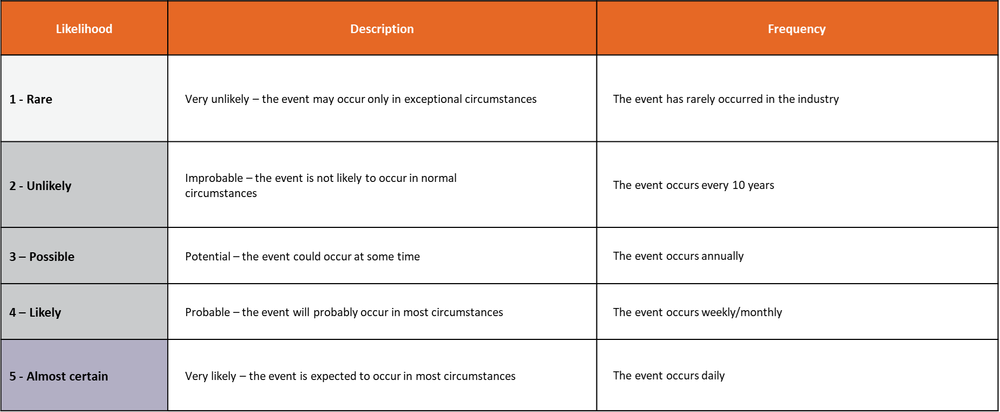
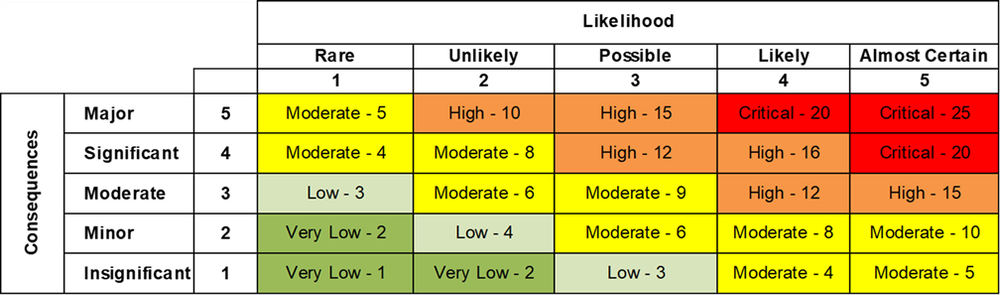
- Risk Assessment (No Controls or Inherent Level) - based on Likelihood and Consequences to assign risk score outcome from the Risk Matrix
- Elimination or Control Measures - What can be done to reduce the Risk?
- Risk Assessment (With Controls or Level)
- Risk Register - Is this activity in the School Risk Register?
- Who Responsible - for the management and Execution of these controls
- When (Date of Event) - is this event or activity taking place?
Hardard Identification
Risk Likelihood
Risk Consquence
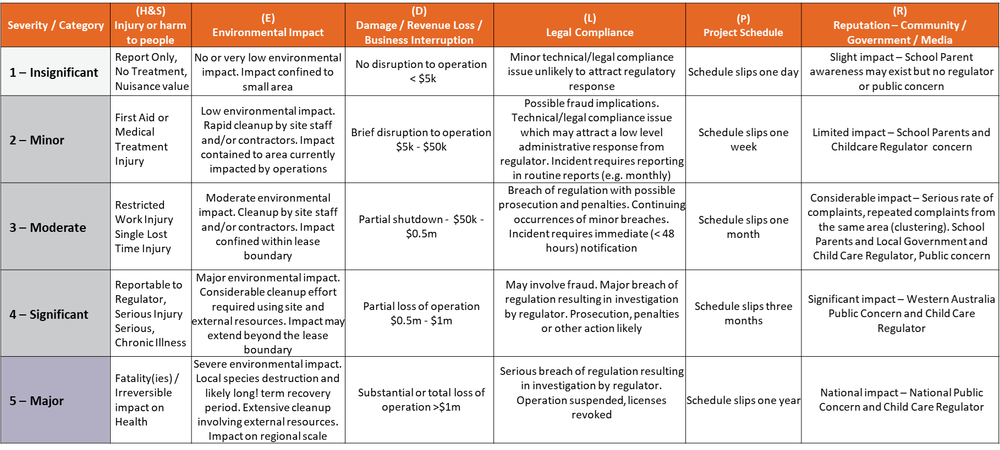
Risk Score Matrix
Risk Score and Outcomes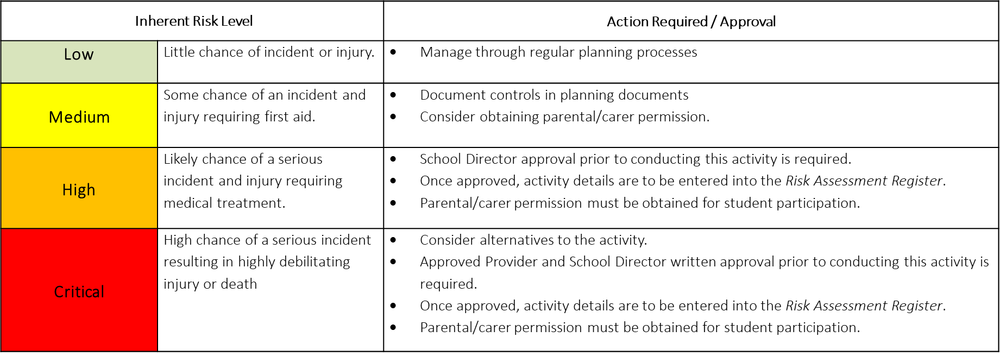
Non-Compliance
Non-compliance with this policy may result in disciplinary action, up to and including termination of employment or engagement. Disciplinary actions will be carried out in accordance with the Akidamy Disciplinary Policy.
Any questions or concerns regarding this policy or its interpretation should be directed to the risk management team or the Human Resources department.
