Child Supervision Procedure

  1. 1

    Ensure a Suitable Environment

    Make sure the area where the children will be supervised is safe, clean, and free from hazards. This includes removing any sharp objects, securing electrical outlets, and ensuring there are no choking hazards within reach.

    Also, ensure that the area is adequately equipped with age-appropriate toys, books, and activities to keep the children engaged. 

    Please read and refer to the Supervision Policy and Staffing Arrangement Policy
  2. 2

    Establish Clear Communication

    Communicate with the children in a clear and age-appropriate manner, ensuring that they understand any rules, expectations, or safety instructions.

    Encourage open dialogue and active listening, allowing the children to express their needs, concerns, or any issues that may arise during supervision.
  3. 3

    Maintain Constant Supervision

    Take responsibility for the continuous and active supervision of the children.

    • Remain physically present in the designated supervision area at all times.
    • Pay close attention to the children's activities, ensuring their safety and well-being.
    • Avoid distractions such as engaging in unrelated tasks.


    Additionally, be aware of any potential risks or hazards that may arise and be prepared to address them immediately.
    • Complete a headcount on Smart Central after transitions
    • Sweep the area that you are moving away from to check there is no one let behind after the children have transitioned through to another space.
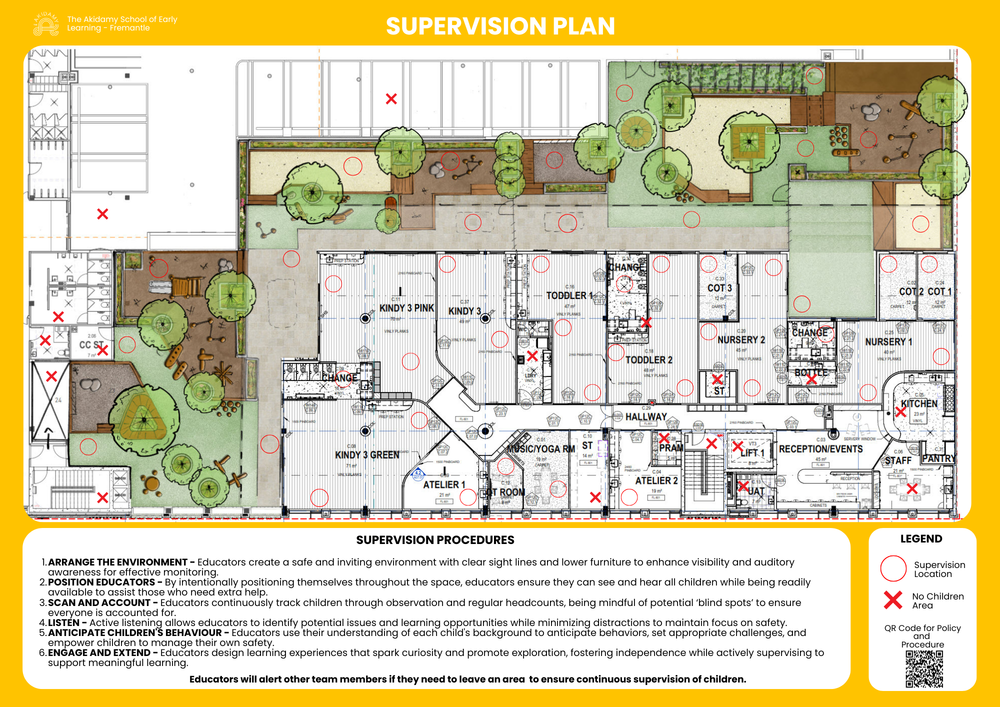
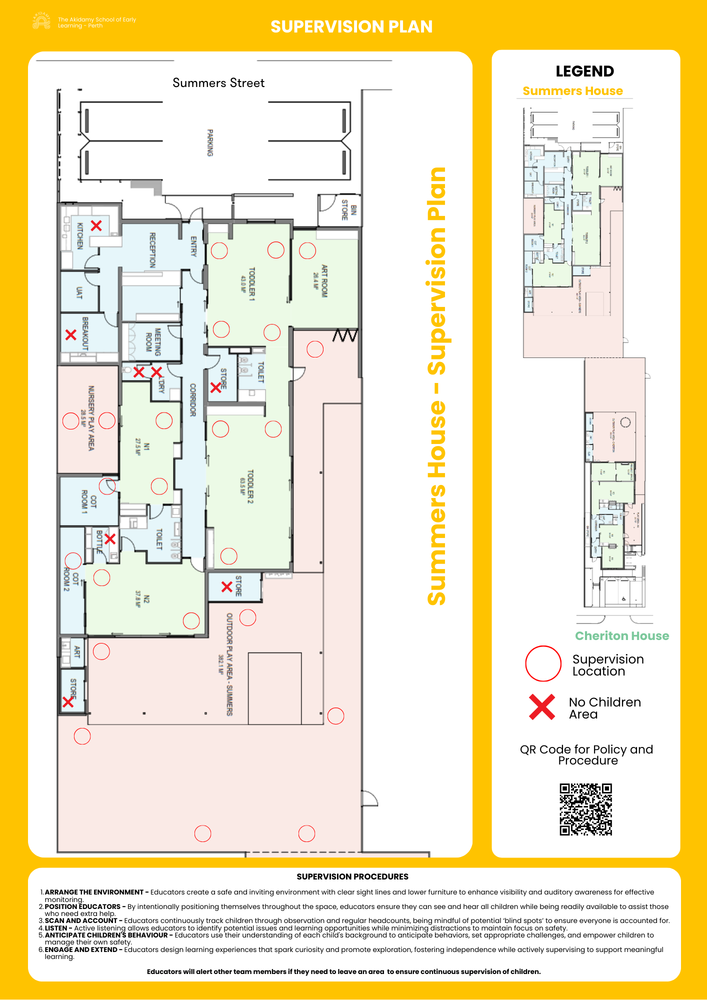
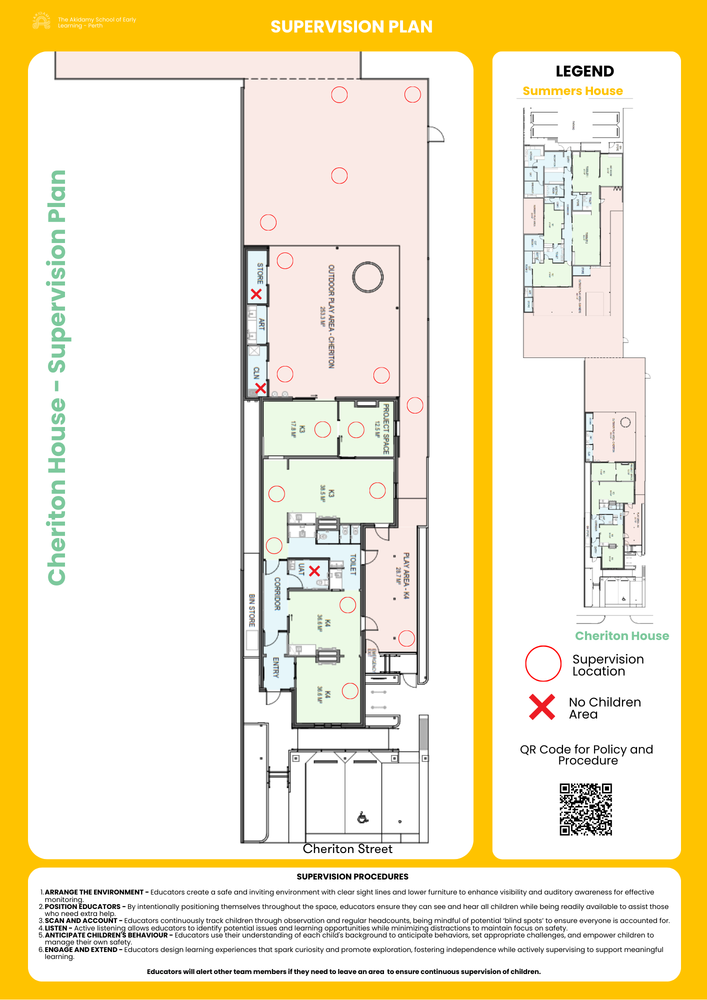
    • Please familiarise yourself with the below document.

  4. 4

    Supervision Plan for Perth School

    The Perth School is split into two houses, Summers House and Cheriton House.

    Summers House


    Cheriton House

  5. 5

    Supervision Plan for Fremantle School

    Fremantle School

  6. 6

    Engage in positive interactions

    Interact positively with the children under supervision.

    • Encourage their social interactions and provide guidance in resolving conflicts or sharing resources.
    • Offer praise and encouragement for their achievements and positive behaviors.
    • Be attentive to their emotional needs, providing comfort and support when necessary.
  7. 7

    Document incidents and observations

    • Document any incidents, accidents, near misses, or any concerning behaviour observed during the supervision period.
    • Include relevant details such as the date, time, location, individuals involved, a brief description of the incident or observation, and any immediate actions taken.
    • Report the documented incidents to the appropriate individuals or authorities as per organisational policies and procedures.