Last Updated on April 30, 2026 by Owen McGab Enaohwo
You’re interviewing a strong candidate for an open position on your team. They ask about your remote work policy and PTO structure. You confidently start explaining your policies, then realize you’re not entirely sure what you documented last on your revision. Was it 15 days or 20 days of PTO? Did you update the remote work section after COVID?
That moment of uncertainty is exactly what an employee handbook is supposed to prevent. An employee handbook outlines company policies, expectations, standard operating procedures (SOPs), and employee guidelines for new hires. It helps employees understand the organization’s values and their responsibility in achieving the set goals.
But here’s the problem. The thought of writing an employee handbook from scratch can feel overwhelming, especially for a small business owner juggling multiple priorities. However, with an employee handbook template, you have a ready-made structure with the essential sections already in place. You just need to refine and customize it to your business.
So, what should you include in your employee handbook template? Here’s a comprehensive guide and examples of free templates you can use to get started.
If you’re already looking for a tool to manage your employee handbook, SweetProcess is a simple place to start. You can update it regularly and keep everyone aligned. Start the 14-day free trial today!
Table of Contents
5 Employee Handbook Templates and Examples You Can Model for Your Team
What To Include in an Employee Handbook
How To Create Employee Handbooks Using SweetProcess
Benefits of Employee Handbook Templates
How To Customize an Employee Handbook Template for Your Company
Create and Manage Your Employee Handbooks in One Place Using SweetProcess
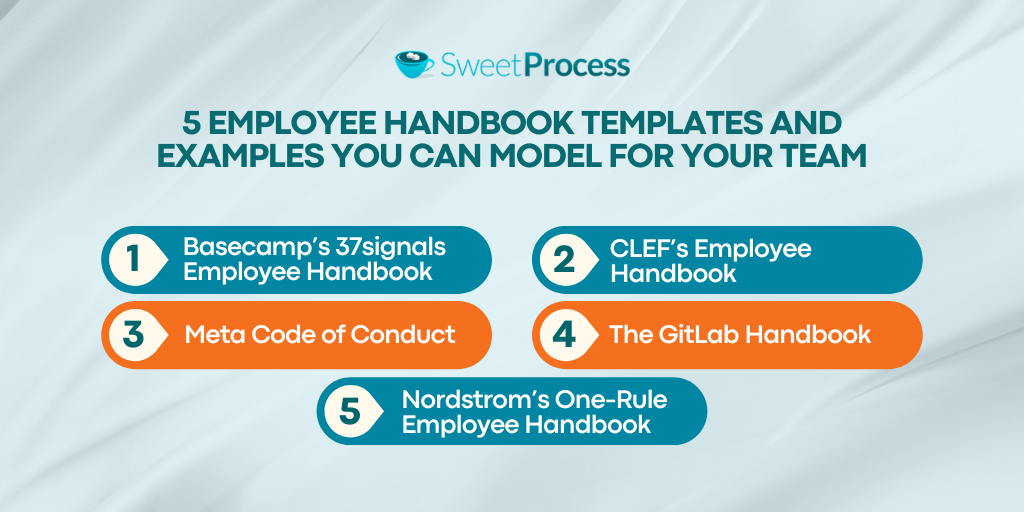
5 Employee Handbook Templates and Examples You Can Model for Your Team
Before you start building your employee handbook for your small business, it’s worth seeing what other successful companies have done. Some companies go for minimalist one-pagers while others have comprehensive 2,000-page manuals.
However, they all have one thing in common: they communicate the company’s policies and procedures in a way that employees understand. Here are real-world employee handbook examples you can model for your small business.
Basecamp’s 37signals Employee Handbook
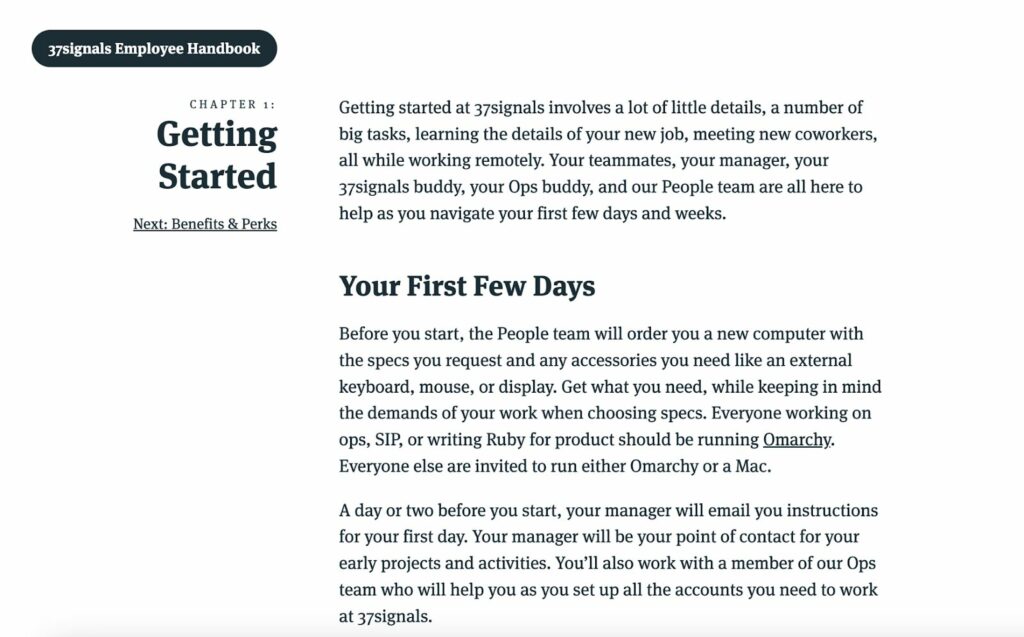
Link to Basecamp’s Employee Handbook
Basecamp’s handbook is simple and direct. Instead of using corporate jargon and complex legal language, it reads more like a conversation with the manager. The company policies are written in plain language, making them easy for employees at every level to understand.
The handbook is organized into short, digestible sections with clear headings. Topics like “How We Work,” “Benefits & Perks,” “Our Rituals,” and “Code of Conduct” make it easy to find what you need without scrolling through 50 pages of dense text. Additionally, there are sections for specific roles, such as designers, programmers, and the support team.
Here’s what you can leverage:
- The clear expectations around communication and work culture
- Simple policy structure without legal-heavy language
- Easy-to-read formatting that doesn’t feel overwhelming
Best for: Small businesses, startups, and remote-first teams that want a people-first, culture-driven handbook.
CLEF’s Employee Handbook
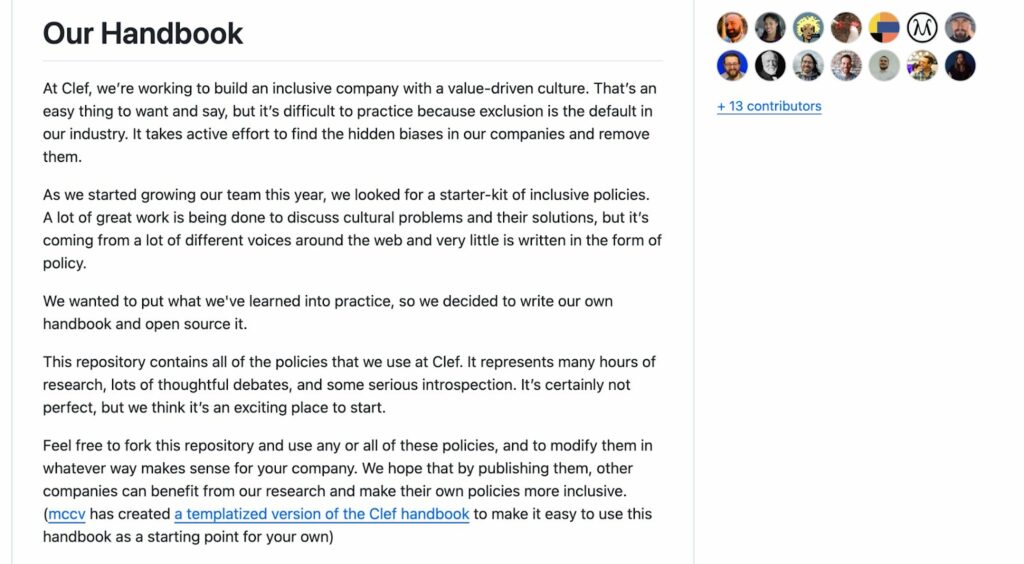
Link to CLEF’s Employee Handbook
CLEF has a comprehensive and well-structured employee handbook that blends traditional HR policies with clear operational guidelines. This handbook covers everything from values and employment policies to hiring and onboarding documents, benefits, and perks. It’s organized into sections so employees can follow it easily.
In addition, they include specific details that most handbooks gloss over, such as how equity vests, what happens to your stock options if you leave, exact PTO accrual rates, and step-by-step processes for requesting time off.
What you can find in this handbook:
- Structured policy sections
- Clear definitions of roles and responsibilities
- Balanced tone between professional and approachable
- Consistent formatting across policies
This type of handbook works especially well for teams transitioning from informal processes to more formal systems. It helps standardize expectations without making the organization feel rigid.
Best for: Growing small businesses that are building a structure for the first time.
Meta Code of Conduct
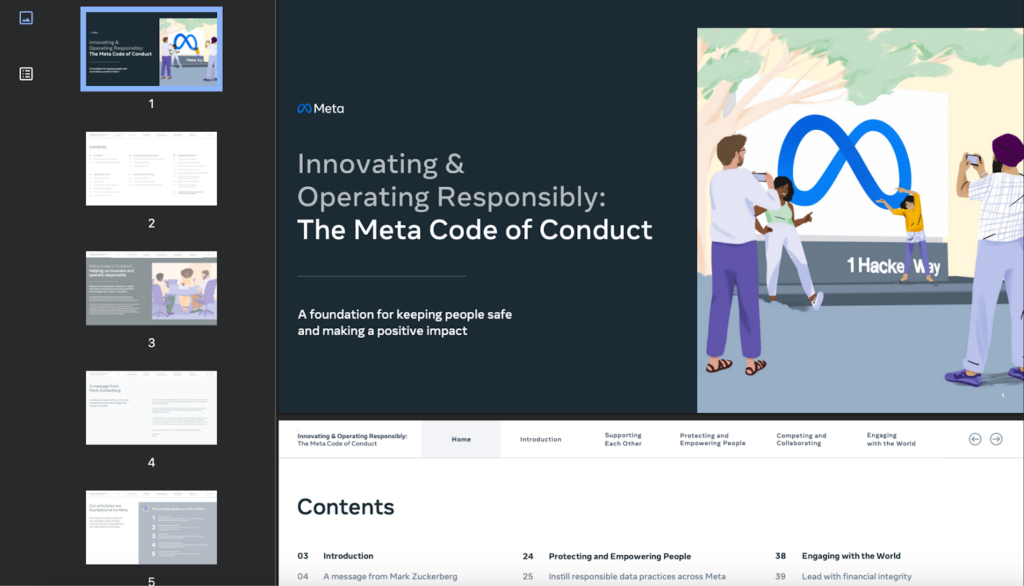
Link to Download Meta’s Code of Conduct
Meta’s (formerly Facebook) Code of Conduct shows how to clearly document ethics, behavior, compliance, and accountability at scale. While it’s built for a large organization, the structure is extremely useful for any business that needs clear standards of behavior and compliance.
It demonstrates how policies can be firm, clear, and enforceable without being confusing. It starts with a message from Meta’s CEO and founder, Mark Zuckerberg, and its foundational principles.
Each section starts with a principle, then breaks down what that means in practice with real scenarios. Instead of vague statements like “treat everyone with respect,” they give concrete examples: what constitutes harassment, how to report violations, and what happens during investigations. It also includes contact persons for issues and additional resources that employees can access.
What you can take from this example:
- Ethics and compliance structure
- Reporting and accountability systems
- Clear escalation pathways
- Whistleblowing and misconduct reporting processes
Best for: Businesses operating in regulated industries or scaling quickly.
The GitLab Handbook
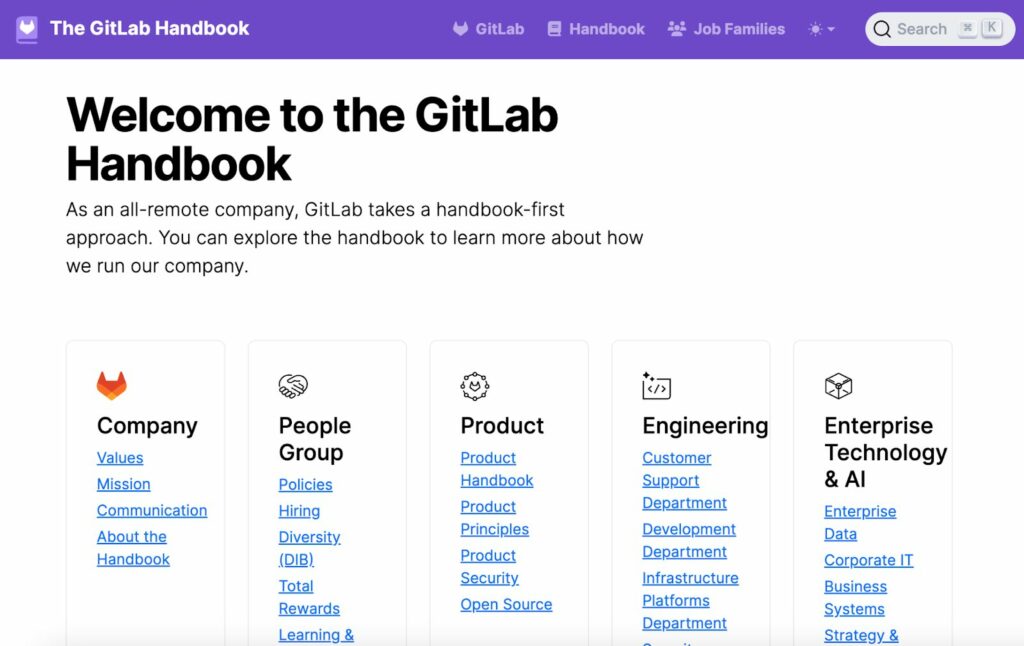
Link to GitLab’s Employee Handbook
GitLab is a remote software company best known for its DevOps platform that helps teams plan, build, secure, and deploy software. Its handbook is one of the most famous examples of an open, living handbook. It’s fully digital, constantly updated, searchable, and designed to scale. It shows what a real “living document” looks like in practice, where policies evolve alongside the company.
At over 2,000 pages, it documents virtually everything about how GitLab operates, including the company values, communication guidelines, hiring processes, engineering workflows, marketing strategies, and HR policies. Since GitLab is fully remote, this handbook acts as a single source of truth.
New employees can find answers to their questions without waiting for someone in a different time zone to respond.
Here’s what you can use from this example:
- Version-controlled policies
- Living documentation structure
- Continuous improvement culture
- Clear navigation and categorization
- Global, remote-first policies
Best for: Remote teams and digital-first businesses
Nordstrom’s One-Rule Employee Handbook
Link to Nordstrom’s Employee Handbook
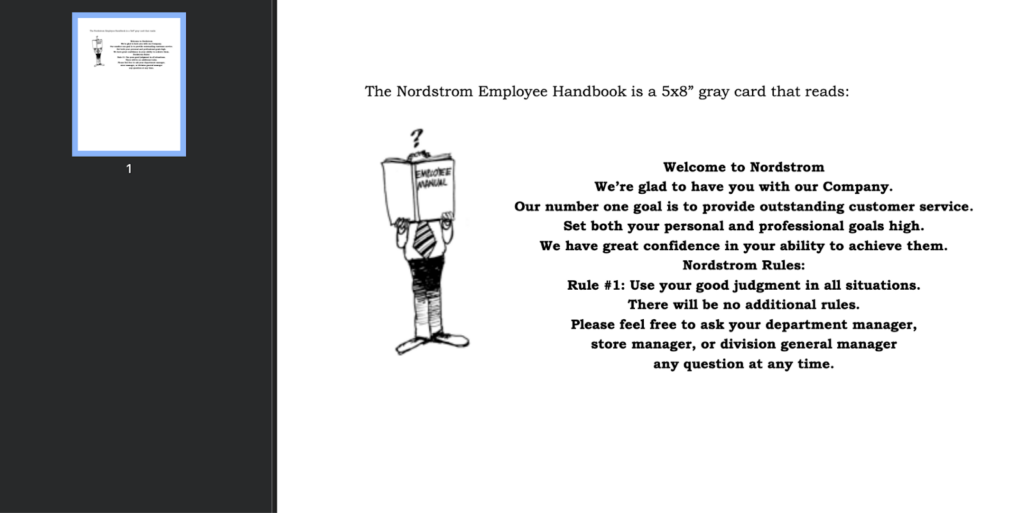
Unlike most companies, Nordstrom’s employee handbook is famous for its simplicity. They take a different approach by providing only one rule: “Use good judgment in all situations.”
Their policy document doesn’t include any lengthy policies on dress codes or handling customer complaints. While Nordstrom provides additional training materials and guidelines for specific roles, its core handbook empowers employees to make decisions without relying on a detailed policy manual.
What you can imitate from this example:
- Culture-first approach
- Trust-based policy structure
- Employee empowerment
- Decision-making autonomy
Best for: Small businesses with strong culture and high-trust environments.
What To Include in an Employee Handbook
You’ve seen what great handbooks look like. What needs to go in yours? Here are the essential sections that every employee handbook should have, whether you are creating a new one or updating an older version.
Welcome Statement and Company Overview
Your welcome statement sets the tone for how employees experience your business from day one. It’s your chance to explain who you are, what you do, and what kind of workplace you’re building. This way, employees feel welcomed and aligned with your company’s purpose.
Some of the key things to include here are:
- A letter from the CEO or founder
- A short company history
- Your business model
- What you’re working toward
When new hires understand the bigger picture, the workplace rules make more sense. They get the details about your general culture even before they start their first task.
Mission, Vision, and Core Values
Why does your business exist beyond making money? Your mission explains the fundamental problem you’re solving or the change you’re trying to create. On the other hand, your vision describes where you’re headed, and your values define how you’ll get there.
For instance, if your core value is customer satisfaction, your policies should reflect this by detailing how to offer more flexible return windows or by empowering employees to resolve customer problems without manager approval.
When employees understand your values, they make better decisions independently because they understand what the company stands for. This reduces micromanagement and creates a more empowered team culture.
Code of Conduct and Ethics
What happens when an employee witnesses a coworker falsifying an expense report? Without a clear code of conduct, this situation can turn into an awkward judgment call.
Your code of conduct establishes the behavioral ground rules everyone agrees to follow. It covers professional behavior, workplace respect, conflicts of interest, ethical business practices, and what constitutes unacceptable conduct.
As you add this section, be specific. Instead of vague statements like “treat everyone professionally,” define what that means. This section can include no bullying, no discrimination based on protected characteristics, and no retaliation against people who report problems. You can also add clear examples when possible and explain how to report violations. Employees need to know that raising concerns won’t backfire on them.
This section protects both your culture and your business while creating clear boundaries for employees.
Attendance and Leave Policies
This section of your employee handbook addresses:
- What happens if someone is late
- How sick days work
- Guidelines around parental leave or emergencies
- Time-off policies
- Holiday schedules
If you don’t answer these questions in your handbook, you’ll answer them individually a hundred times. Be clear about your expectations. For instance, if you require a 24-hour notice for sick days, except in emergencies, ensure you explicitly state that.
Having these details in the handbook prevents frustration and misunderstandings, especially in small teams where one absence can impact everyone. It also creates fairness by ensuring everyone follows the same standards.
Compensation and Benefits
Money conversations make people uncomfortable, which is exactly why you need this section in writing. Employees should have clear guidelines on how pay, raises, bonuses, and benefits work. This section also covers pay periods and payroll schedules, overtime policies (who’s eligible and how it’s calculated), performance reviews, and any other perks your company offers, such as gym memberships, education reimbursement, or equity.
This form of transparency builds trust. When people understand how they’re compensated, it reduces conflict and increases confidence in leadership decisions. It also helps prevent misunderstandings around promotions and financial growth opportunities.
Workplace Safety and Anti-Harassment Policies
According to an HR Acuity study, 42% of workplace harassment cases go unreported, often because employees don’t know how to report it or don’t believe anything will happen. Failing to provide guidelines on reporting channels could lead to legal liabilities. Your employee handbook should include anti-harassment and anti-discrimination policies that comply with federal and state law.
Here are some best practices:
- Define what constitutes harassment
- Describe how to report incidents through multiple channels
- Outline your investigation process
- Use plain language
For instance, you can draft, “If someone makes you uncomfortable based on your race, gender, religion, age, disability, sexual orientation, or any protected characteristic, or if you witness this happening to someone else, here’s exactly what to do.”
While workplace safety requirements will vary by industry, they should cover emergency procedures and any industry-specific safety protocols. If you operate a warehouse, you’ll have forklift certification requirements. If you’re fully remote, your safety section might focus on reporting technical security concerns. Tailor this to your actual work environment.
Confidentiality and Data Protection
A data breach could be something as simple as an employee posting a screenshot of your Slack channel on X, revealing a product launch date you haven’t announced yet, or someone forwards a customer email to their personal Gmail account; a departing team member downloads your entire client list before starting at a competitor.
Without confidentiality policies, you could lose critical company data. You need to protect your customer data, financial information, product roadmaps, internal communications, and trade secrets. In this section, you can also define how employees should handle confidential information and train them on secure file sharing.
This section helps ensure you remain compliant with data privacy laws, such as the General Data Protection Regulation (GDPR) and the California Consumer Privacy Act (CCPA).
Remote Work and IT Usage Policies
Remote work has now become a standard operating procedure for millions of employees. Therefore, it needs to be well structured in your employee handbook. Apart from providing training materials during onboarding process, here are the key things to include in this section:
- Work-from-home eligibility and expectations. Can everyone work remotely or only those in certain roles?
- Equipment provided by the company versus personal devices
- Security requirements like VPN usage and password management
- Communication expectations for remote workers
- Working hours across time zones for fully remote teams
Once you define these guidelines, you establish clear boundaries and keep distributed teams aligned.
Disciplinary Procedures
What happens when policies are violated? It’s a good idea to document your disciplinary process and define the criteria for when employees receive verbal warnings, written warnings, a final warning, and termination. You also need to be clear about whether there are opportunities for appeal or review if someone disputes a disciplinary action.
Having these procedures creates fairness and structure in conflict situations. They ensure all decisions are handled professionally and legally, protecting both employees and the company.
How To Create Employee Handbooks Using SweetProcess
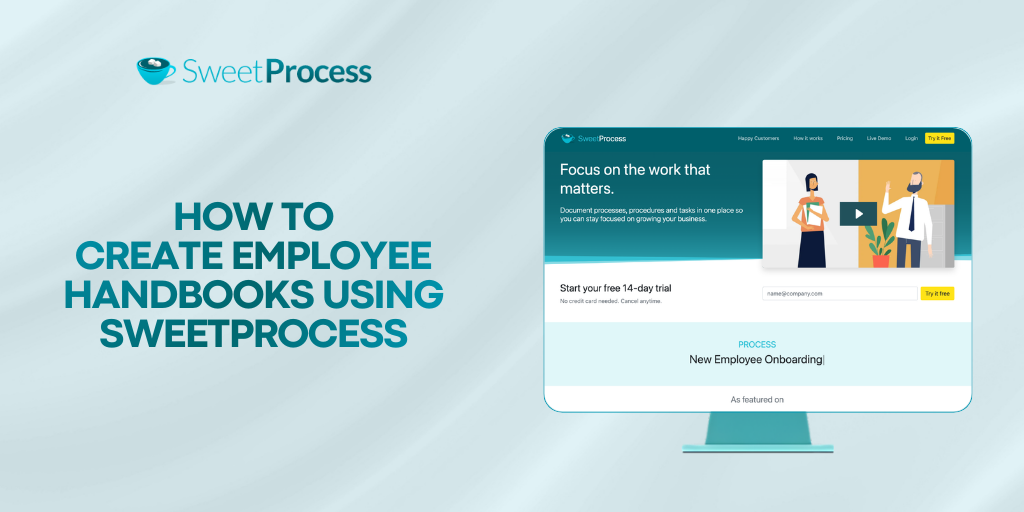
Your employee handbook changes as policies or your industry evolve. If you have a static Word or PDF template, it becomes obsolete with these changes. To keep up with every shift, you need to invest in employee handbook software like SweetProcess that transforms your handbooks into a structured, digital policy system.
With SweetProcess, procedures, policies, and other documentation live in one place, making it easy to update and manage your employee handbook as your business grows. With the SweetAI employee handbook builder, your team leads can create documentation and collaborate to ensure policies are up to date without version control issues.
Here’s how to use SweetProcess to build an employee handbook that actually works.
Manually and Automatically Create Procedures Using SweetProcess
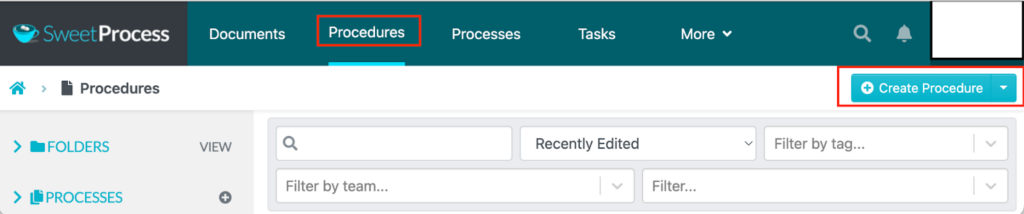
SweetProcess lets you build procedures from scratch using a simple, guided structure that keeps everything consistent and organized.
To create your SOPs manually, you’ll get a blank template and then add your title and description.
You can also add images, insert videos, or embed images that are related to the procedure.
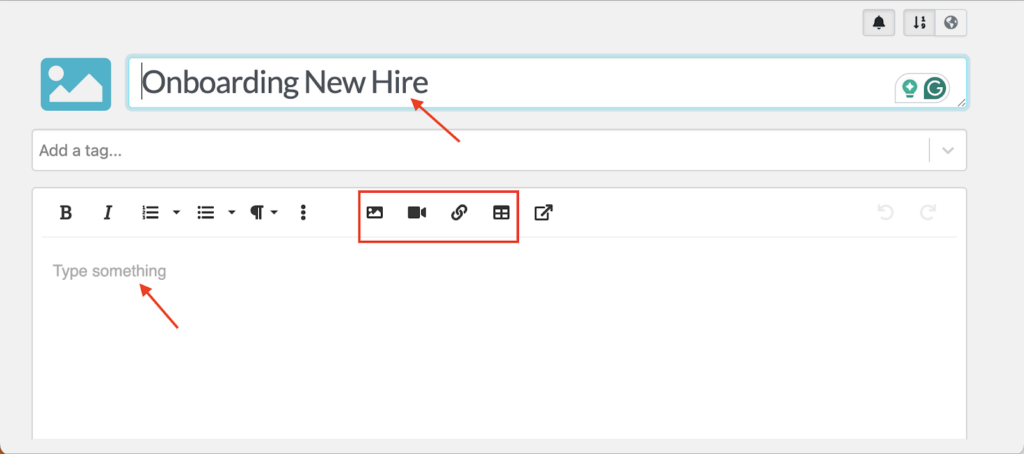
SweetProcess ensures that your steps are easy for employees to follow, especially for onboarding and training.
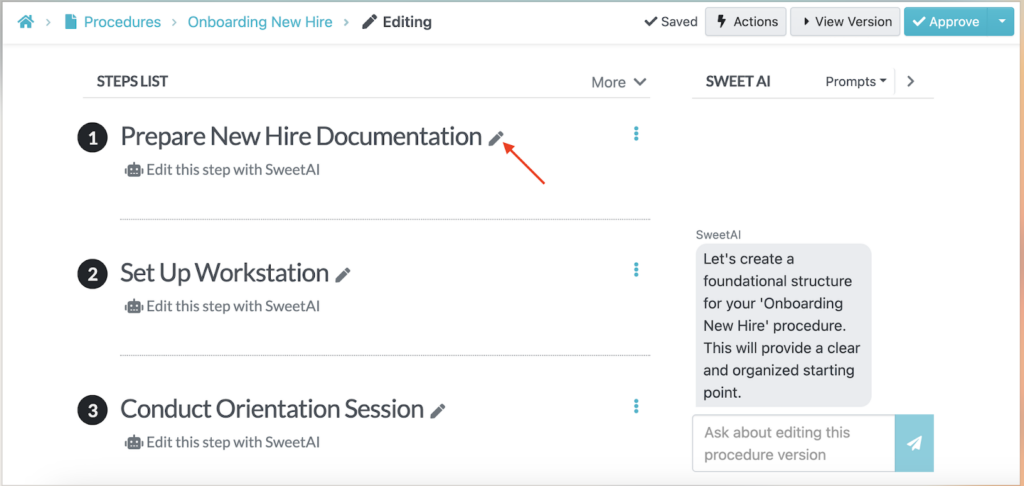
Alternatively, you can use the AI assistant, SweetAI, to document your procedures.
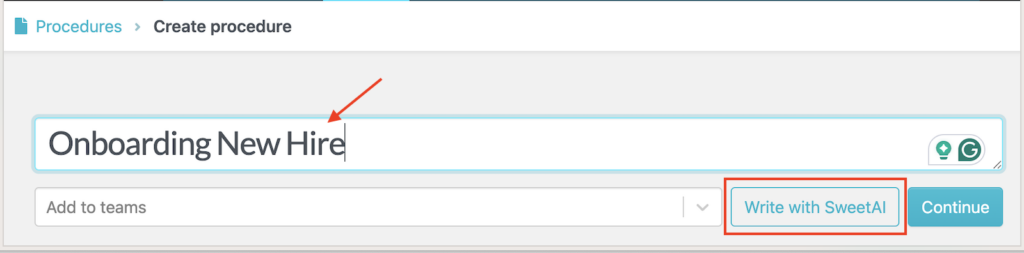
This automated process drafts a procedure within seconds. With this feature, you can standardize your SOPs across the organization and save the time and effort it takes to draft documents from scratch.
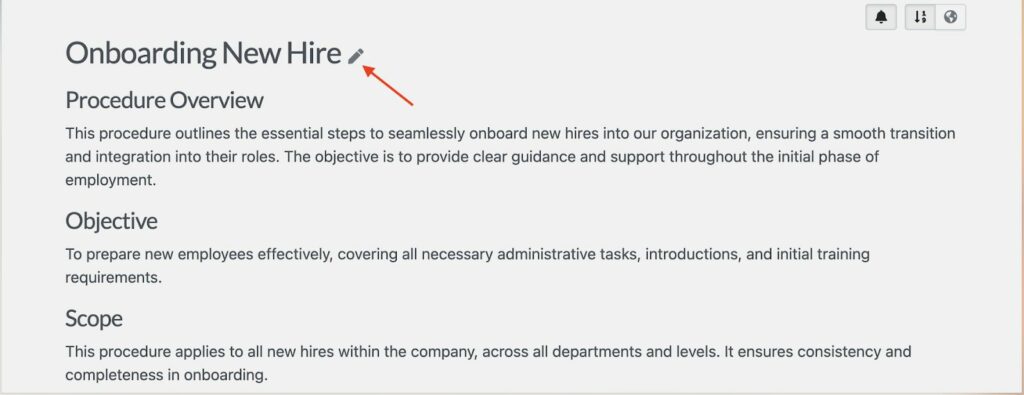
Additionally, this employee handbook generator outlines all the steps you need to add to your employee handbook.
Manually and Automatically Create Policies Using SweetProcess
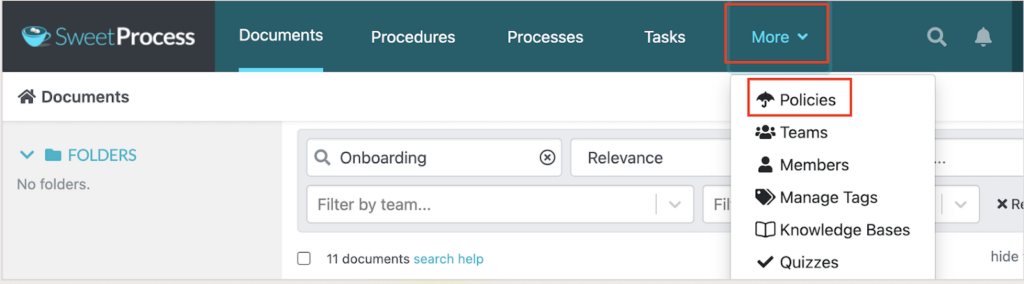
Policies form the backbone of your employee handbook. SweetProcess provides a structured system for creating and managing them. You can manually build policies from the “Policy” menu on the dashboard.
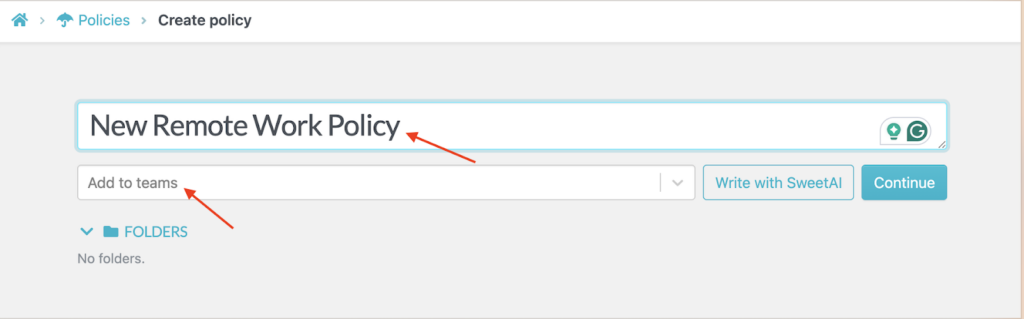
You can then add a policy title and assign it to the right teams on the same platform.
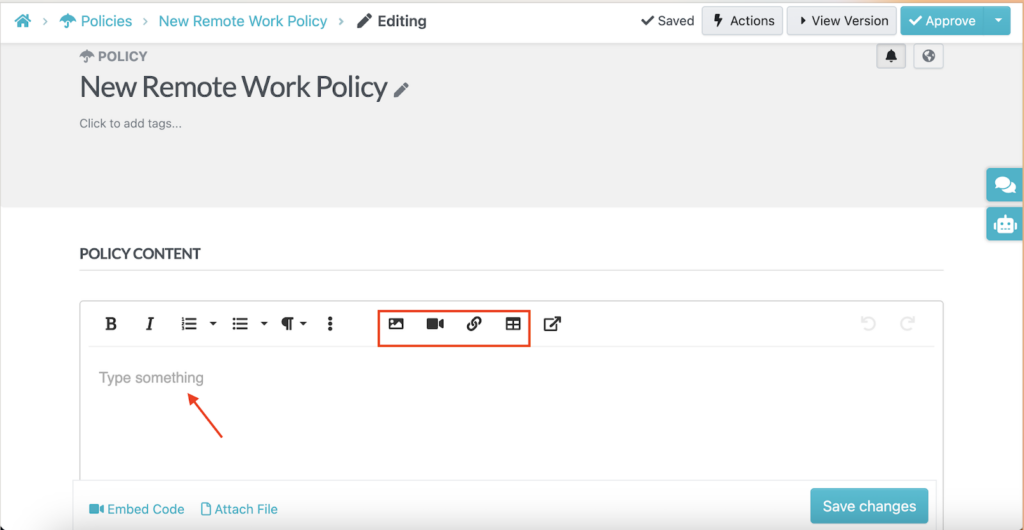
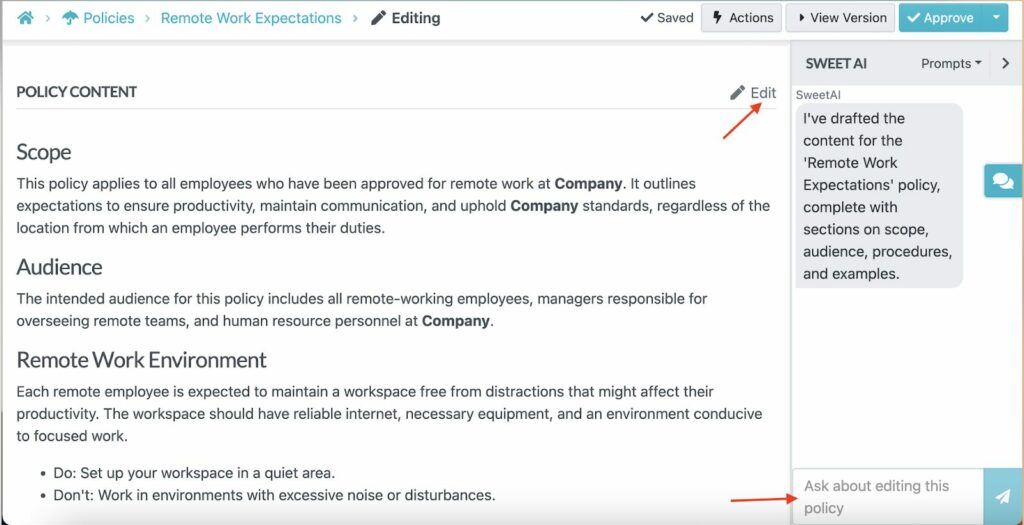
SweetProcess has a built-in editor that makes it easy to add file attachments, videos, links, and images. These formatting features come in handy as you customize your policy to align with your company’s goals.
Alternatively, you can draft your policy using AI. You can generate training materials and develop standardized policies for employees to follow. Once you add a title, SweetAI will draft the policy document.

To add any more sections or refine the draft to meet your expectations, you can prompt the AI document generator to make these changes.
Invite Teams and Collaborate on Policies and Procedures
Your employee handbook shouldn’t be created in isolation by one person. To build the best handbook, get input from the people who actually do the work. For instance, if you’re creating an onboarding handbook, you can have the HR director draft the benefits section while the IT director writes the data security policies.
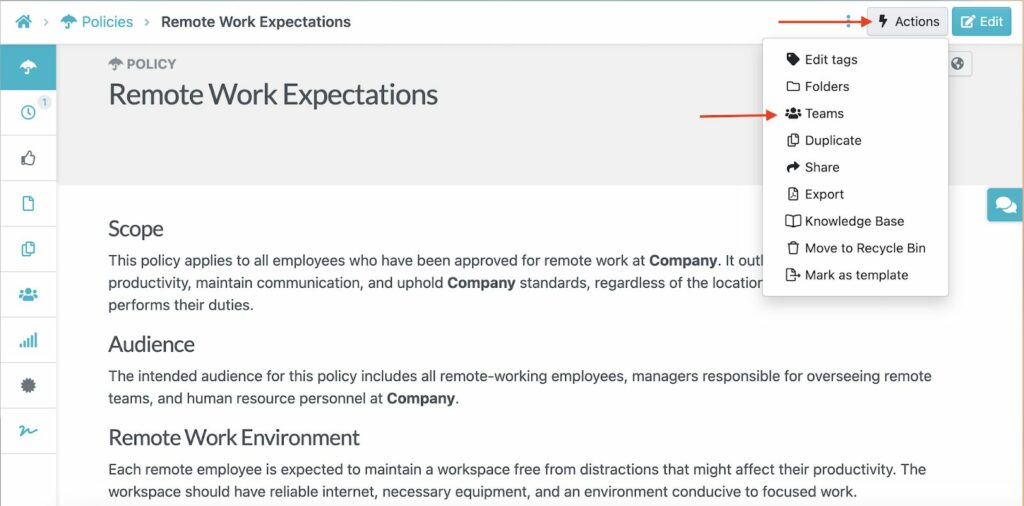
SweetProcess makes collaboration simple. Once you draft a policy, you can assign it to the respective teammates.
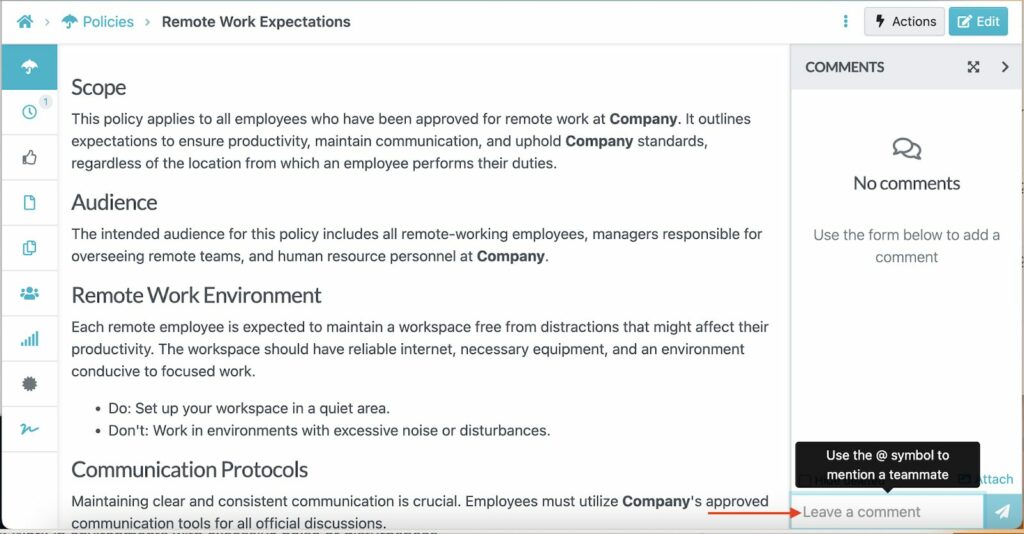
In addition to co-authoring, you can leave comments on specific sections or tag teammates to review policies.
Frequently Review Handbook Policies and Procedures
Most employee handbooks become obsolete after several years. SweetProcess makes it easy to review and update your handbook regularly without losing control of versions or creating confusion.
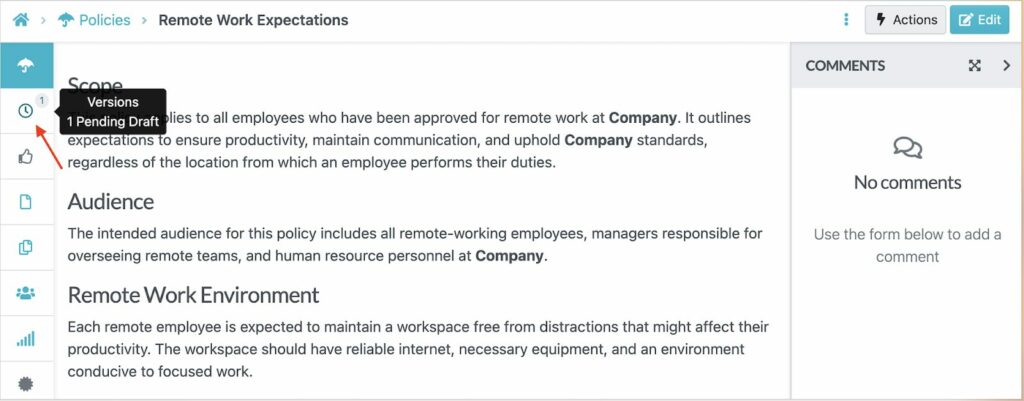
When a team member makes a change to a policy document, you can use the “Version Control” feature to view which information was added and who made the changes. You can also revert to an older version when necessary.
Furthermore, when updates are made or tasks are assigned, users receive a notification. This feature enables you to confirm acknowledgment. With these capabilities, SweetProcess helps small businesses in meeting compliance requirements during audits.
Export and Print Employee Handbooks
Even in a digital-first system, sometimes you still need physical copies. Your new hires might need a printed handbook for reference, or your compliance officer needs a PDF version for records.
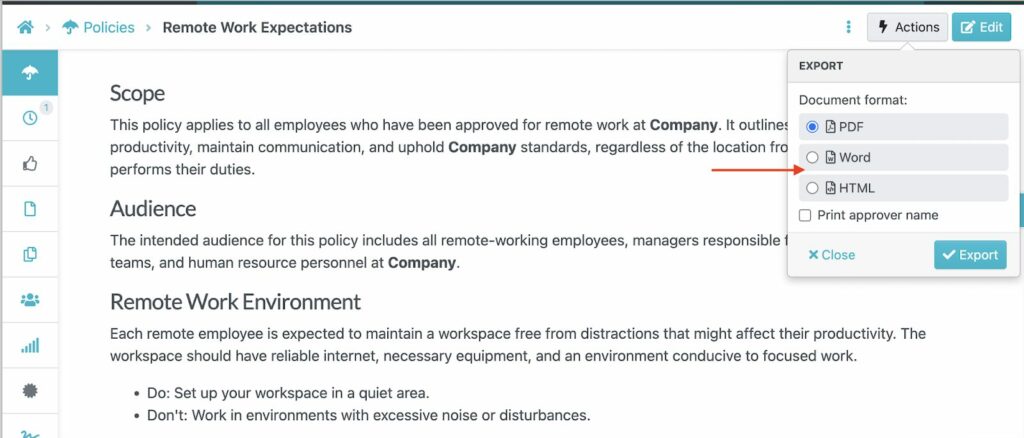
SweetProcess allows you to export and print your employee handbook when needed.
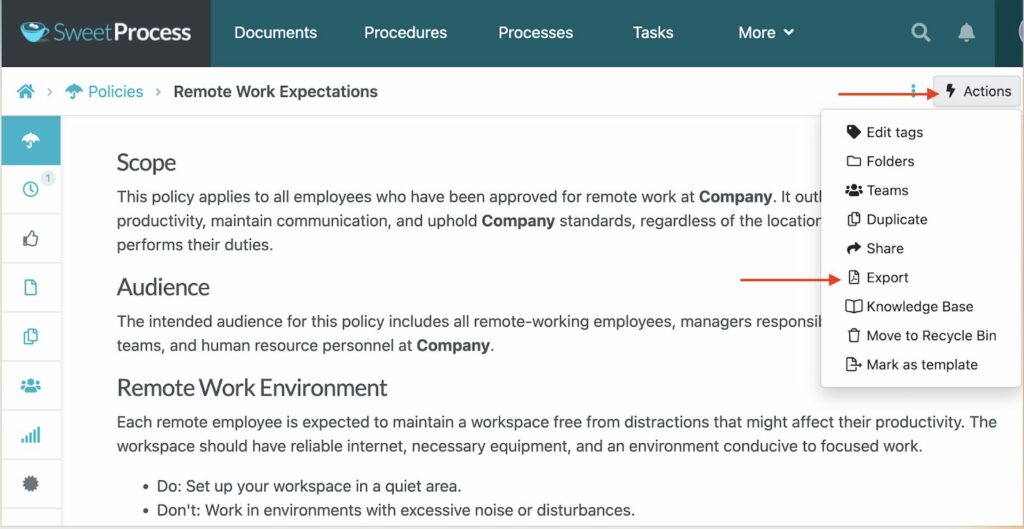
You can export your document as a Word document, PDF, or HTML file.
One of the companies that has used SweetProcess to streamline its handbook documentation process is Sigray. This precision X-ray technology and engineering firm needed tight operational alignment across technical teams. However, most of their procedures were scattered in binders, Google Docs, and individual files, making it hard for new hires and existing employees to find the right information when they needed it.
Important policies and procedures weren’t documented in one place, leading to inconsistent execution, confusion, and a heavy onboarding burden for managers.
When the director of operations, Nam Kim, discovered SweetProcess, the company finally had a system that allowed them to pull all their processes and policies into a single, searchable, structured library. Thanks to SweetProcess, the company now has:
- A centralized Repository: All policies and procedures live in one place, eliminating confusion over versions or locations.
- Improved Onboarding: New team members can access standardized documentation from day one, dramatically reducing the time managers spend training.
- Consistent Execution: Technicians and staff follow the same procedures, improving quality and reducing operational inconsistencies.
- Accessible Knowledge: Team members can now search and navigate documentation, which increases compliance and reduces repetitive questions.
Another beneficiary of SweetProcess is a strategic consulting firm 2050 Partners. As the company grew rapidly, the co-founder, Ted Pope, realized that the documented knowledge wasn’t serving the company. When the team was leaner, most of the information was stored in Word documents and scattered spreadsheets, making onboarding challenging.
Ted brought in a new team member to implement SweetProcess into their operations. The results were instant. Here’s what the organization got from this new system:
- Scalable Documentation: As the company doubled in size, its policies and procedures scaled as well, without any loss of clarity.
- Reduced Training Time: Instead of repeatedly explaining procedures, leaders could point new team members to documented policies.
- Organized Policies: SweetProcess helped them turn scattered documentation into a professional, handbook-style system that staff can navigate easily.
- Improved Consistency: Standardized procedures and policies enabled team members to operate with the same expectations, reducing errors.
Benefits of Employee Handbook Templates
As you draft an employee handbook from scratch, you might be overwhelmed by questions such as, “What sections do I need?”, “What’s the right tone?”, “Should it be formal or conversational?”, “Ten pages or fifty?”.
Employee handbook templates eliminate this paralysis. They help you move faster by providing a structured framework.
As the founder and CEO of Contactr AI, Yaminah C. shared on LinkedIn, many founders wait until they’re onboarding their first hire to create a handbook. But writing down how decisions are made and how work actually happens, even in a simple format, turns tribal knowledge into a clear blueprint new hires can rely on as the company grows.
Here are key benefits:
Easy Customization
A good employee handbook template comes pre-loaded with all the essential sections, organized in a logical flow. Instead of drafting all details from scratch, you just need to add in your company name, insert your specific PTO rates, adjust the remote work policy to match what you actually allow, and update the benefits section with your health insurance details.
You can remove sections that don’t apply, for instance, if you don’t offer equity. Additionally, you can adjust the tone to match your culture; a creative agency’s handbook will sound different from a law firm’s. This flexibility is especially helpful for small businesses that want to create a handbook faster and keep it unique.
According to HR executive Scott Baker, copying an employee handbook verbatim from the Internet and not tailoring it rarely works because it doesn’t reflect how your team actually operates. Templates are most effective when they’re treated as a starting point and then customized to mirror real workflows and decisions.
Ensures Legal Compliance
Employment law varies by state and country. To ensure you cover all labor laws, workplace safety guidelines, employee rights, and payment regulations, you can use a template that includes these critical sections. While these templates don’t replace legal advice, they create a good foundation to ensure that you don’t accidentally leave out key details.
For instance, some will include policies on overtime calculation, break periods, final paycheck timing, and other areas where businesses commonly make mistakes. This way, you can add the specific details and reduce the risk of violations and potential lawsuits from your employees. Templates make it easier to review your handbook with a legal professional and update policies as regulations change.
Reduces Inconsistencies
When a team member wants to work remotely, is there a policy that outlines the guidelines? A template provides consistency by ensuring that all employees follow the same rules and expectations. For instance, you can document which employees are eligible for remote work and what the approval process entails to prevent confusion.
Consistency improves your operational efficiency and employee productivity. When you use the same language, you can maintain a consistent standard for everyone and ensure fairness, which is great for your company’s culture. Additionally, managers and team leaders can onboard new hires more quickly because there’s a uniform document to follow.
Provides Legal Protection
An employee handbook protects both employees and your business. It creates a documented record of your policies and employee acknowledgment. When you clearly communicate expectations such as attendance requirements, performance standards, disciplinary procedures, grounds for termination, and have employees sign an acknowledgment form, you have evidence that they were informed.
This record is critical during disputes over discrimination, wrongful termination, harassment, wage and hour violations, or benefits eligibility. A template ensures that your handbook includes these protective elements from the start rather than reacting after a problem occurs.
How To Customize an Employee Handbook Template for Your Company
Downloading a template is the easy part. The real value comes from making it yours. Customizing the employee handbook template involves adapting every section to match your operations. Here’s a simple guide that you can follow:
Tailor for Company Size, Industry, and Culture
A five-person startup doesn’t need the same handbook as a 200-employee organization. Your template should reflect this situation. A smaller business may require a lean handbook that focuses on essentials such as work hours, PTO, basic conduct expectations, and legal requirements.
Additionally, a handbook for a healthcare practice will differ from a restaurant handbook. Each of these must comply with the industry’s guidelines and regulations. The company’s culture also matters. A creative agency may use conversational language and flexible policies, while a financial or legal firm may adopt a more formal tone. You need to adjust the wording and expectations so the handbook reads as if it came from your company.
As you customize your handbook, it’s also helpful to align it with related documentation, such as training manuals, so employees understand how work is done in your industry.
Align With Legal Requirements
Once you have the templates, you need to keep them accurate and legally compliant. Employment laws vary by country and industry, so your handbook should reflect the regulations that apply specifically to your business. For instance, if your small business handles credit card data, you need to comply with PCI compliance policies.
A generic template won’t have this information. You must customize it and update the sections on wages, overtime, leave, workplace safety, and employee rights to match local laws. Doing this early reduces risk and ensures your handbook supports compliance.
Get Management and Legal Input Before Rollout
Before sharing your handbook with employees, involve the people responsible for enforcing it. Managers can help validate whether policies are realistic and aligned with how work actually happens day-to-day. For instance, the finance manager can identify any issues with expenses and reimbursement timelines.
Legal input is equally important. A legal review helps catch gaps and ambiguous language that could cause issues later. They can confirm that the document meets current standards and complies with federal and state law. This collaborative approach ensures your handbook is practical before it’s rolled out to your team.
Create and Manage Your Employee Handbooks in One Place Using SweetProcess
An employee handbook shouldn’t be a document you create once and forget about. It’s a living system that needs to evolve with your business and be updated when policies change. The templates and examples in this article give you a strong starting point. But the real challenge is keeping the handbook current, ensuring your team can find it, tracking who has read updates, and maintaining consistency as your company grows.
Static Word documents and PDFs become outdated quickly and are harder to manage and share. But with SweetProcess, you can create and manage policies and procedures in one place. You can use the employee handbook generator to create an editable template within seconds. Additionally, you have version control and collaboration features to ensure everyone is on the same page.
Ready to build an employee handbook that evolves with your business? SweetProcess offers a reliable platform to help you consistently create and update your policies. Start your free 14-day trial of SweetProcess today—no credit card required.