Last Updated on November 14, 2026 by Owen McGab Enaohwo
TL;DR: SweetProcess is a strong fit when you want procedures, policies, and recurring tasks managed together. Flowster provides template-led workflows, scheduling, and a marketplace, with capabilities and limits that vary by plan.
Choose based on the processes your team needs to repeat, the people who need access, and the full cost of the required setup.
Start your free 14-day trial of SweetProcess.
No credit card needed. Cancel anytime.
You already know which work your team needs to repeat. New employees need training, client projects follow similar steps, and routine tasks must happen on schedule.
The challenge is making sure people can find the right instructions, understand their responsibilities, complete each step, and follow the latest version of the process.
Flowster and SweetProcess both let you write instructions, assign work, and repeat it on a schedule. They start in different places.
Flowster starts with templates that you run as workflows. SweetProcess connects documented procedures and policies with approvals, version history, recurring tasks, and knowledge bases.
Flowster also offers a marketplace where you can find SOP templates, alongside tools for creating your own.
Use the feature comparison, recurring-work example, and team-cost scenarios below to decide which approach fits your processes.
Key Takeaways
- SweetProcess connects documentation and execution. You can document procedures, create policies, assign recurring tasks, manage approvals, track version history, and maintain public or private knowledge bases on the same account.
- Flowster uses a template-led workflow model. Its marketplace, scheduled workflows, dependent workflows, and conditional logic can help you organize repeatable work.
- Both tools support recurring tasks, but SweetProcess schedules procedure-based tasks, while Flowster schedules workflows created from templates.
- Flowster prices its software by tier, with included allowances for two, five, or 10 users. SweetProcess includes all features in its standard and Small Team billing options, with additional-user charges when your team exceeds the included allowance.
- Test both tools on one recurring workflow or SOP. Check whether the instructions, assignments, and recurring schedule fit your team. To test SweetProcess, sign up for a 14-day free trial here!
Table of Contents
Flowster vs SweetProcess at a Glance
One Recurring Workflow Compared
Flowster vs. SweetProcess Pricing
Why Should You Use SweetProcess?
Migration and Evaluation Checklist
Flowster vs SweetProcess: Which One Should You Choose?
Flowster vs SweetProcess at a Glance
The right tool should help your team do more than store instructions. It should help people find the correct version, understand who owns the work, complete assigned tasks, and repeat the process when needed.
At SweetProcess, we created this comparison. Our platform fits teams that want maintained procedures, policies, and trackable recurring tasks together. Flowster may fit better when marketplace templates and dependent workflows are priorities.
Here is how they compare.
|
Comparison point |
Flowster |
|
|---|---|---|
|
Main approach |
Maintained procedures, policies, and processes you write, approve, and keep current. |
Reusable SOP templates, built by you or from a marketplace, that you run as workflows. |
|
Creating SOPs |
Write step-by-step procedures, draft content with SweetAI, or capture on-screen steps with the Chrome extension |
Create templates from scratch, use marketplace templates, or generate templates with the ChatGPT integration |
|
Recurring work |
Assign procedures as recurring tasks |
Schedule recurring workflows |
|
Task assignment |
Assign procedure-based tasks with owners, due dates, and recurrence |
Create workflows from templates and assign them to team members |
|
Conditional logic |
Supports adding decision points in your SOP |
Conditional logic is available on Growth and Enterprise plans |
|
Integration |
Integrates with 1,000+ apps via Zapier |
Integrately and Zapier integrations available on the Growth and Enterprise plans |
|
Guest access |
Guests complete assigned tasks through unique links; they do not have regular account or dashboard access |
Free guests on all plans; access is limited to assigned workflows |
|
Pricing |
$99/month or $990/year for up to 10 users; Small Team is $495/year for up to five, plus additional-user charges |
Startup starts at $24/month billed annually for up to two users; higher tiers increase user and template allowances |
|
Free trial |
14 days, no credit card required |
Seven days |
Pricing and comparison details checked November 13, 2026.
Where SweetProcess Fits
SweetProcess is an SOP tool that helps you map processes, document procedures, and implement policies. SweetProcess can be used for employee onboarding, task automation, process mapping, and knowledge base creation.
It can function as the single source of truth for your business, where all the important documents and details are hosted.
SweetProcess gives teams a shared place to maintain operating instructions. You can write procedures, keep them current, assign them as tasks, and see when work is done without switching between separate documentation and task tools.
Features of SweetProcess
Document Procedures and Policies Step-by-Step
A procedure provides step-by-step instructions for completing a task. It can include individual steps, descriptions, and supporting material such as images, videos, forms, and links to related procedures.
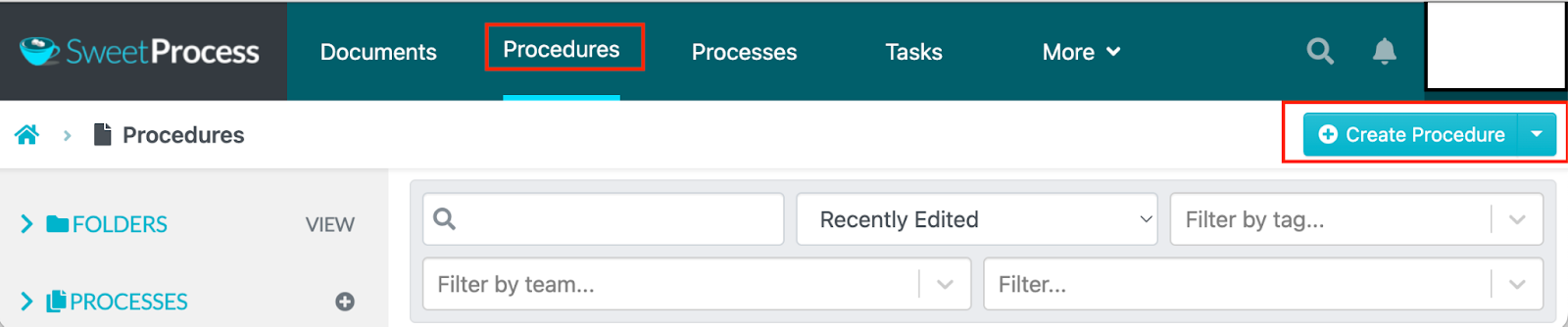
For example, a client-onboarding procedure might explain how to confirm a signed agreement, create the client’s account, collect required information, schedule the kickoff meeting, and send a welcome email.
You can assign the work to the relevant team and use SweetAI to help draft the instructions.
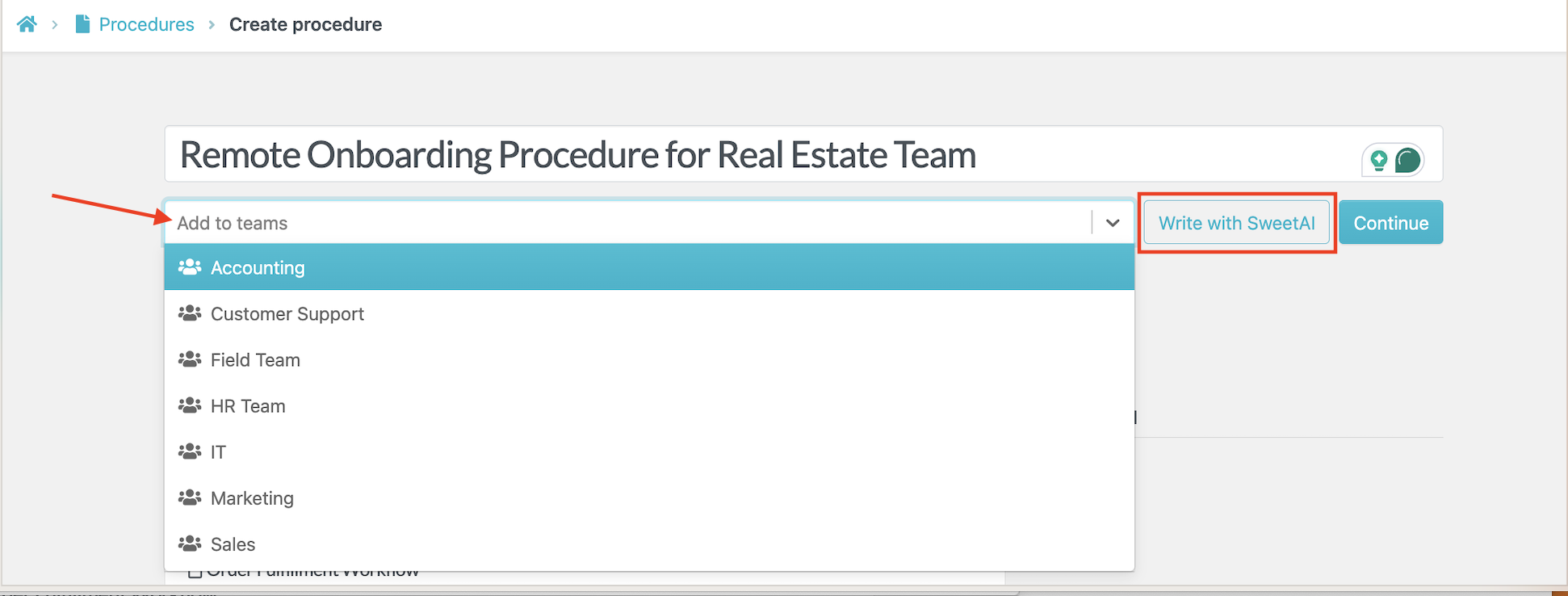
You can then use the initial draft as a starting point, review it, correct it, add the details your team needs, and route it through the appropriate approval process.
AI-generated instructions should not be treated as approved operating procedures without review. The person who understands the work should confirm that the steps are accurate, complete, and appropriate for your business.
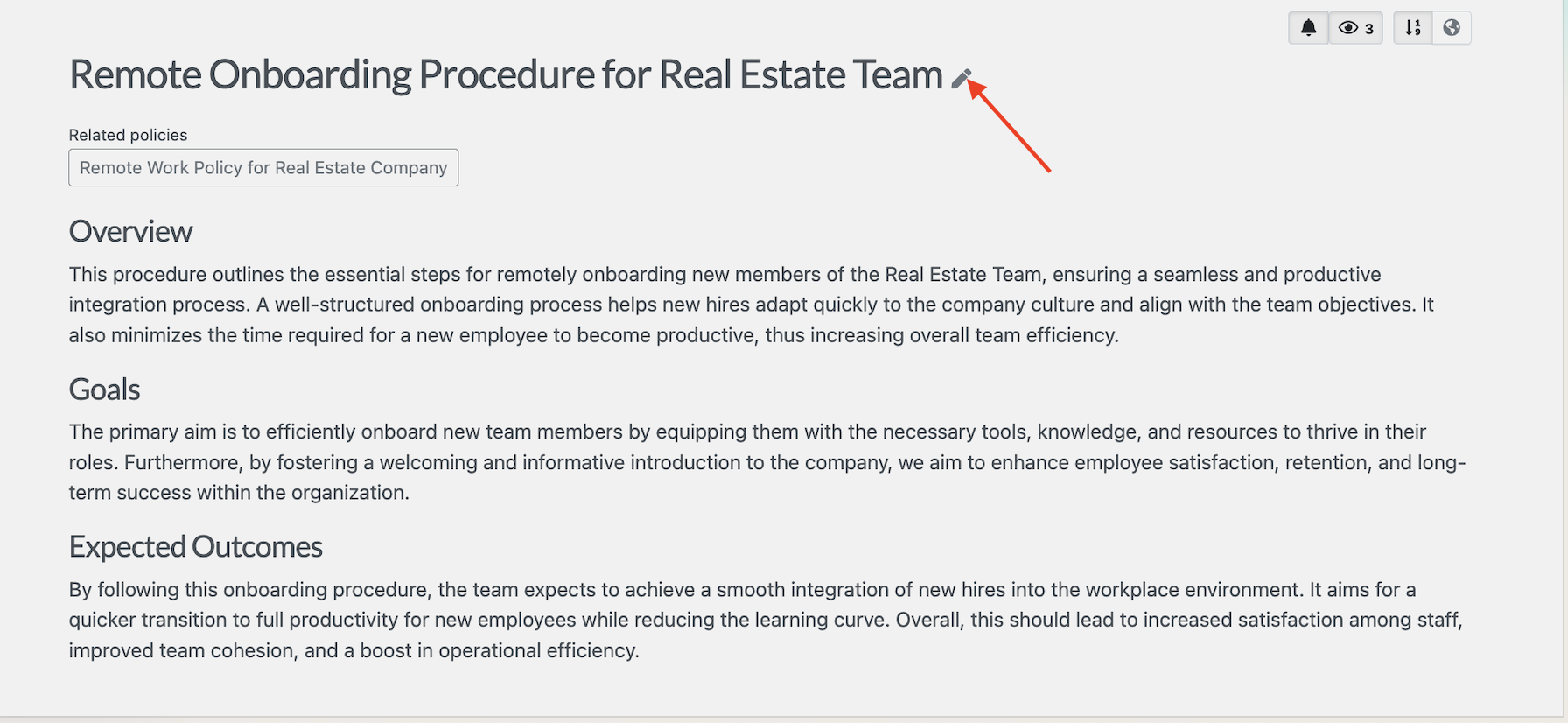
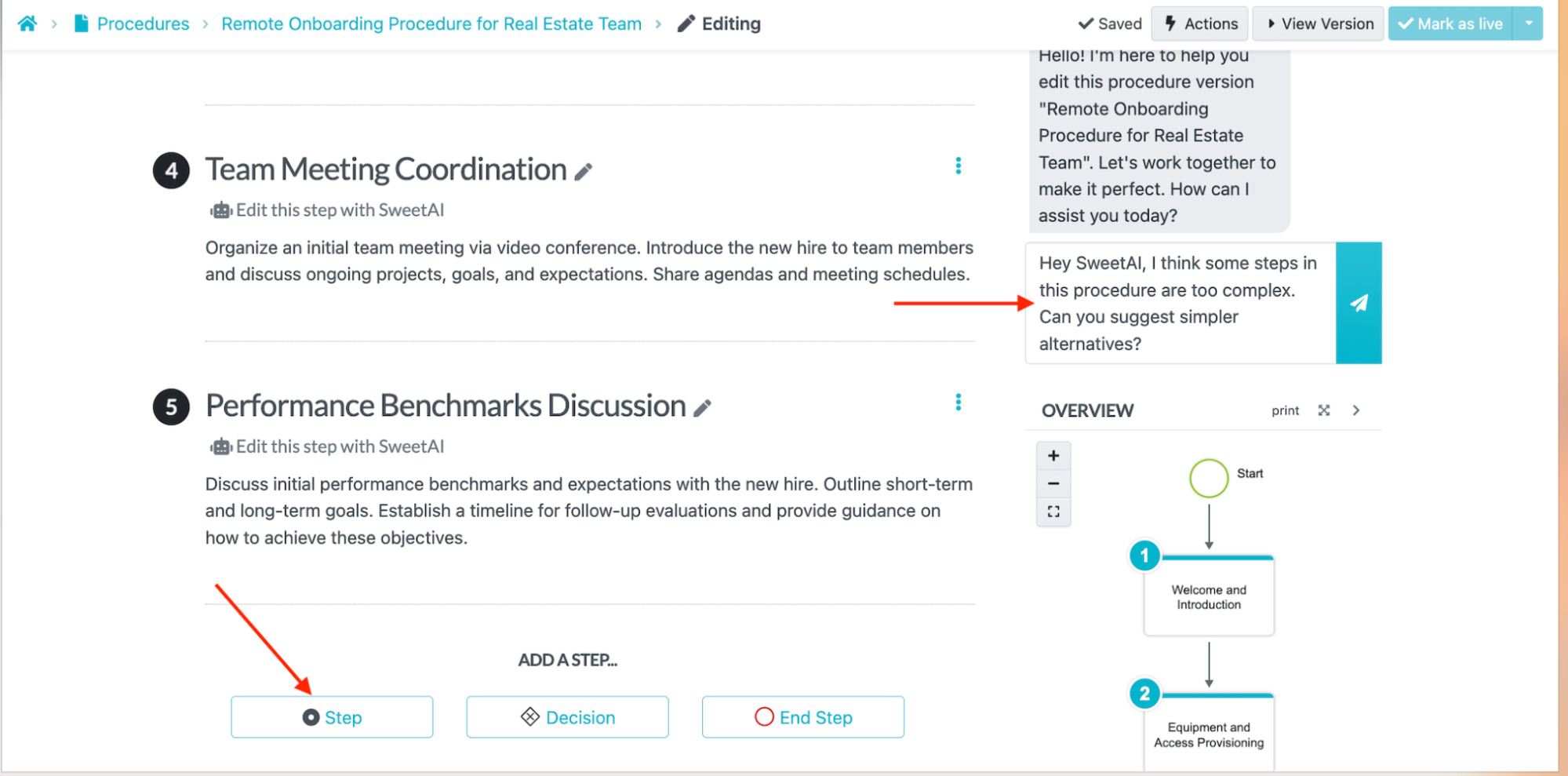
Each step can give the assigned employee the information needed to continue without depending entirely on a manager’s memory. You can add more steps and edit with SweetAI depending on your work.
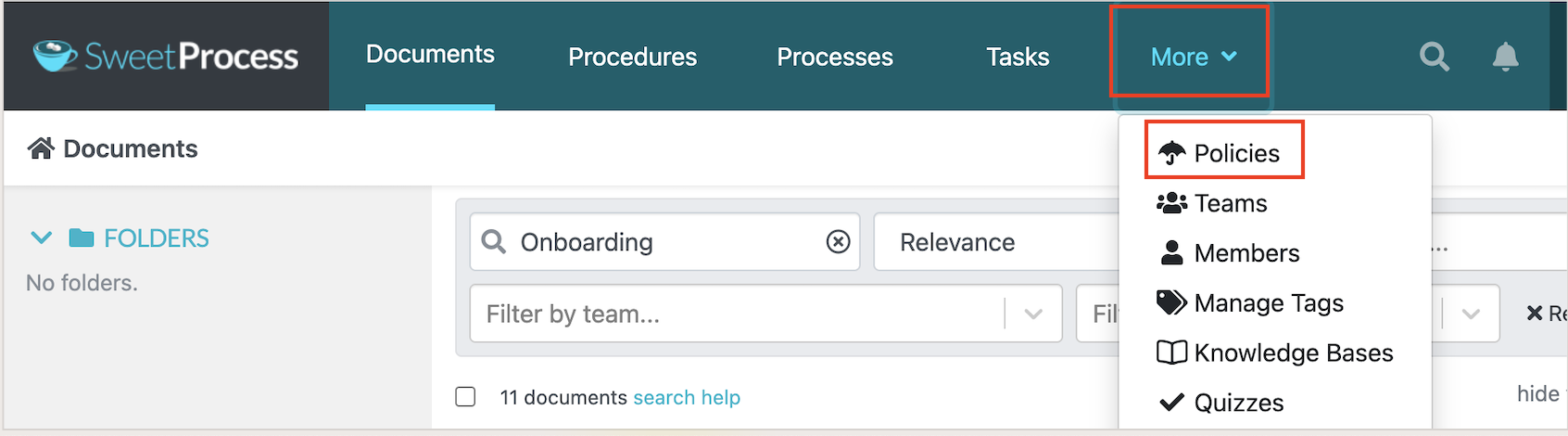
You can also follow a similar process for documenting and managing policies.
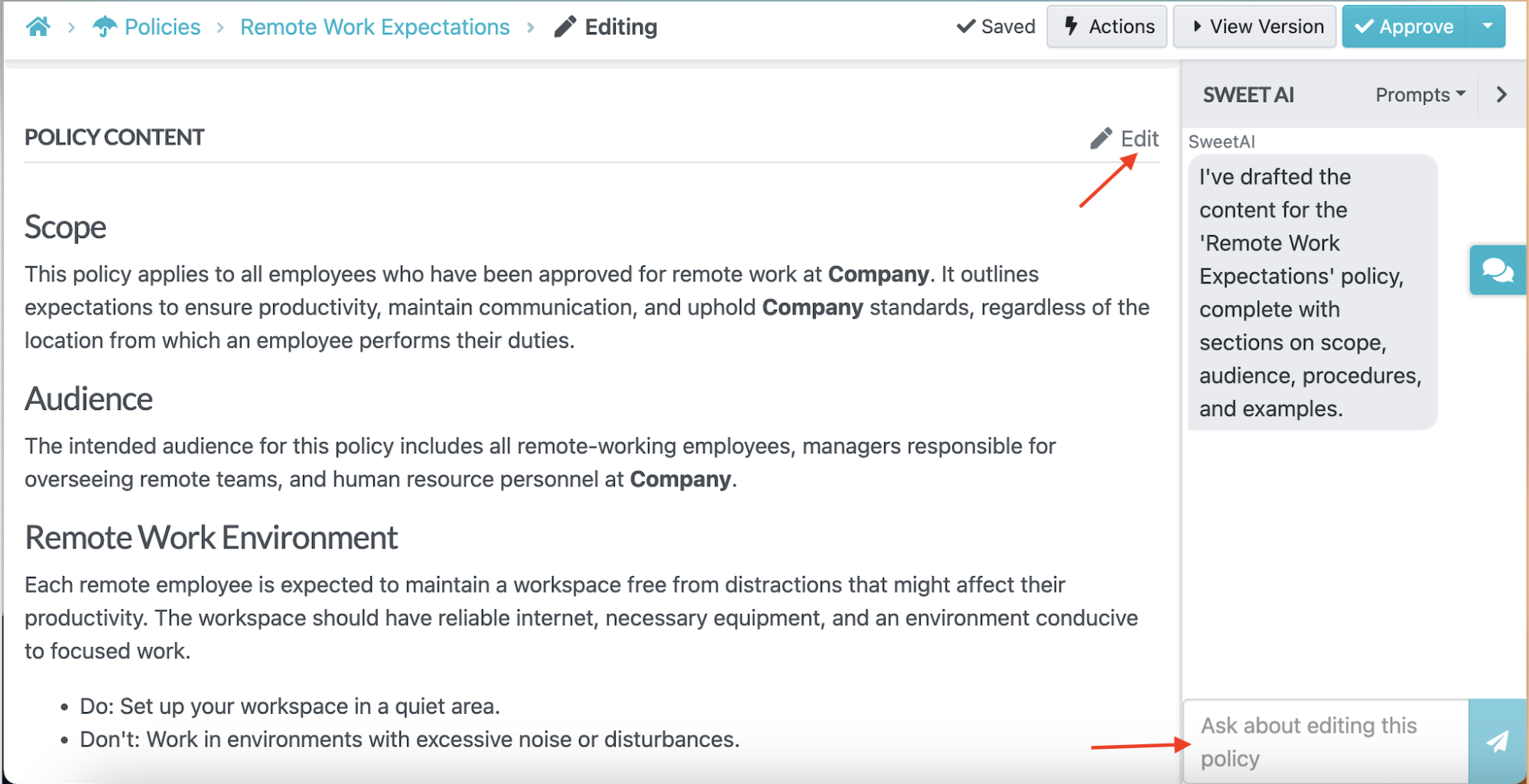
SweetAI can generate an initial policy draft for you to review.

You can add tables, images, and links to make your policy more comprehensive.
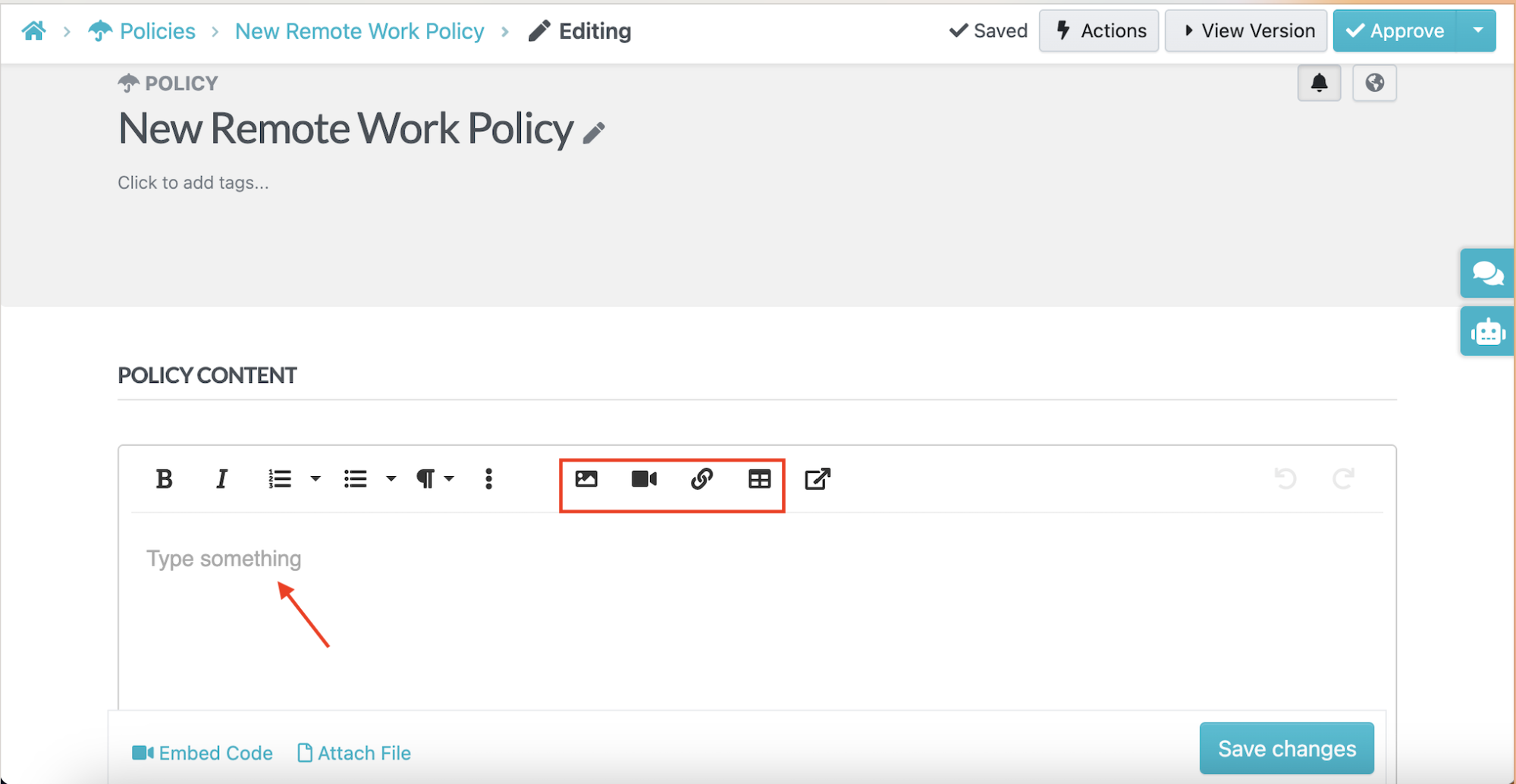
This draft may include generic details that don’t represent your organization. You can edit it manually or prompt SweetAI to refine it to fit the way you work.
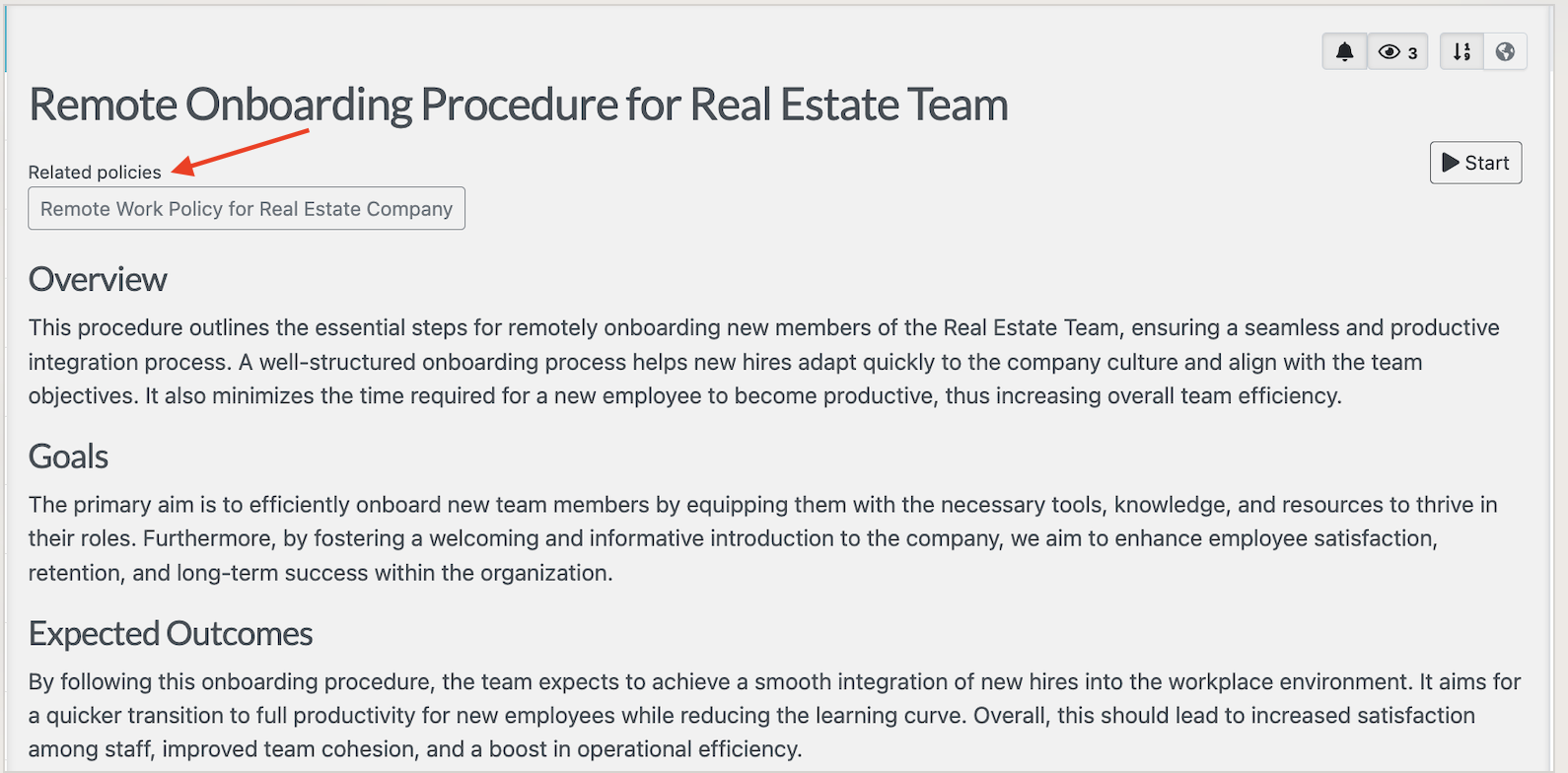
SweetProcess lets you create policies and link them to related procedures. This can help employees connect the instructions for a task with the rules they must follow while completing it.
This way, your team can view all the related documentation they need to access from the same account.
Assign SOPs as Tasks
Writing a procedure is only one part of managing recurring work. Someone must be responsible for carrying it out.
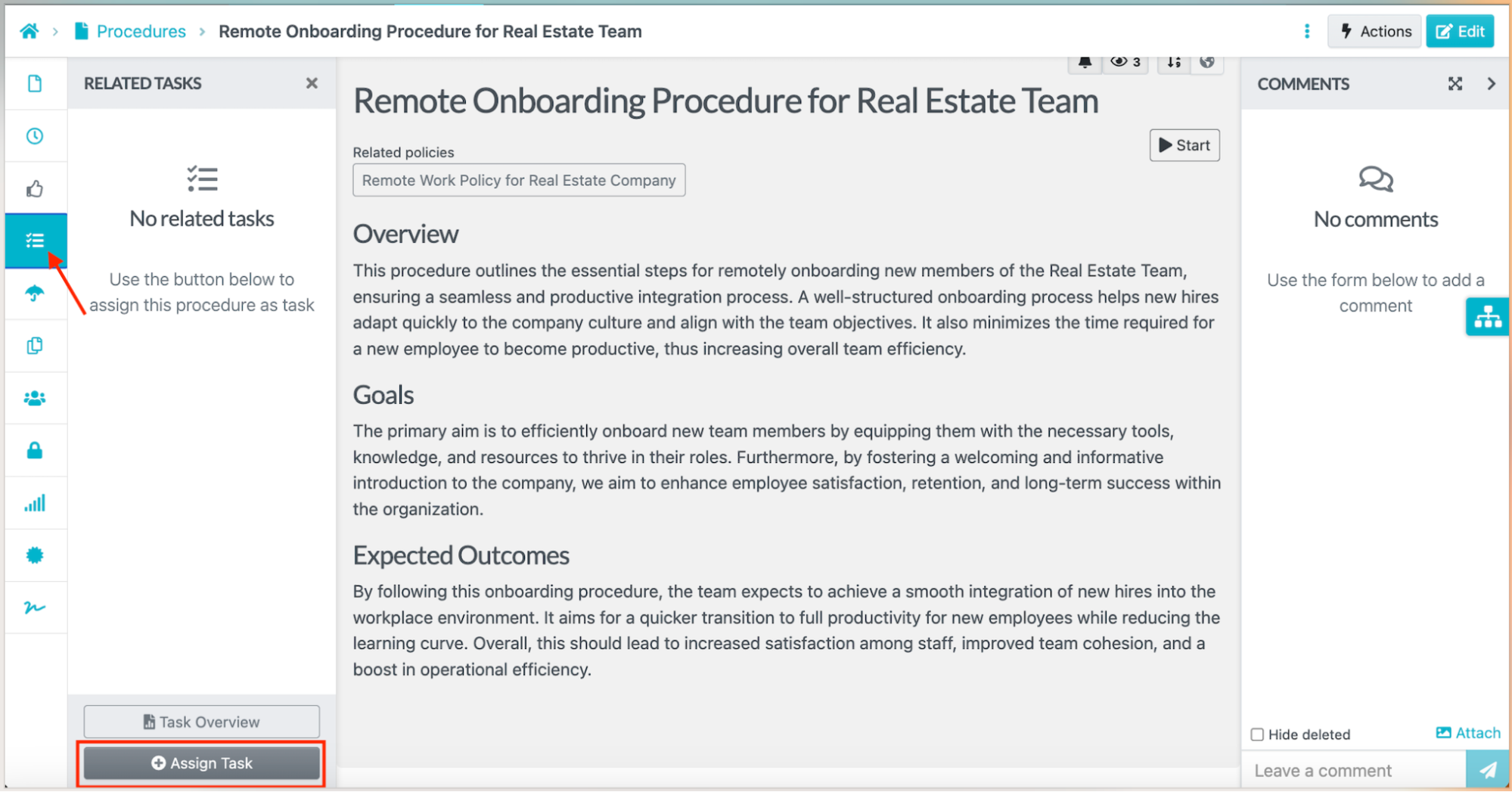
With SweetProcess, you can assign a procedure as a task to keep the team accountable.
For easier tracking, you can add the employee’s name or select the entire team if the work is meant for an entire department.
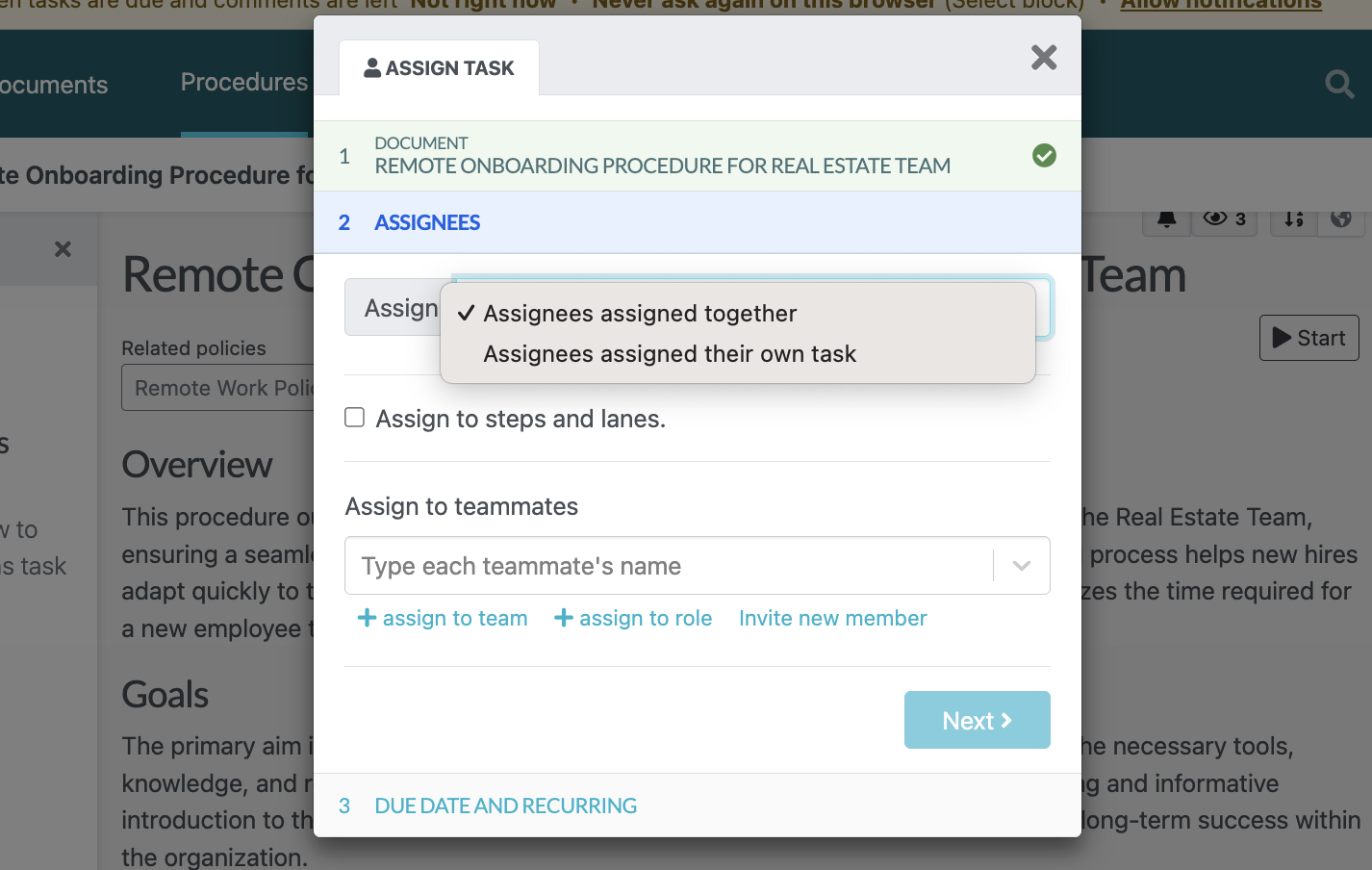
Depending on the task, you can also set a recurrence frequency, such as a weekly review, a monthly report, or a repeated step in an onboarding process.
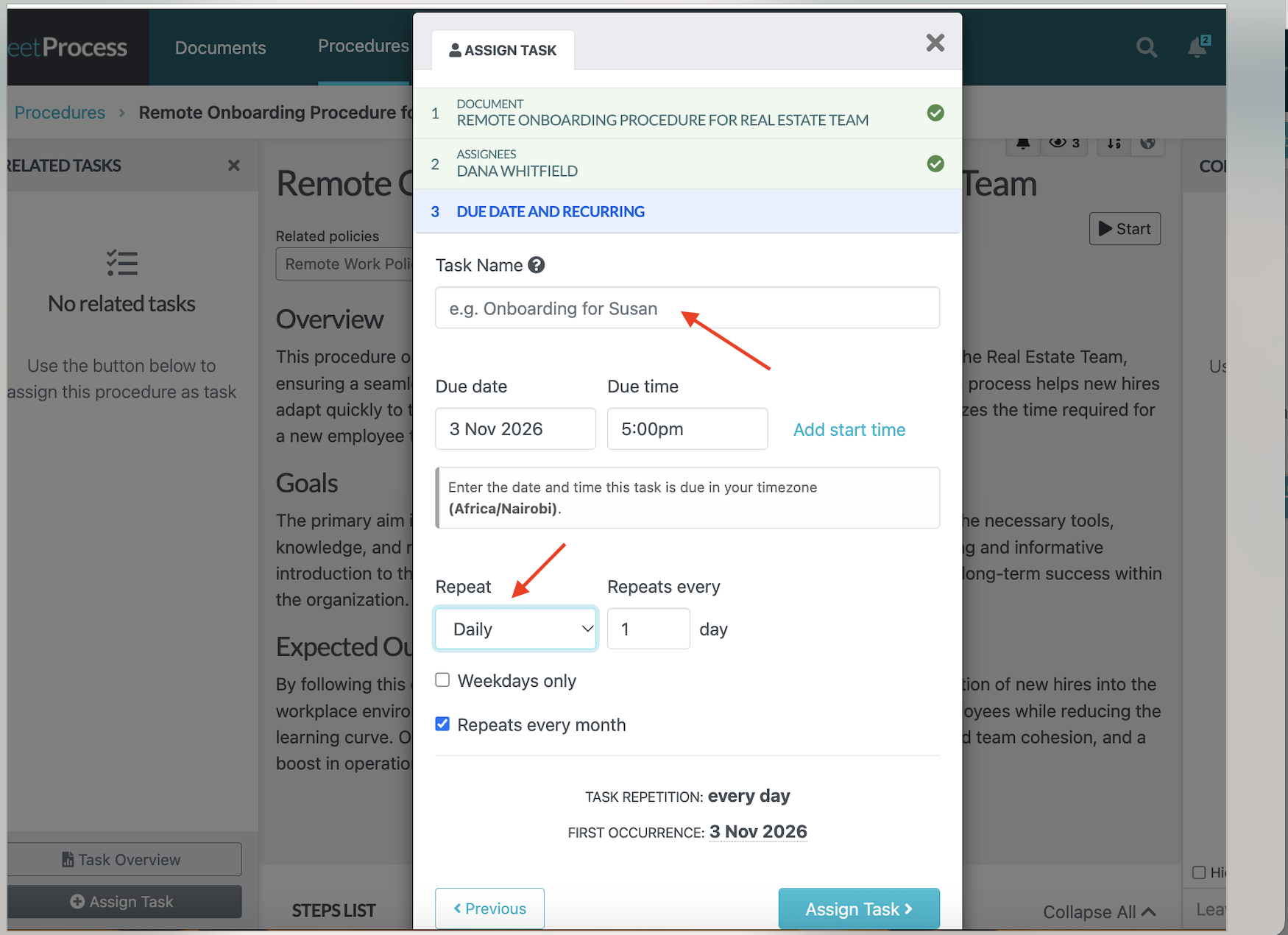
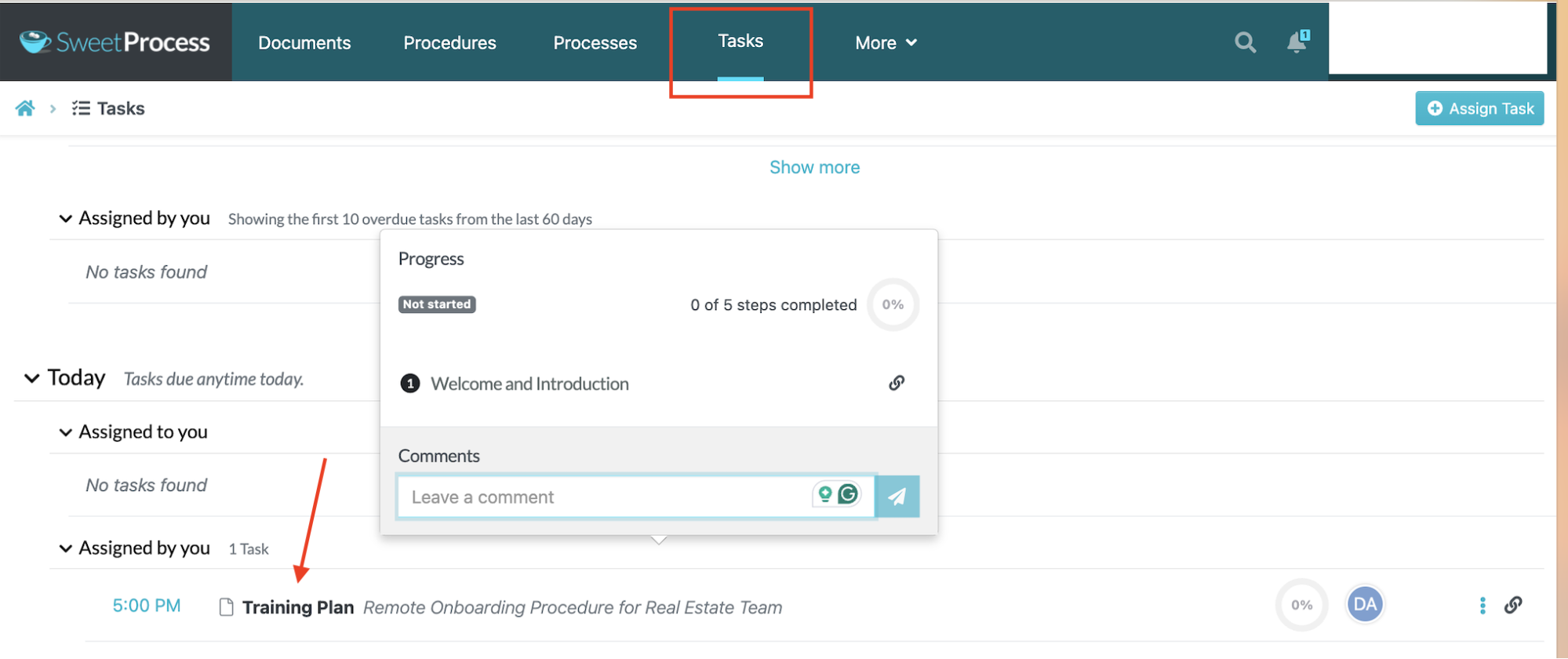
Your assignees will get a notification once the task is assigned or overdue. As a manager, you can view the progress from the “Tasks” menu, which shows what’s pending or completed.
Review and Maintain Versions
Procedures often change as a business adds services, updates tools, or improves the way work is done. An old set of instructions can cause confusion when employees continue to follow it after the process has changed.
SweetProcess provides version history for all your procedures, processes, and policies. You can review earlier versions and inspect changes, which gives you a record of how the documentation has developed.
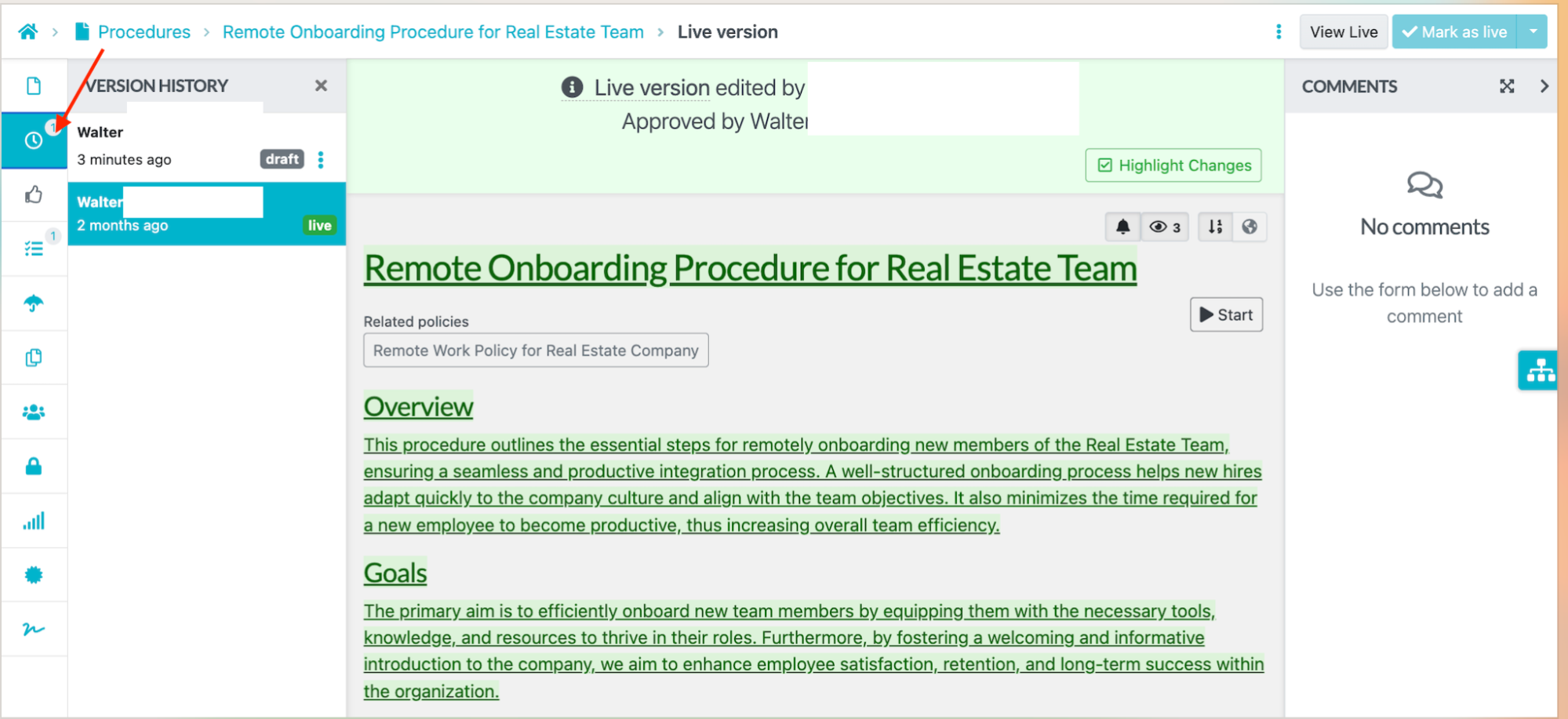
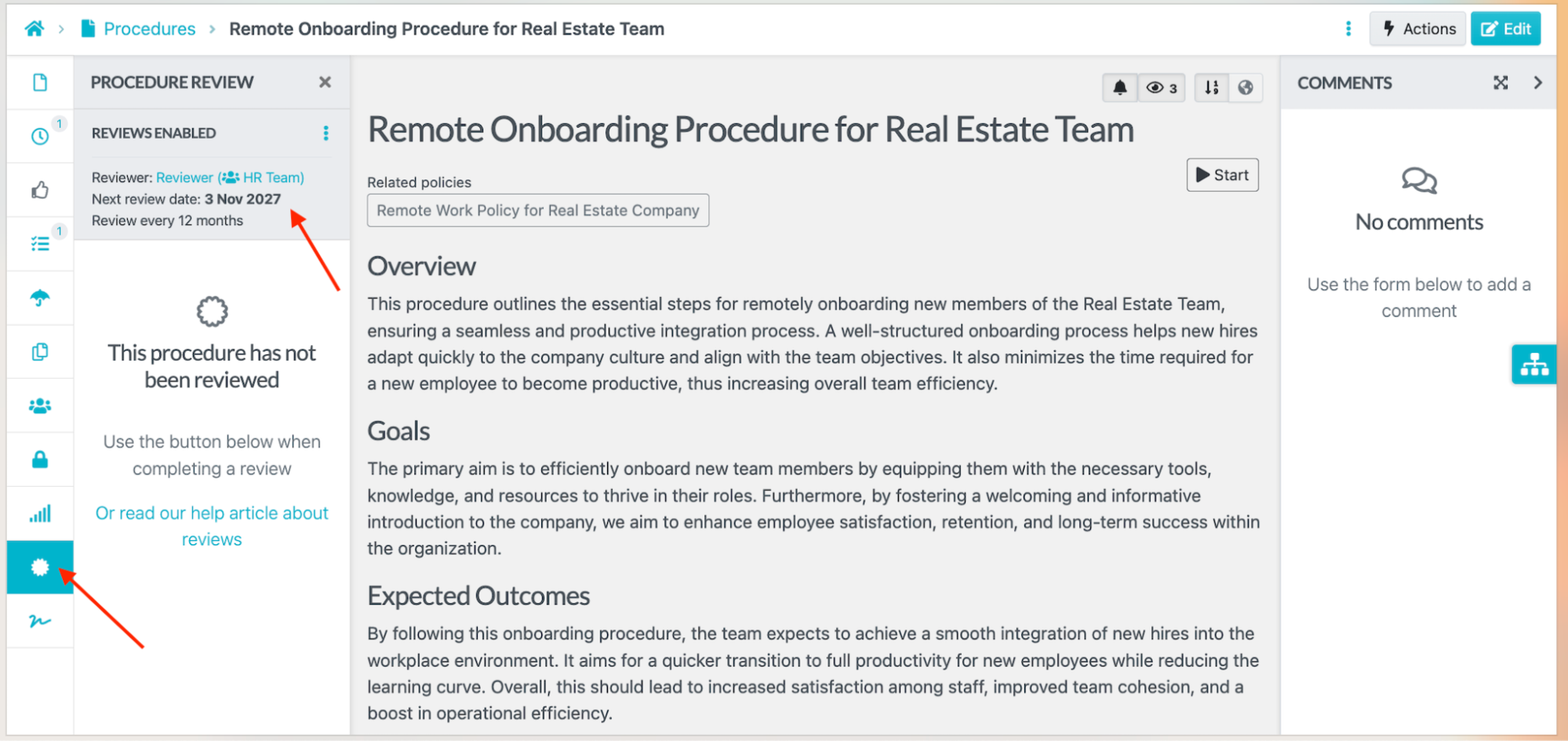
While version history supports traceability, it does not replace a well-defined review process. Your team still needs to decide who owns each document and when it should be checked.
You can add the team responsible for the review and include a date for easier tracking.
Build a Knowledge Base for Employees and Customers
A knowledge base helps employees and external stakeholders find information or answers. It can reduce the need to answer the same questions individually.
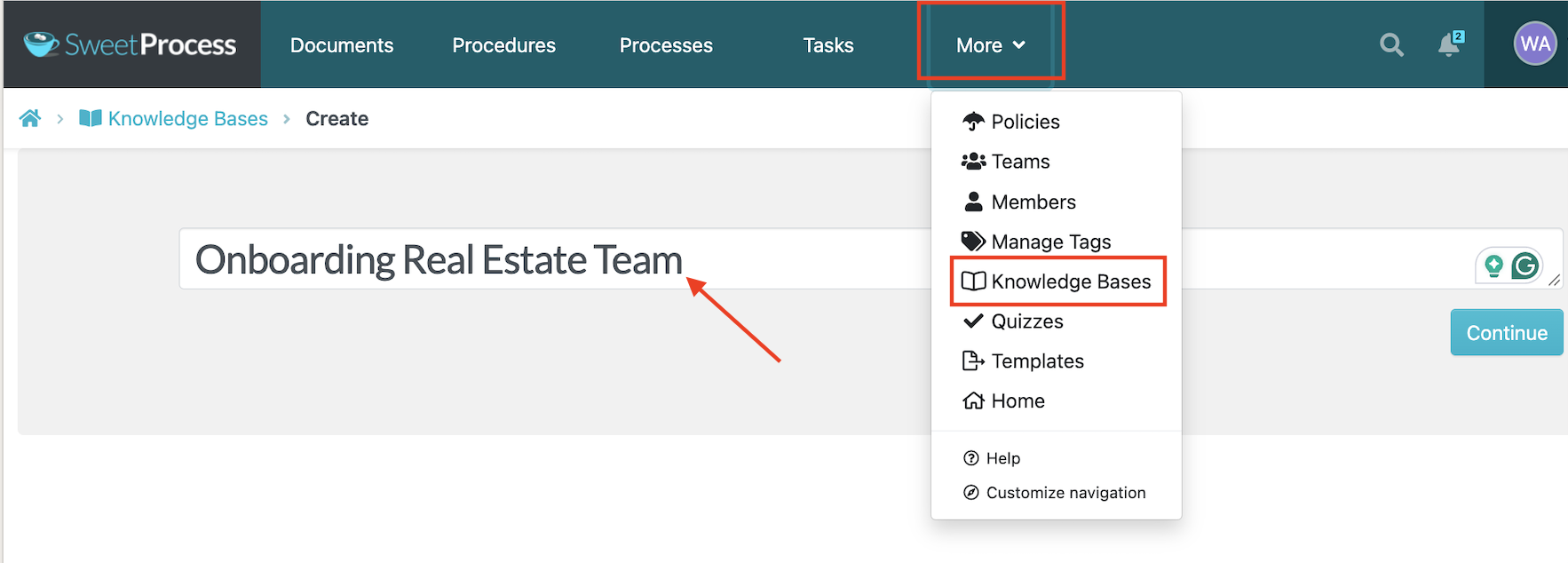
SweetProcess lets you create public and private knowledge bases. You can organize material into categories and make selected content available to the people who need it.
For example, an internal knowledge base could contain onboarding instructions, common support answers, and links to company policies. A public knowledge base could provide customers with approved guidance about a product or service.
You get a link that employees can use to access the knowledge base.
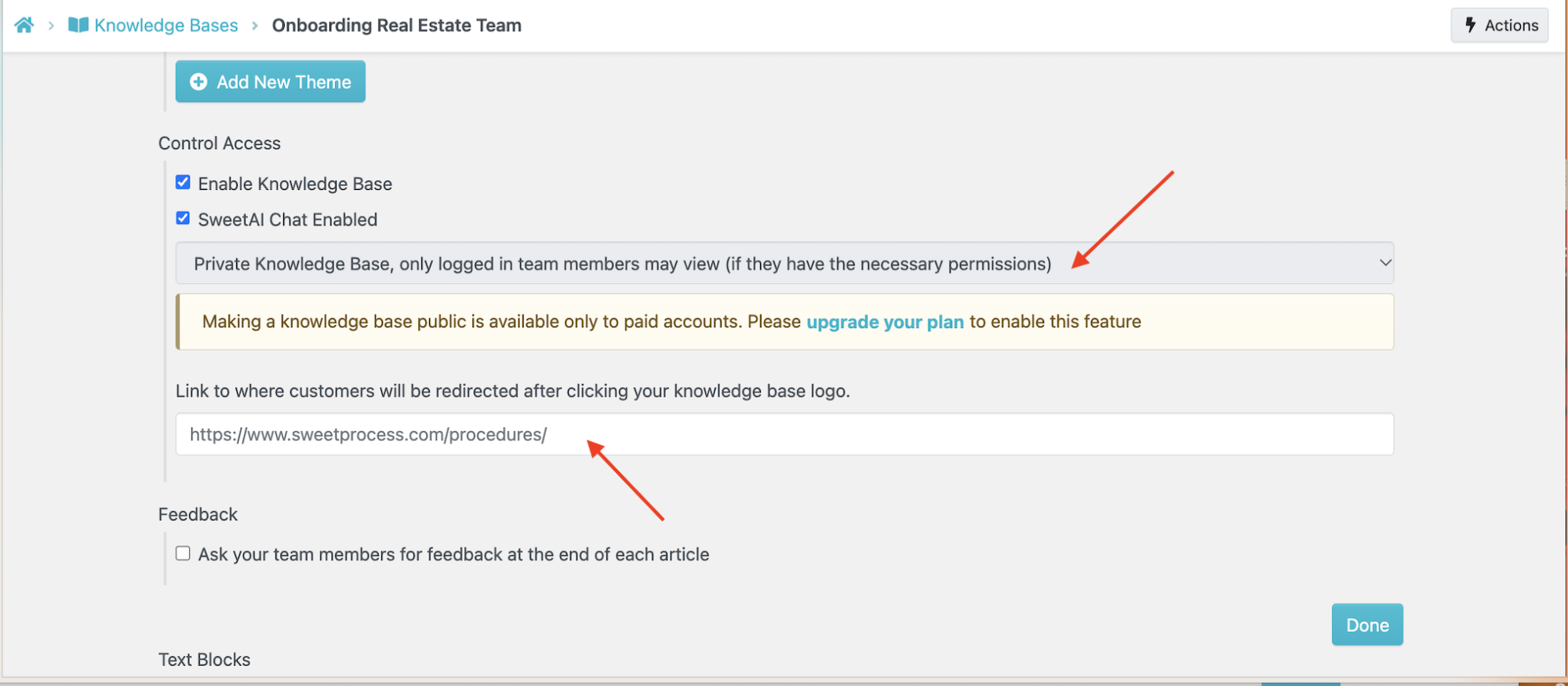
This gives you a place to organize information alongside your documented procedures.
You can review which information belongs in each knowledge base and who should be able to view it.
Approvals To Support Accountability
If an employee can change a procedure without review, the team may end up following instructions that have not been checked. A defined approval process helps separate drafting from authorization.
SweetProcess supports drafts, approvals, version history, comments, and collaboration. These capabilities can help you establish who prepares a document, who reviews it, and which version is the approved version.
Once you’re done drafting the SOP, you can request approval from a manager or team lead.
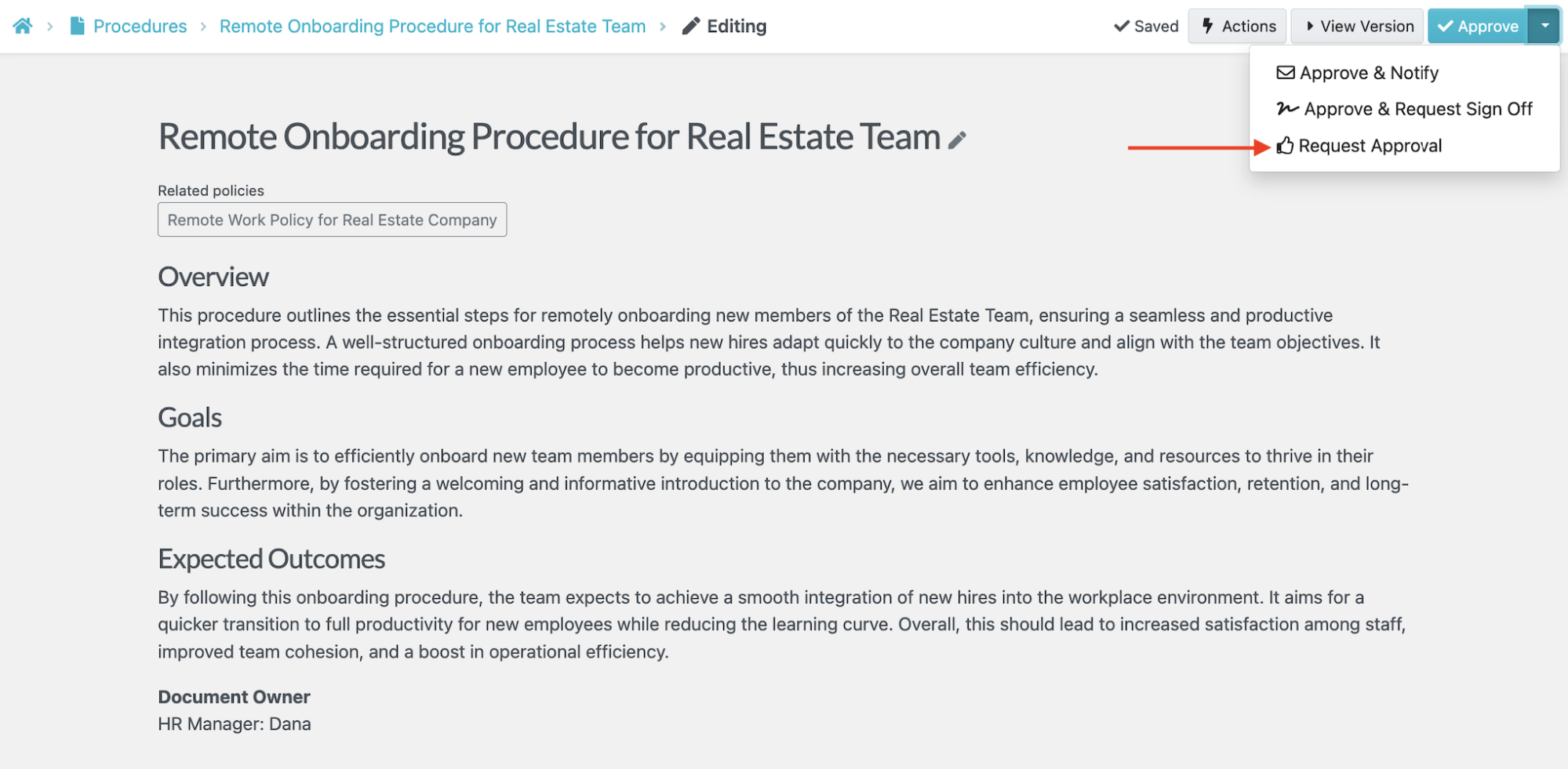
These records support internal accountability.
Print Offline Documents
To increase the accessibility of your team members and clients to important policy and procedure documents, you may want to make them available in various forms.
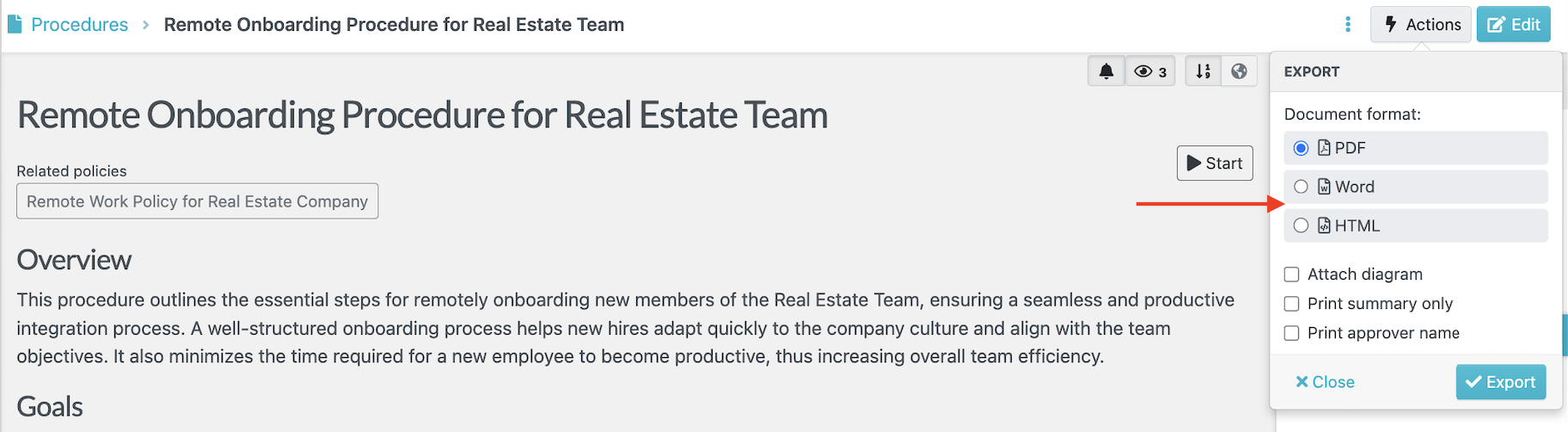
Open the document while logged in to your SweetProcess account. Click on “Actions” and then select “Export.”
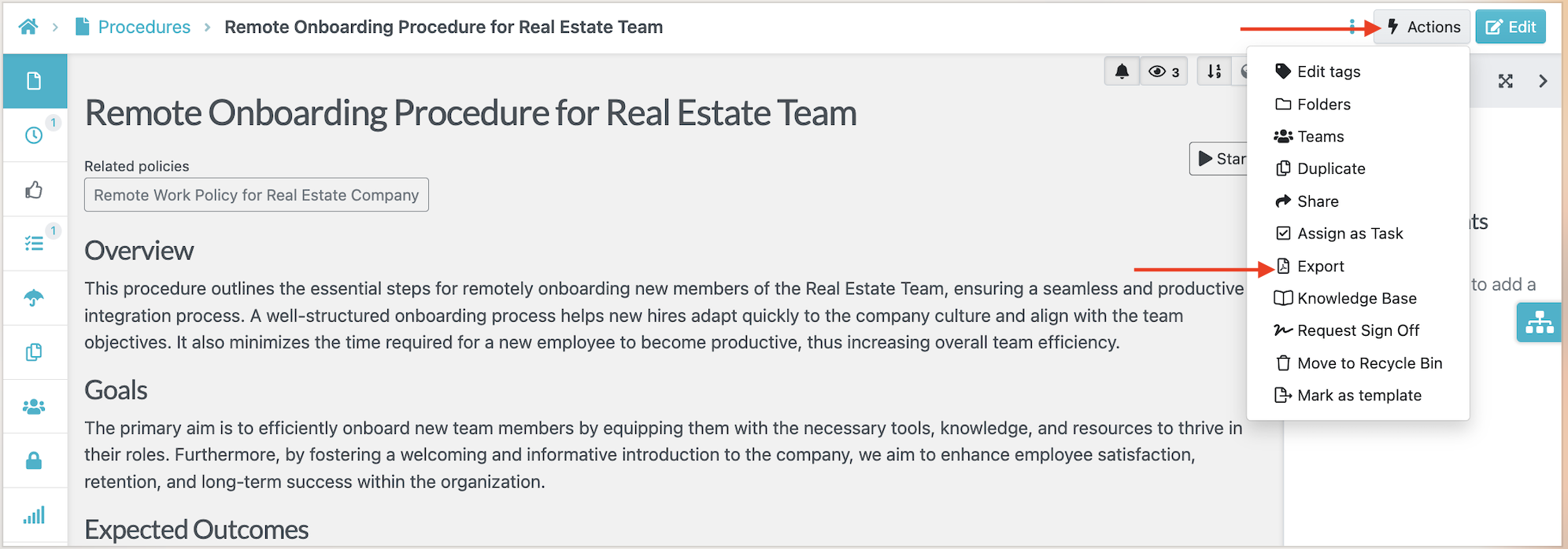
Your existing documents in SweetProcess can be made available as a Word document, PDF document, or HTML files. Choose your desired file format.
Collaborating in Real Time
To collaborate on a procedure in your SweetProcess account with your team members, you need to be able to comment and leave feedback at each step of the process.
You can mention the team member in the comments and send feedback or any information you need added to the procedure.
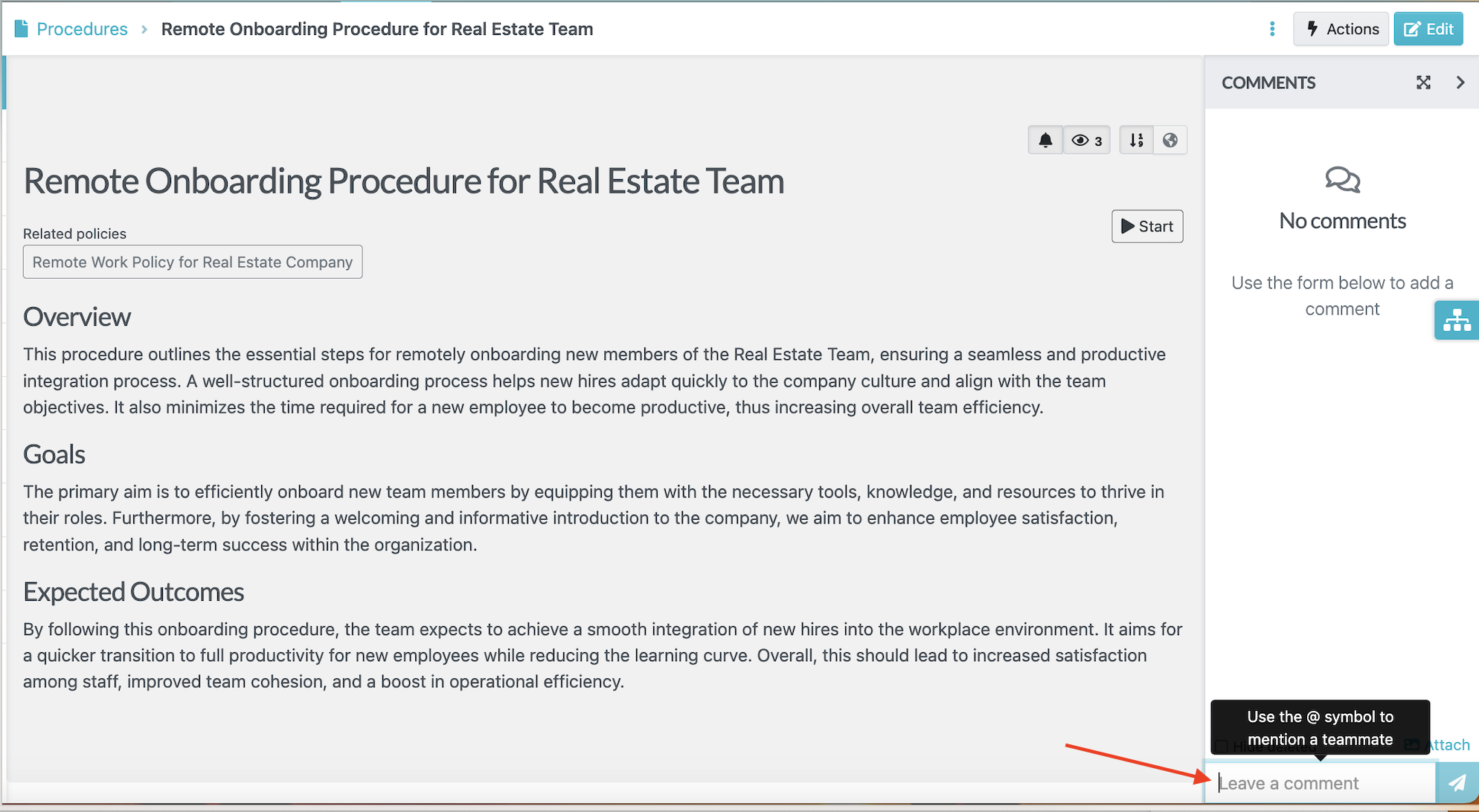
They can also reply to your comments, and everyone will be on the same page.
Capturing SOPs
With the SweetProcess Chrome extension, you can capture your SOP, especially if you need to document work that happens on a screen.
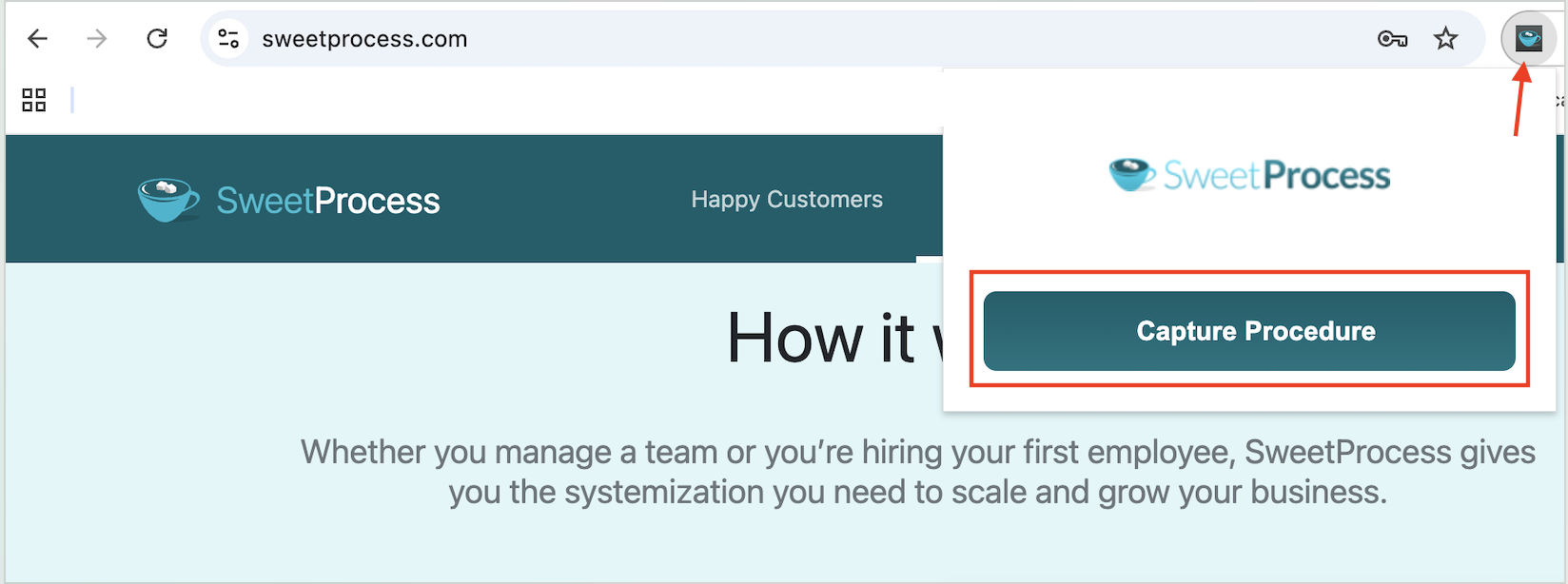
The extension screenshots every click and provides a draft procedure that you can edit and share with your team.
How SweetProcess Works
SweetProcess helps teams standardize their workflows, document SOPs, and organize business processes in one central platform.
It also allows teams to keep instructions accessible and up to date, helping employees and collaborators follow established procedures consistently.
SweetProcess serves businesses of different sizes and roles. Managers, founders, and other process owners can use it to document work, organize instructions, and help their teams follow a consistent process.
Below are some examples of how different professionals have used SweetProcess to support their work.
For Team Managers
With SweetProcess, team managers can create, organize, and share step-by-step procedures. Keeping instructions in one place gives employees a consistent reference and makes it easier to review the steps when work changes.
Don Houk, identified in the customer story as president of Next7 IT, adopted SweetProcess to help his team document its work and build a more proactive operating system.
The published Next7 IT story reports improvements in documentation, onboarding, training, and consistent service delivery.
The Next7 IT story describes using documented procedures to support consistent service, accountability, and employee training. Those are useful goals to test with your own recurring work.
For a team manager, the practical benefit is having instructions that new hires and experienced employees can both consult.
Assign one procedure during onboarding, check whether its steps are clear, and improve the documentation where someone needs help.
For Financial Advisors
Financial advisors can use SweetProcess to organize recurring work and employee onboarding. Documenting each step gives team members a shared reference for the tasks they are expected to complete.
Team members can use the documented procedure and its comments to clarify the work, rather than relying on separate versions of the same instructions.
Thimbleberry Financial described improvements in employee onboarding after adopting SweetProcess.
Amy Walls, identified in the story as its president and financial advisor, used documented procedures to organize training and help employees find the information they needed.
Clear operations manuals also helped the team identify gaps in its existing instructions.
The Thimbleberry Financial story describes employees following procedures and identifying missing steps.
It illustrates how a shared documentation system can support onboarding and process improvement without requiring every question to go to the team lead.
For Chief Executive Officers (CEOs)
For a CEO, a shared procedure library can help employees find the guidance they need while managers retain responsibility for reviewing and approving instructions.
SweetProcess lets you organize training material and knowledge bases alongside procedures. Decide who owns each document and how updates will be reviewed so employees know which instructions to follow.
The Life Coach School provides a reported example of using SweetProcess to organize training and customer-support documentation.
The customer story describes how the company organized its existing training videos within SweetProcess and added written step-by-step checklists for suitable procedures.
It also documented the customer journey for each product and the actions employees needed to take.
Kimberly Job, identified in the story as executive director of marketing and customer support, said, “Our customer support team can look up all the documentation and figure things out on their own.”
The story also describes a staged approach to onboarding: New hires first followed existing processes, then began creating processes subject to review. That account focuses on documented guidance and delegation.
For Founders and Business Owners
Founders and business owners can use SweetProcess to put repeatable work into written procedures. A shared library makes those instructions available to the people who need to carry out the work.
As the business grows, owners can review the same documented process with new employees rather than rebuilding the explanation each time. Keeping that material current remains the team’s responsibility.
Emma Mills, the founder of MiPA, described using SweetProcess as the business grew. The customer story discusses documenting processes, delegating work, and giving employees clearer guidance.
MiPA’s example connects process documentation with employee onboarding and training. Those are useful areas to evaluate during a pilot, using a real procedure and the people who will follow it.
SweetProcess also served as a central knowledge repository, giving employees access to the information they needed to carry out their responsibilities. A shared reference can help a growing team avoid scattered instructions.
For Business Intelligence Personnel
Business intelligence and operations staff can use documented processes to show how work should be carried out. SweetProcess provides a place to maintain those instructions, link supporting material, and discuss changes with the team.
Turkstra Lumber‘s customer story describes using SweetProcess to document business processes and make them easier for employees to follow. Its experience focuses on consistent instructions, a central knowledge base, and visual process maps.
Jamie Ramsden, the business intelligence champion at Turkstra Lumber, found inconsistencies in their processes, hence the search for the right tool that unifies their processes.
The Turkstra Lumber story reports benefits from clearer process documentation and a central knowledge base. It also describes sharing information across the team and using visual flowcharts to explain the work.
For your own team, start with a process that is currently performed in different ways. Record the agreed steps, ask employees to use them, and review where the instructions need clarification.
If you’re a business intelligence professional seeking to optimize your workflows and enhance data-driven decision-making, you may consider checking out how SweetProcess can be helpful to you.
Give your team a shared set of instructions for one recurring task. Sign up for a 14-day free trial today, document the process, and see whether employees can follow it with fewer repeated questions.
Where Flowster Fits
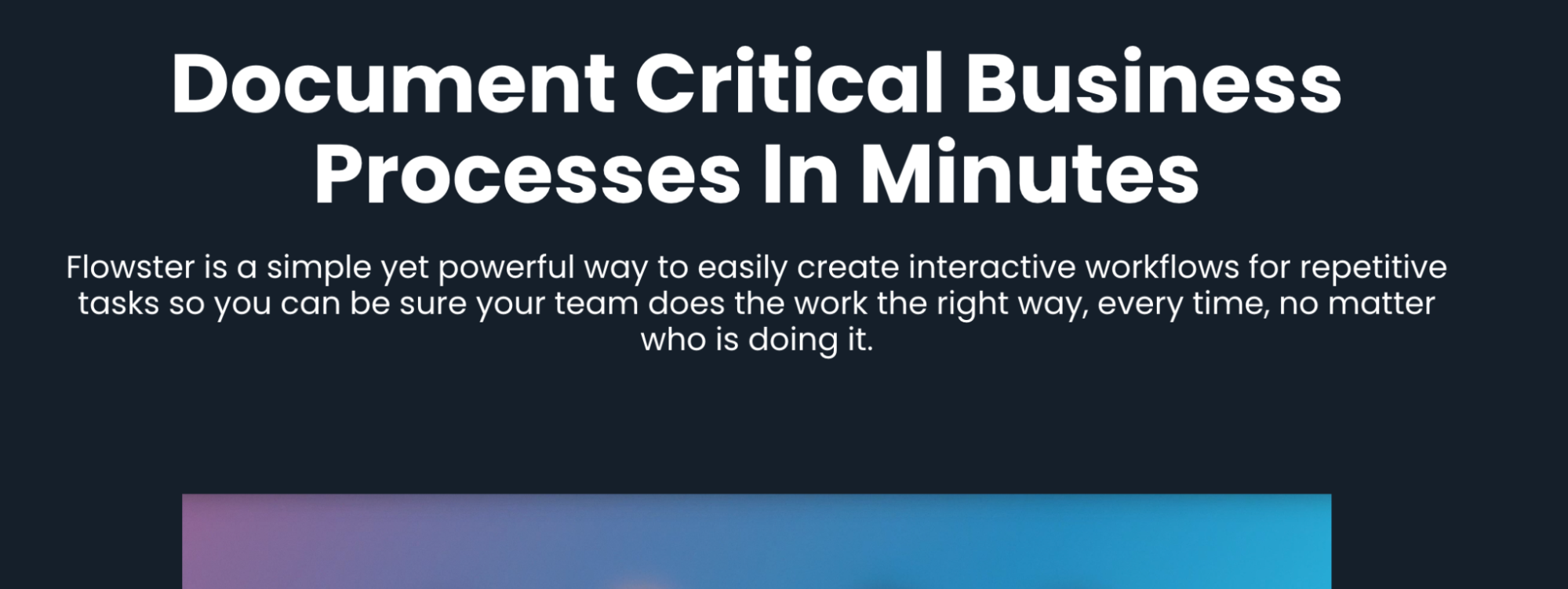
Flowster is a workflow management tool that helps businesses organize and automate their processes. It’s built around templates and repeatable execution.
You can create a template, turn it into a workflow, assign work, and schedule workflows that need to run again.
The template-led model can be useful when a business repeats similar work for different clients, projects, or internal needs.
Instead of designing every workflow from a blank page, you can start from an existing template and adapt it to the work at hand. Flowster organizes work into divisions that can represent a department, a team, or a project for easier collaboration.
Features of Flowster
Creating Templates
Flowster provides a marketplace where you can find templates for different business tasks. Depending on the template and its terms, you may be able to use a free resource or purchase one.
Some marketplace templates are free. Your plan of choice caps the number of templates you can keep. You get 20 templates on Startup, 100 on Growth, and unlimited on Enterprise.
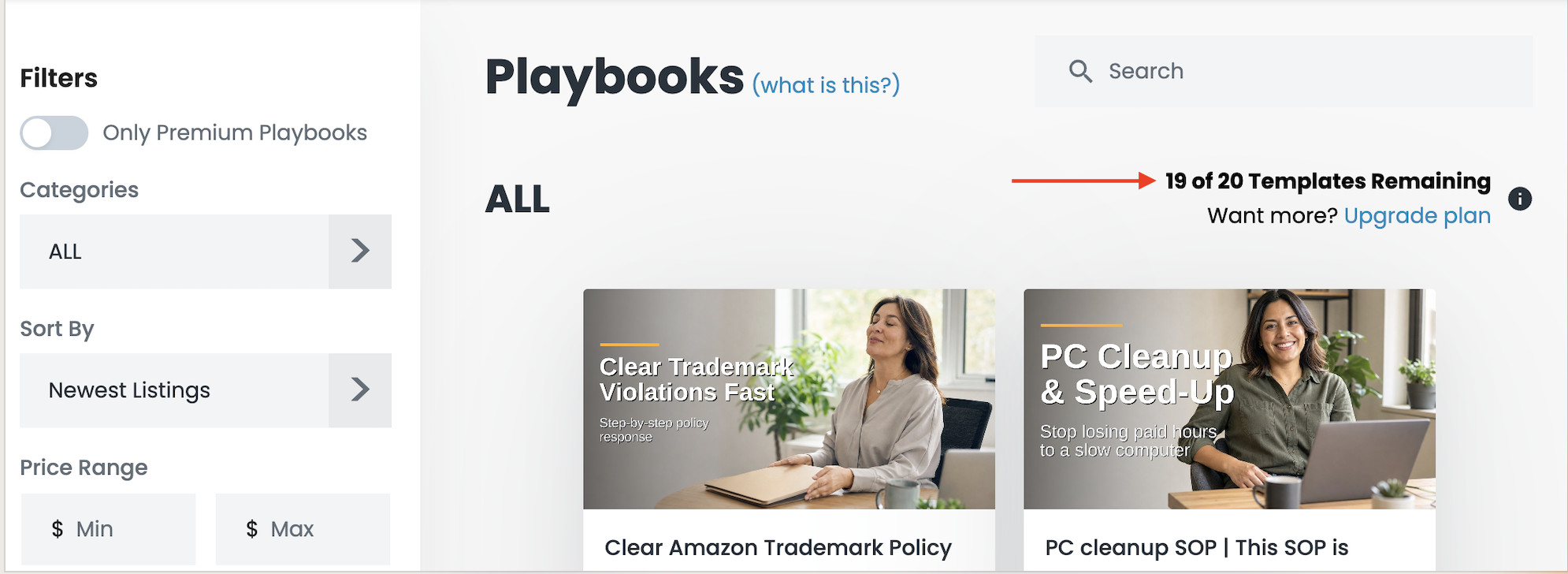
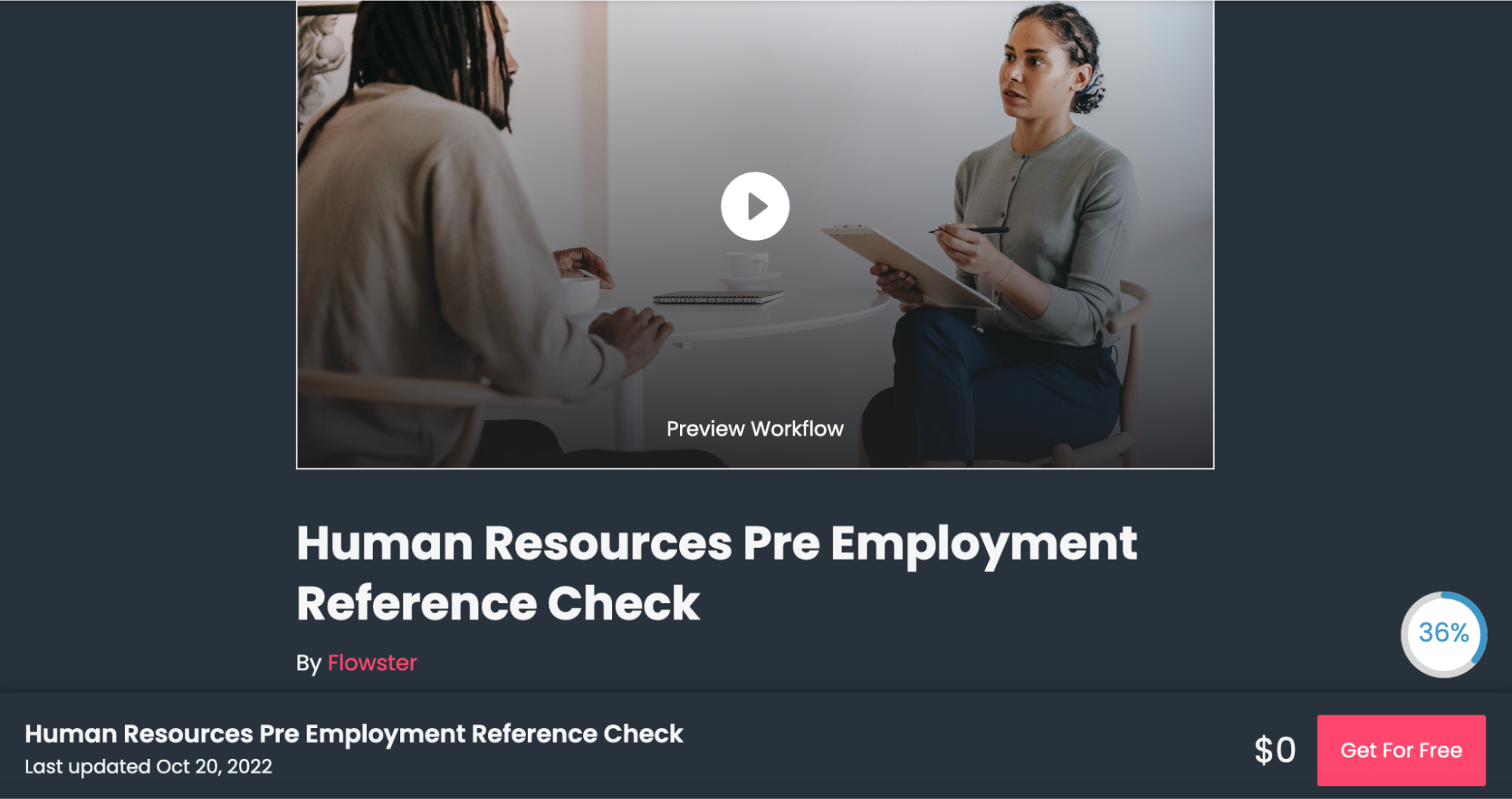
To get started, add the template to your cart and import it into your account.
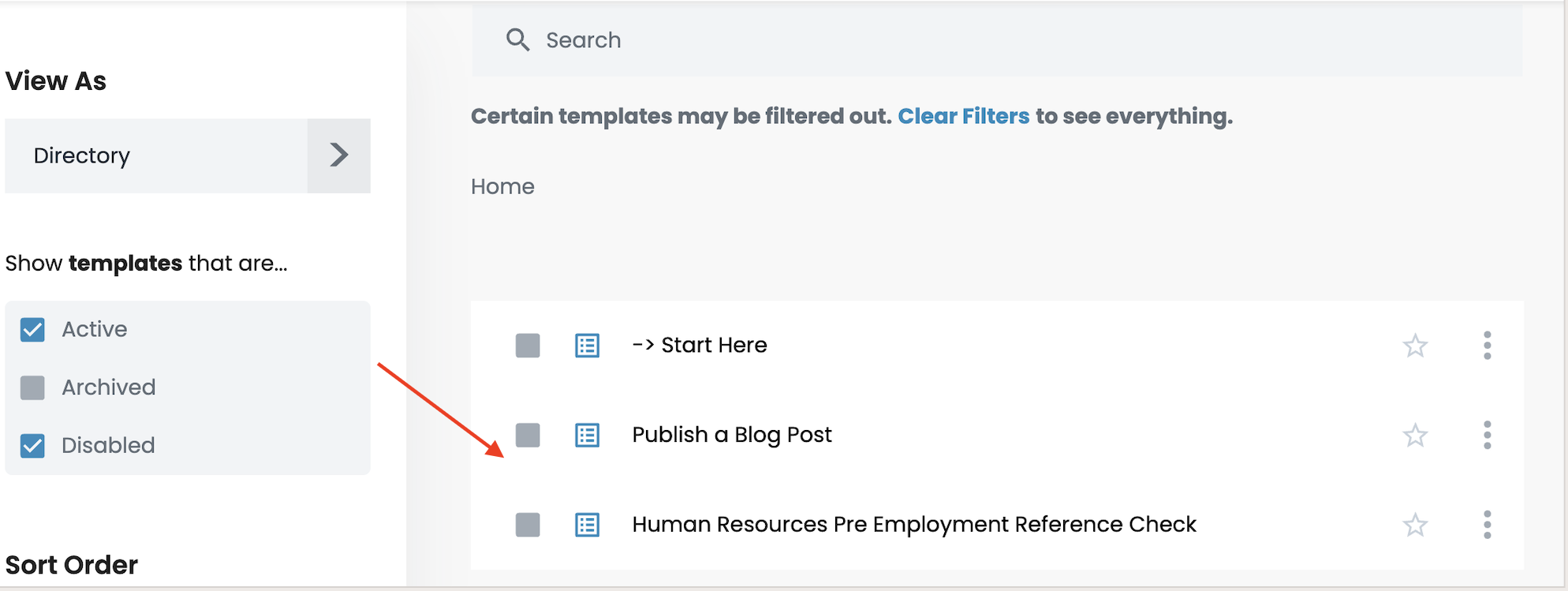
You’ll then see a list of templates available on your dashboard. Select the one you want to edit and give it a name.
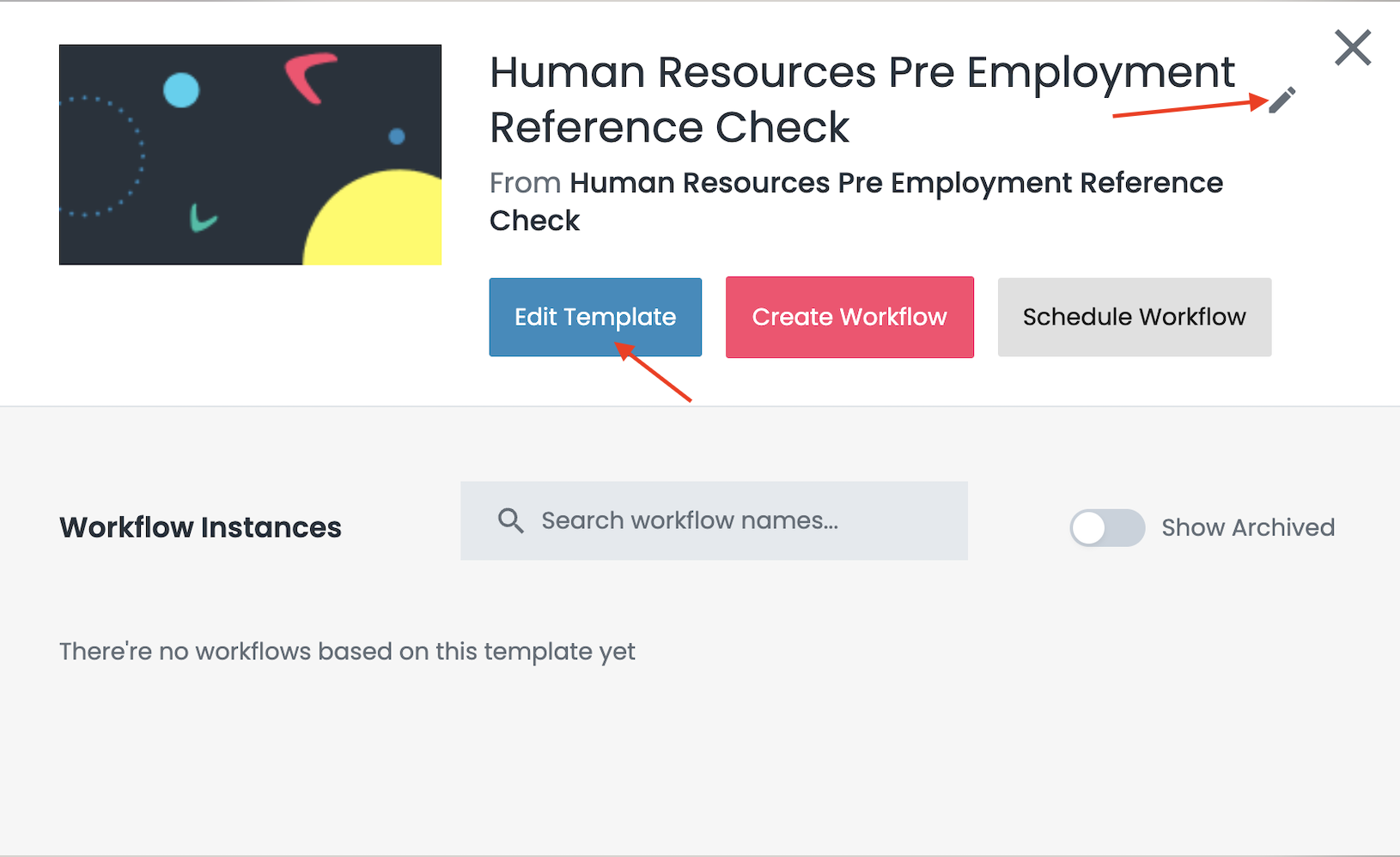
Flowster allows you to edit the template and add any instructions and information you need your team to follow.
A template is built from sections including text, image, video, file, checkbox, requested text, email addresses, URLs, dates, file submissions, and dependent workflows.
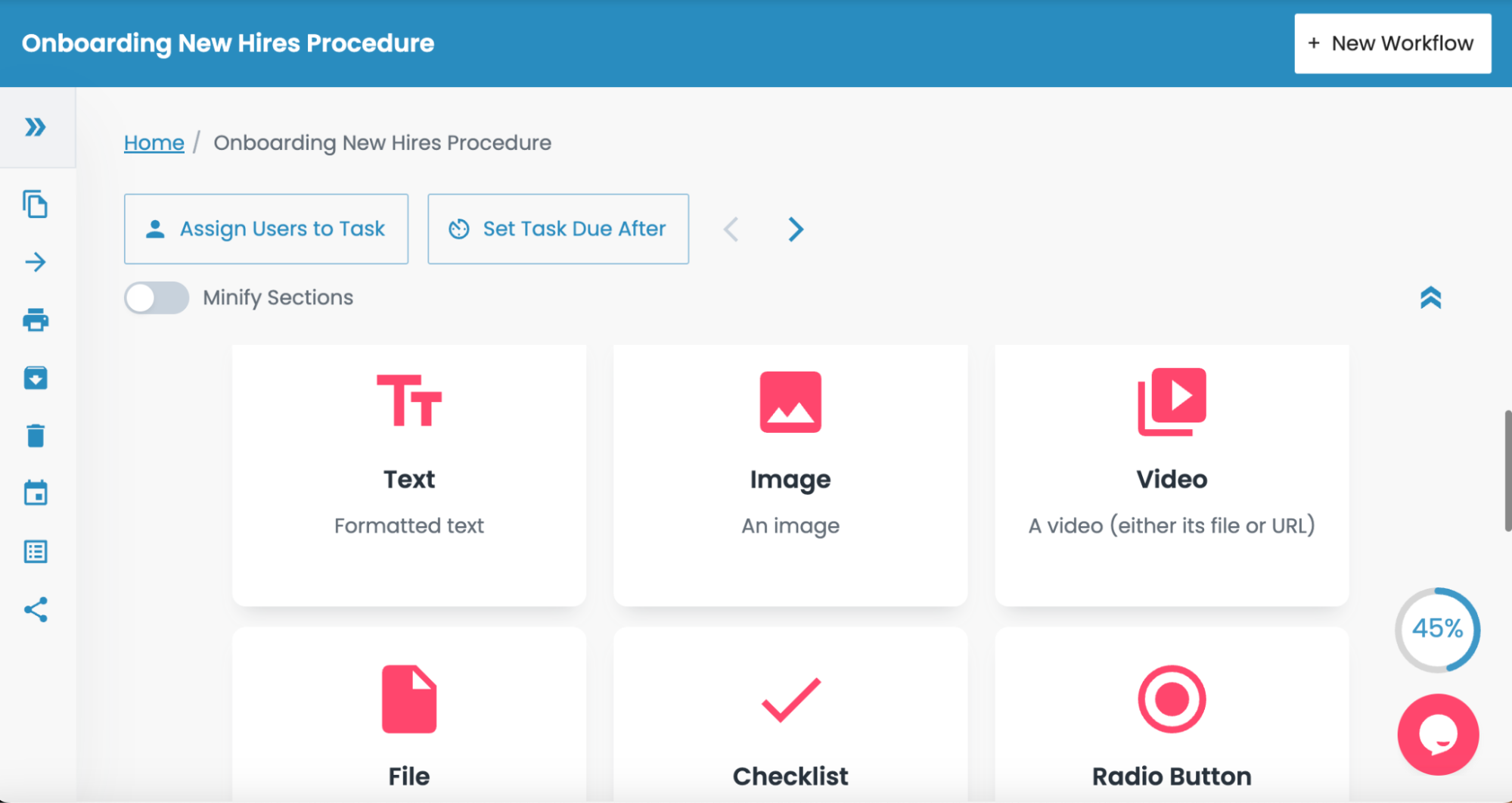
The value of a template depends on how closely it fits your process. You should still review its instructions, remove steps that do not apply, add your internal requirements, and assign responsibility for keeping it current.
Turn Templates into Workflows
A workflow puts your repeatable structure into use for a particular instance of the work.
For example, if you have an HR hiring template, and you need to run it separately for every new employee, each workflow represents a specific onboarding job with its own details, due date, and assigned team member.
You can create a workflow once you have an existing SOP template for such a task.
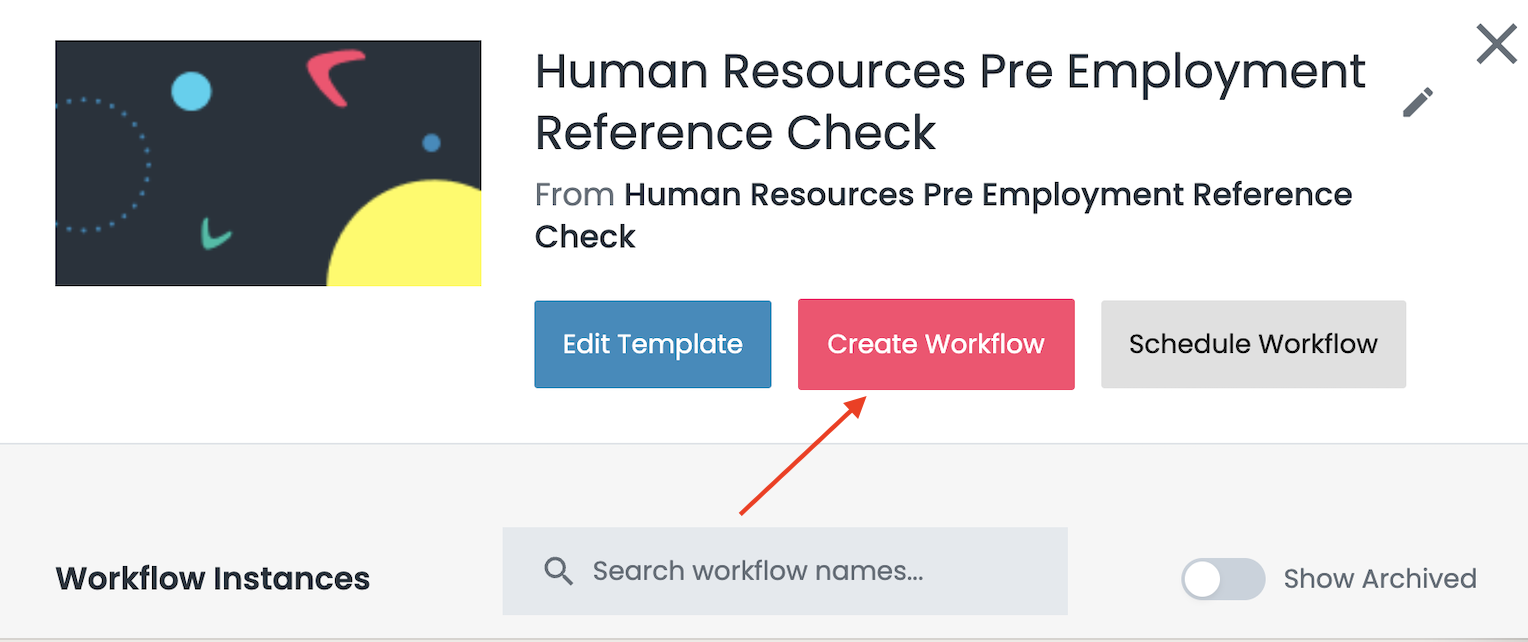
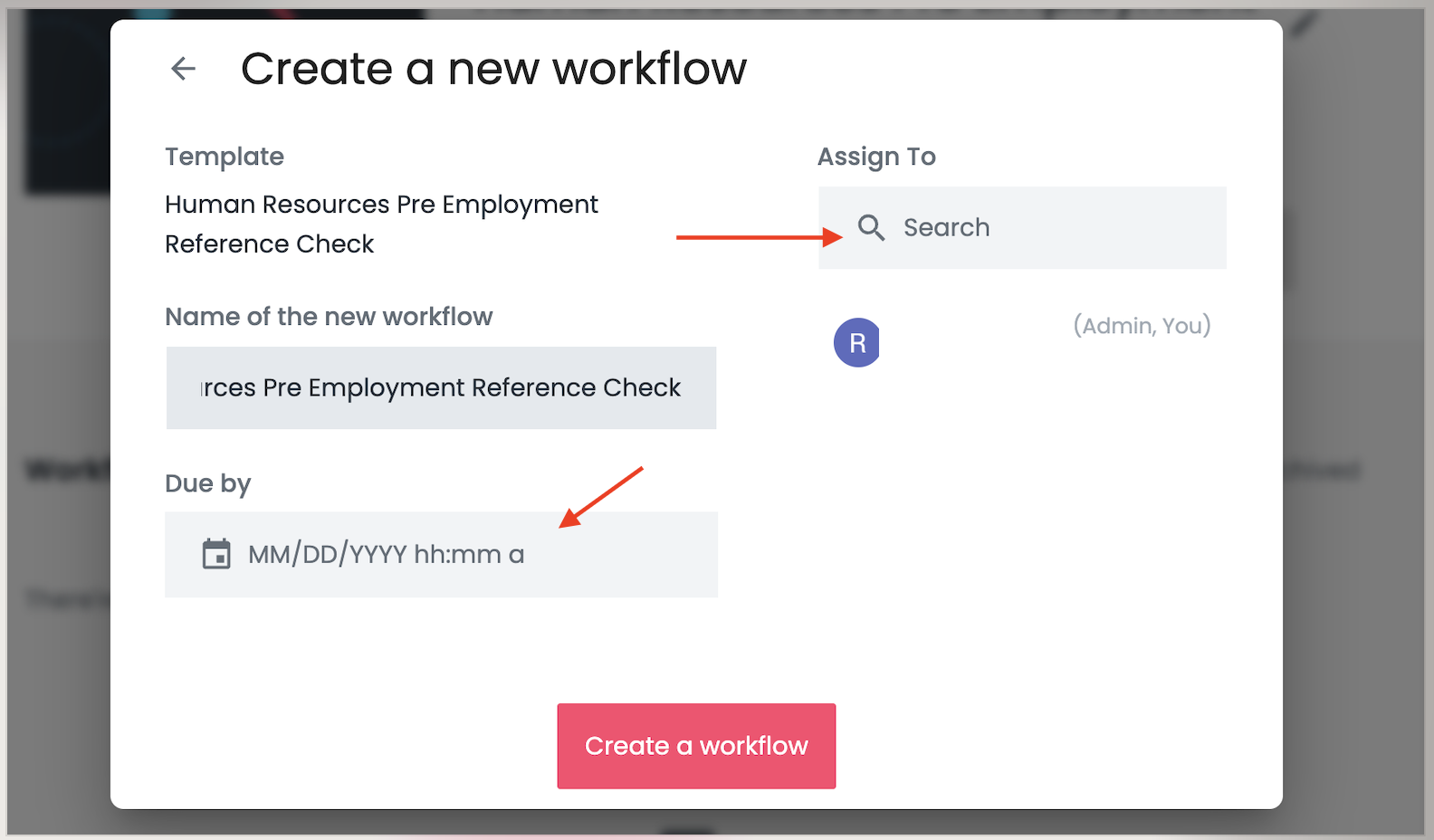
On the next interface, you can give the workflow a name and due date, and assign it to the appropriate team member.
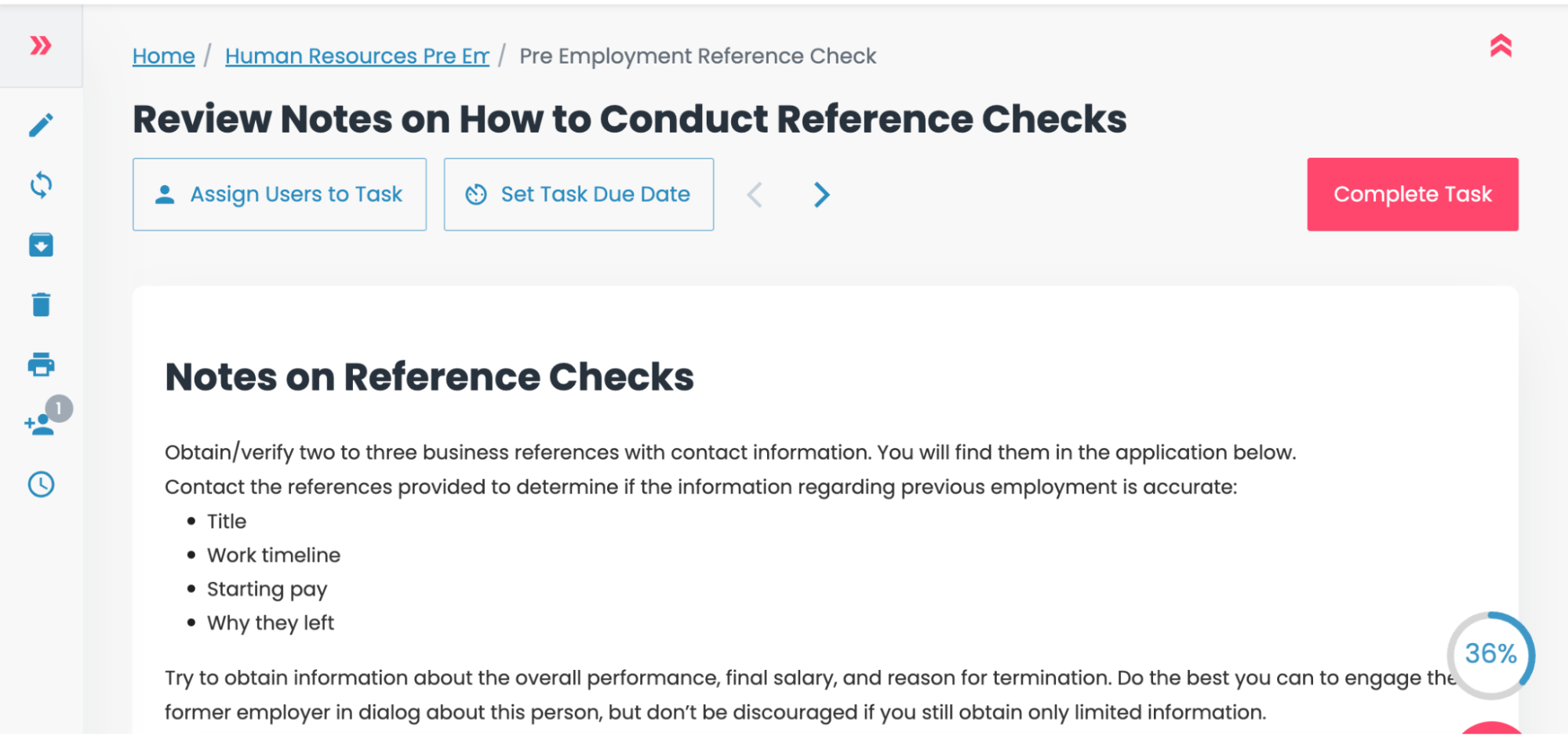
Your workflow is then saved to your account. You can access it from the main dashboard, where you can edit or even assign it to more team members.
Schedule Recurring Workflows
Flowster supports workflow scheduling. You can set up recurring workflows for work that must happen on a regular basis, such as completing a routine review.
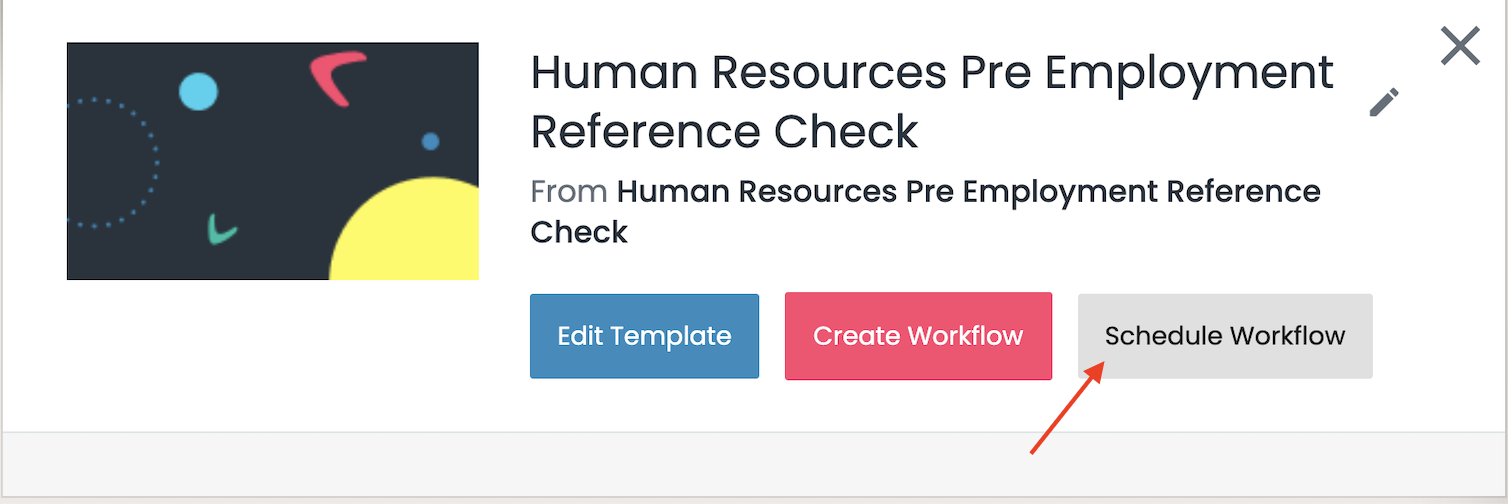
Scheduling can reduce the need to remember to create each new instance manually.
You can set it to repeat, assign it to a person, and give it a due date. If a task depends on an earlier task, you can add a sequence to keep operations flowing seamlessly.
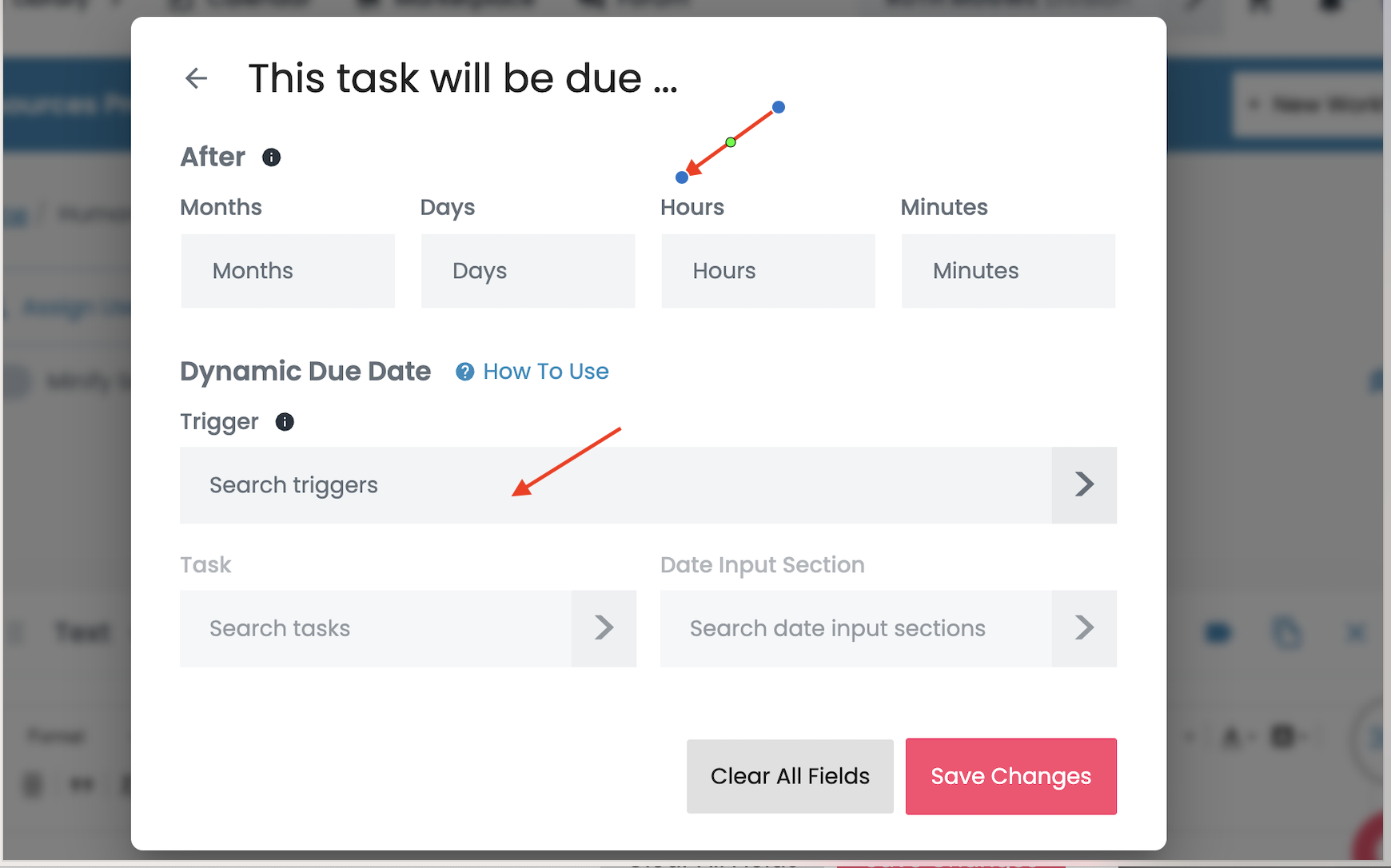
Apply Conditional Logic
Not every workflow follows the same path. An employee may need to complete an extra step based on an answer in a form. Flowster’s conditional logic can show or hide sections or tasks based on specified conditions.
This feature is available only on the Growth and Enterprise plans.
Integrations
Flowster lists ChatGPT integration on all three plans. Integrately and Zapier integrations are available on the Growth and Enterprise plans.
These integrations may matter if your workflow needs to interact with other applications.
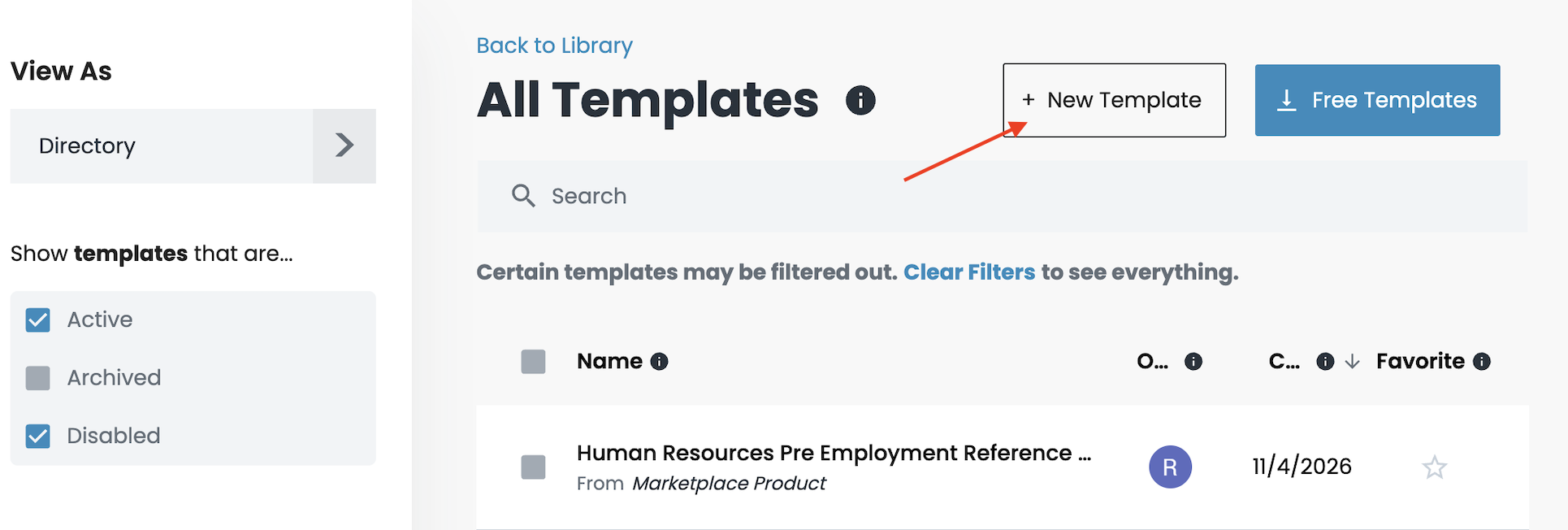
To use the ChatGPT integration, click on “+New Template.”
Switch to AI-generated mode and add your desired name from the drop-down menu.
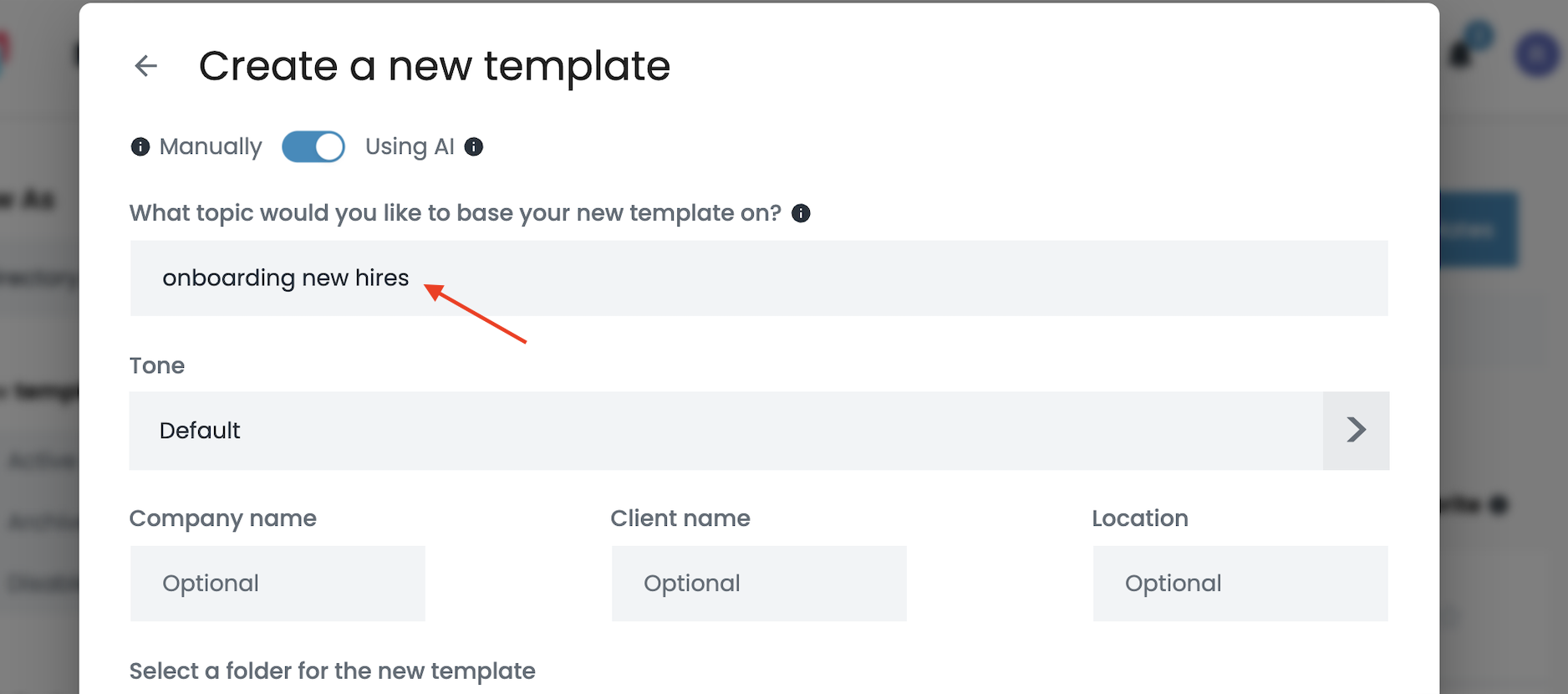
Click on “Generate Template.”
The new template will be automatically generated in a short time.
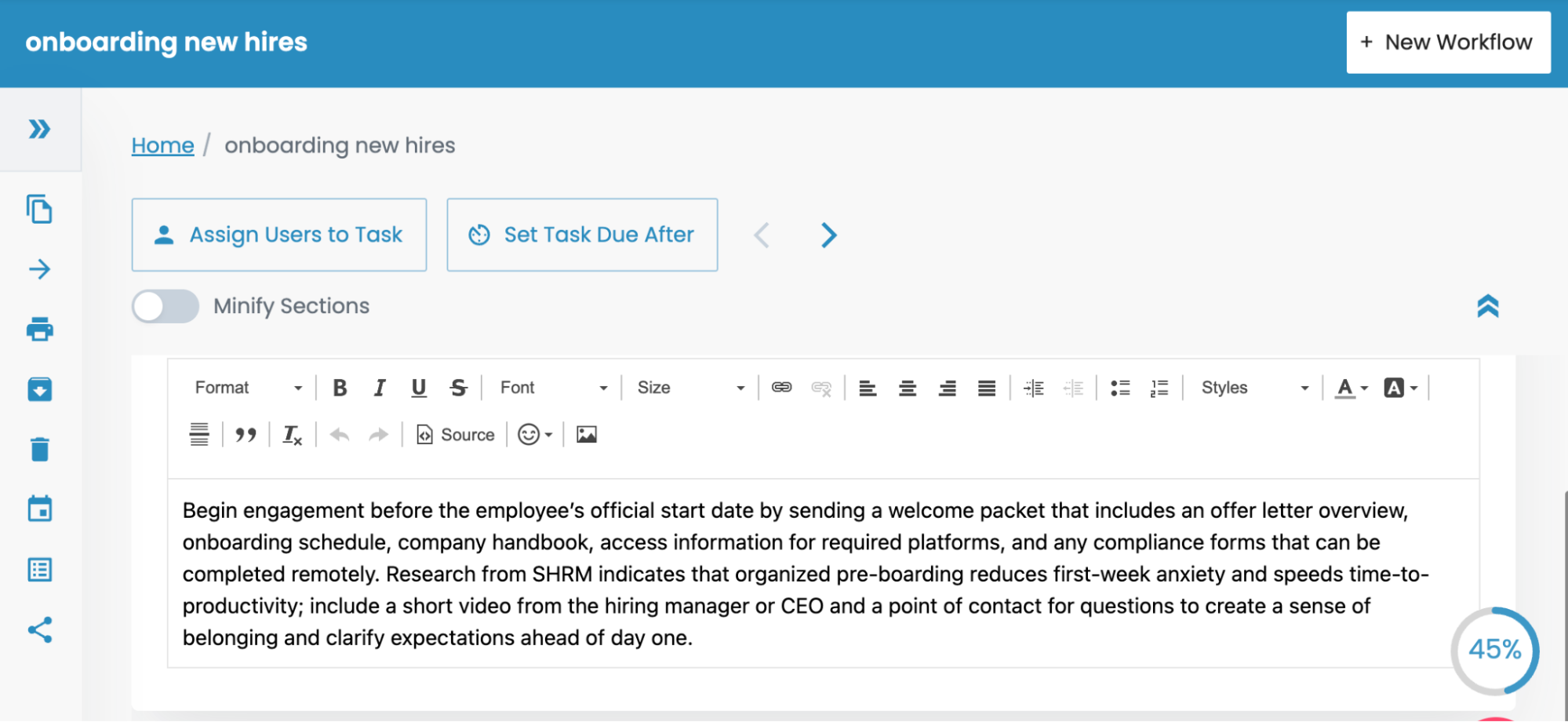
For each task, you’ll see these two buttons at the bottom.
With the “Generate Additional Details” button, you can generate a new summary paragraph describing this task in more detail. You can also generate additional steps using the appropriate button.

Guest Accounts
Flowster has three access levels: admins, members, and guests. As an admin, you can add or remove users, update account information, and assign roles. Members can build and edit templates and workflows and assign them to everyone else on the team.
Guest accounts are free on all plans and can only execute assigned workflows.
Assign the appropriate account role before sharing work, and verify what each user can access.
Flowster Capture
The Flowster Capture Chrome extension records on-screen steps so you can create instructions without manually taking a screenshot for every action.
Review the captured steps and screenshots, edit the instructions, and confirm the export or sharing options that fit your workflow.
One Recurring Workflow Compared
Both Flowster and SweetProcess offer extensive features to help you create and manage your SOPs and workflows. Here’s how they compare when creating and managing a recurring workflow.
For a five-person company, hiring someone triggers several jobs. Someone needs to prepare accounts, explain policies, arrange training, assign onboarding work, and check completion.
Writing the Instructions
With SweetProcess, you can create a procedure and organize the work into steps. You can also link relevant policies and supporting procedures. SweetAI can help draft the initial content, which can be reviewed later by an employee.
With Flowster, you can create a template or adapt one from the marketplace. You can add text, images, and any additional steps that support your workflow. You can also use ChatGPT integration to draft the instructions.
Assign an Owner
A procedure needs an accountable owner. Without one, tasks may be left unfinished because everyone assumes someone else is handling them.
For example, the HR manager owns the employee onboarding process, while the IT administrator is responsible for setting up the new employee’s accounts, configuring system access, and preparing their work devices before their first day.
In SweetProcess, you can assign the onboarding tasks to the people responsible for the work and add due dates.
With Flowster, you can create the workflow from the onboarding template and also assign it to the appropriate team member.
Repeat the Process
If you’re hiring throughout the year, each new hire needs an onboarding run. However, the tasks should be associated with the correct person and start date.
SweetProcess allows you to assign tasks from a procedure and set due dates and recurrence patterns. With Flowster, you can create a workflow for each new hire and add due dates.
If the work must recur automatically, you can schedule recurring workflows.
Check Permissions
As you onboard the new hire, the HR manager, IT administrator, and hiring manager may not necessarily need the same access.
For Flowster, you can distinguish guests from members and admins. A guest can access assigned workflows, while a member can create templates and workflows and assign work.
With SweetProcess, you can add permissions to specific team members as you create the SOP. For instance, you can share the document with just the HR team or send it to a specific employee.
Record Completion
You need to know whether the required tasks were finished and whether outstanding work needs follow-up. On Flowster, you can inspect the task status to see the completion information.
SweetProcess also allows you to view the pending and completed tasks from the “Tasks” menu.
Completion tracking promotes accountability within the teams and departments.
Revise the Instructions
If you have any changes that need to be updated to your onboarding instructions, you need to edit the SOP to reflect this. Flowster allows you to edit the template and workflows you have created.
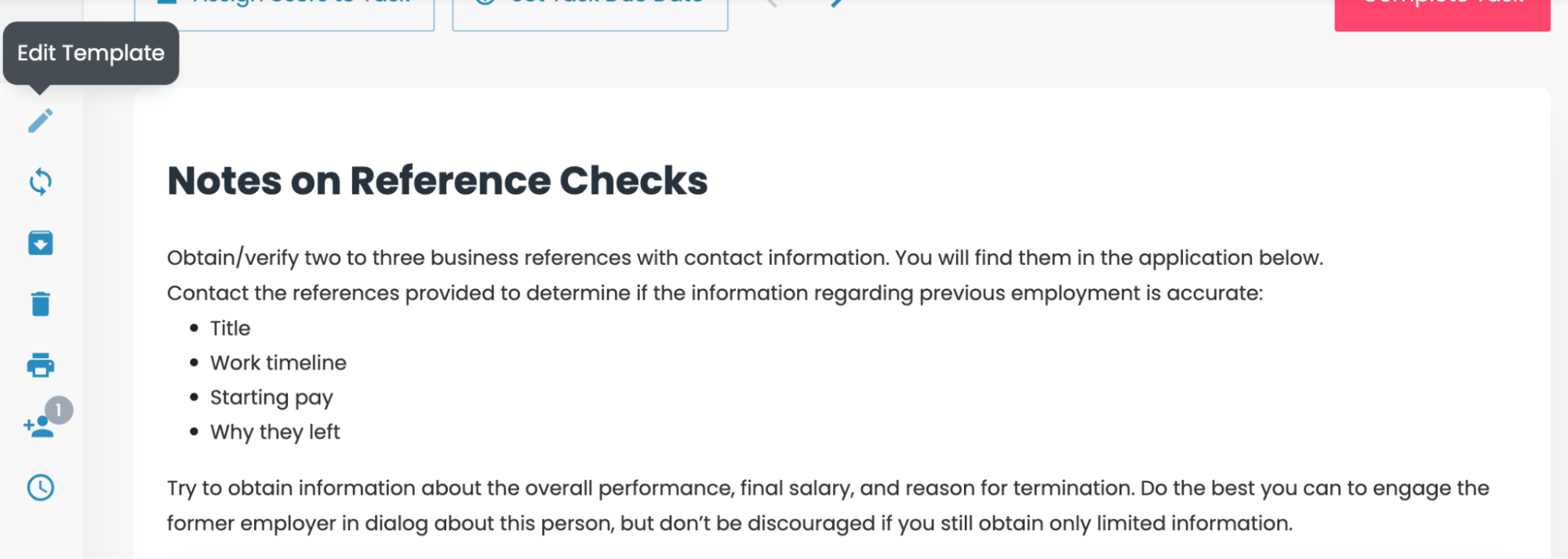
With SweetProcess, you can review version history to see how instructions have changed. Use the approval process to confirm the revised procedure before employees rely on it for their work.
The Workflow Comparison Scorecard
Here’s how to determine whether either Flowster or SweetProcess is a good fit for your workflows.
|
Test |
What a successful result looks like |
|---|---|
|
Find the current instructions |
The assigned employee can locate and identify the version they should use |
|
Follow the steps |
The instructions are clear enough to complete the work and explain any required decisions |
|
Assign ownership |
Each task has a clear responsible person |
|
Set due dates |
Deadlines reflect the real process and are visible to the people involved |
|
Check completion |
The manager can distinguish completed, incomplete, and overdue work |
|
Review permissions |
Each person has the access needed for their role without unnecessary editing rights |
|
Revise the process |
The owner can update instructions and confirm how changes affect active and future work |
Flowster vs. SweetProcess Pricing
Flowster uses feature tiers. SweetProcess includes the same features in its standard and Small Team billing options, with costs based on the number of users and billing cycle.
SweetProcess Pricing
SweetProcess costs $99 per month or $990 per year for up to 10 users. Additional users cost $5 per month or $50 per year each. The annual-only Small Team option costs $495 per year for up to five users, plus $50 per year for each additional user.
All billing options include all features. You can start with a 14-day free trial without a credit card and cancel anytime.
SweetProcess offers a 30-day money-back guarantee if you do not see a measurable improvement to your business, plus a free one-hour consultation to discuss ways to streamline operations.
Flowster Pricing
Flowster offers three plans. Startup costs $24 per month billed annually or $28 per month on monthly billing, and includes up to two users and 20 templates.
Growth costs $89 per month billed annually or $129 per month on monthly billing, with up to five users and 100 templates.
If you want a plan that covers 10 users, you can subscribe to the Enterprise option that costs $199 per month, billed annually, or $299 if you pay monthly. Here, you get unlimited templates.
If your team is larger, you can request a quote from the sales team.
Cost for two, five, and 10 users
|
Team size |
SweetProcess |
Flowster |
|---|---|---|
|
Two users |
Small Team: $495 per year. Standard: $990 per year, or $1,188 on monthly billing. |
Startup plan: $288 per year, or $336 on monthly billing |
|
Five users |
Small team plan: $495 per year |
Growth plan: $1,068 per year, or $1,548 on monthly billing |
|
10 users |
Small Team with five additional users: $745/year. Standard: $990/year, or $1,188 on monthly billing. |
Enterprise plan: $2,388 per year, or $3,588 on monthly billing |
These totals cover 12 months and exclude taxes. Flowster examples use the tier whose included user allowance covers each team size; features and template limits differ by tier. SweetProcess billing options include the same features.
Compare the capabilities you need, access requirements, and any additional services or integration costs before choosing.
Why Should You Use SweetProcess?
Start With One Procedure
SweetProcess provides an editor for documenting procedures and policies step by step. Start with a familiar task, add its instructions, and ask a teammate to follow it. This shows you what the tool makes clear and where your team may need guidance.
Your team can then explore task assignment, approvals, and knowledge bases as those features become relevant to its work.
In-Built and Customizable Template
The in-built SOP template is readily available in your SweetProcess account, and you can start creating your procedures by following the template.
You will end up with a written procedure and also a process map that is automatically created while you write your procedure.
Import Existing SOPs
If you already have SOPs in other files, check the available import options before moving your full library. Bring over one representative procedure first, then verify its text, media, links, and formatting.
Ask SweetProcess about migration support if your files need additional work.
Get Support
If you need help maximizing the features of SweetProcess, our support team is ready to walk you through it.
Start with the SweetProcess knowledge base for setup instructions. You can also contact support by email or phone and ask about guidance for your team.
Create a Knowledge Base for Your Employees and Customers
SweetProcess allows you to create both public and private knowledge bases. The private knowledge base is only visible to your signed-in team members.
You will be able to equip it with information that is only relevant to your employees and not the public.
The public knowledge base can be seen by anyone on the internet, even through a Google search.
You will be able to equip it with all the details that will be helpful to your clients, collaborators, and everyone willing to know more about your product.
A useful knowledge base can reduce repeated questions by giving employees and customers a place to find approved answers. Review the questions people still ask and update the content where information is missing or unclear.
Automated Process Maps and Flowcharts
Some team members prefer a visual view alongside written instructions. SweetProcess automatically creates flowcharts for procedures and processes, including branches at decision points.
Use the flowchart to review the sequence of steps and the written instructions to explain how to complete them. Check both views when a process changes.
Migration and Evaluation Checklist
When comparing Flowster to SweetProcess, you don’t have to move everything to test the tool. You can start with a small pilot first and score both tools with the same questions. Here are the steps to follow:
- Take inventory: List your current SOPs. Note where each lives, who owns it, who uses it, and when someone last updated it.
- Pick one procedure: Choose one recurring SOP that has media, links, or forms.
- Move it to the new tool: Ask each vendor how import and export work for your file types, such as Word documents, PDFs, or wiki pages. If there is no import path for your files, you can copy the text and rebuild the media.
- Check the result: Open the finished procedure as a team member would. Look at images, videos, links, formatting, and permissions, and make sure the right person can still edit it.
- Assign an owner: One employee should own the procedure and its updates. Ensure that you add this to the procedure.
- Define acceptance: Write down what “good enough” means before you start, such as “the steps read the same, the links work, and the next run appears.” You can also ask a teammate who did not run the pilot to follow the procedure. If they get stuck, you can identify areas that require more focus.
Flowster vs SweetProcess: Which One Should You Choose?
SweetProcess and Flowster both help you organize repeatable work, but they suit different priorities. SweetProcess is a strong choice if you want procedures, policies, and knowledge bases in one account, with approval and version history around them.
It also fits teams of five or 10 that want every feature without a tier limit.
Flowster is worth considering when you want to start from marketplace templates, run the same workflow for many clients, or keep a two-person team on its lowest tier. It also fits when dependent workflows matter most.
Whichever you choose, start with one process. Give it an owner, a due date, and a repeat. Your results will give you a clearer basis for choosing than a feature list or entry price alone.
If maintained procedures and accountable execution are priorities for your business, put SweetProcess through that practical test.
Start your 14-day free SweetProcess trial. Document one procedure, assign the work to your team, and see how the process fits your operations. No credit card is required.
FAQs
Which tool fits maintained SOPs and recurring work?
SweetProcess fits when you want procedures, policies, approvals, version history, and recurring tasks in one account. Flowster fits when you want to start from templates and run them as scheduled workflows.
While both support recurring work, the difference is the starting point. SweetProcess starts from the instructions you maintain, while Flowster starts from templates you turn into workflows.
How much do Flowster and SweetProcess cost for my team?
Flowster’s Startup plan costs $24 per month billed annually or $28 per month on monthly billing for up to two users. SweetProcess costs $99 per month or $990 per year for up to 10 users, with additional-user charges.
Its annual-only Small Team option costs $495 for up to five users, plus $50 per additional user per year. Compare both user allowances and the features included in each Flowster tier.
How does guest access work?
Flowster lists free guests on every plan, limited to workflows assigned to them. They cannot create templates or assign work. SweetProcess guests receive unique links to assigned tasks without needing a regular account login.
They cannot access teams or dashboards, and their access expires after 14 days by default unless you change the expiry date.
Are recurring workflows and integrations available on every plan?
Flowster lists scheduling, dependent workflows, and ChatGPT integration on all three plans. Conditional logic and Integrately or Zapier integrations are listed on Growth and Enterprise.
SweetProcess includes recurring tasks and integrations in all its billing options.
Can I migrate existing SOPs?
SweetProcess provides document import and export options. Test one representative procedure before moving your full library: record its steps, media, links, owner, and approval requirements, then move or recreate it and check that each element works.
SweetProcess exports procedures as Word, PDF, or HTML files.
What should I test during the free trial?
Test one real, recurring process. You can write the procedure or template, assign it to a named owner with a due date, set it to repeat, and confirm the next run appears. You can also make changes and see who can approve or track the new updates.
SweetProcess gives you 14 days. Flowster gives you seven days to test your workflows.