Last Updated on November 13, 2026 by Owen McGab Enaohwo
TL;DR: SweetProcess is a strong Flowster alternative when you want procedures, policies, and recurring work kept together. CheckFlow and Process Street are close checklist and workflow options.
Wrike and ClickUp focus on broader project and work management, ProcessPlan supports configurable process routing, Kissflow is designed for low-code business applications, and MaintainX focuses on maintenance operations.
To choose the best alternative, start with the work your team needs to run, then compare the required plan and total cost.
Start your free 14-day trial of SweetProcess.
No credit card needed. Cancel anytime.
Looking for better ways to maintain procedures, run recurring workflows, or coordinate work across your team? The best Flowster alternative depends on where your current setup falls short.
You might need a dedicated system for maintaining instructions and recurring tasks, or a broader platform for managing projects, approvals, and operational processes.
Start with one process that causes trouble today. Compare who can update its instructions, who owns each step, and what the required plan costs for your whole team.
The eight options below cover maintained SOPs, checklist execution, project coordination, custom applications, and maintenance work, with a pilot checklist to help you test the fit before switching.
Key Takeaways
-
Of these eight Flowster alternatives, SweetProcess, CheckFlow, and Process Street are the closest replacements for SOP and recurring checklist work. Wrike and ClickUp focus on broader work management, ProcessPlan on process routing, Kissflow on low-code applications, and MaintainX on maintenance operations.
-
The total costs for each of these alternatives vary depending on seats, guests, templates, billing terms, and features. You need to compare tools on the same basis as you budget for a potential replacement.
-
Before switching to a Flowster alternative, test one recurring process from start to finish. Confirm that instructions remain editable, the right person owns each step, exceptions can be handled, completion is recorded, and you can export the information you need.
-
SweetProcess is a good pick for teams that want maintained procedures and recurring work in one place. Start your free 14-day trial of SweetProcess here!
Table of Contents
Flowster Alternatives at a Glance
When Should You Replace Flowster?
SweetProcess: Best for Maintained SOPs and Recurring Work
CheckFlow: Best for Checklist-Led Execution
Process Street: Best for Structured Workflows With Approvals
Wrike: Best for Project and Portfolio Coordination
ProcessPlan: Best for Routed Process Steps
Kissflow: Best for Low-Code Apps and Workflows
ClickUp: Best for a Broad Work-Management Workspace
MaintainX: Best for Maintenance and Asset Operations
What Are the Features That Make SweetProcess a Productive SOP Software?
How to Choose Flowster Alternatives by Workflow and Total Cost
Flowster Alternatives at a Glance
This shortlist separates tools that closely match Flowster’s SOP and workflow capabilities from platforms designed for broader work management or specialized operational needs.
|
Software |
Best fit |
Pricing basis |
Important consideration/Trade-off |
|---|---|---|---|
|
Maintained procedures, policies, approvals, and recurring tasks |
$99 per month for up to 10 members; Annual: $990 per year. Small Team: $495 per year for up to five members |
Best suited to teams that want instructions and recurring execution managed together |
|
|
CheckFlow |
Checklist execution and reusable operational knowledge |
Business plan starts at $10 per user per month or $9 per user per month billed annually. |
Admins and members are paid users; guest and anonymous participant permissions differ |
|
Process Street |
Structured workflows, approvals, and scheduled execution |
Request quote |
Confirm the required modules, user count, and plan boundaries with the sales team |
|
Wrike |
Project and portfolio coordination |
Team plan starts at $10 per user per month, billed annually. |
As a project planning tool, it’s different from maintaining a central SOP system |
|
ProcessPlan |
Configurable process routing and operational workflows |
$29 per user per month billed annually, or $35 per user per month billed monthly, for user licenses. |
AI Employee charges can add to the user-license cost. |
|
Kissflow |
Low-code applications and configurable business processes |
Request for quote |
Consider who will build, govern, and maintain the applications |
|
ClickUp |
Broad tasks, docs, and project workspace |
Free plan; Core plan starts at $9 per user per month, billed annually. |
Feature limits vary by plan, and broad flexibility requires configuration |
|
MaintainX |
Maintenance operations, work orders, and assets |
Basic plan is free; Essential starts at $20 per user per month, billed annually. $25 per user per month billed monthly. |
Maintenance-specific features may be more than an office SOP team needs |
Competitor details and pricing checked November 13, 2026. Prices are in US dollars.
Which Flowster alternative should you consider?
Choose based on the job you need the software to do.
-
You need one place for procedures and recurring work; start with SweetProcess.
-
You want checklist-led execution with a knowledge Library; compare CheckFlow.
-
Your processes require structured workflows, approvals, and scheduled runs; evaluate Process Street.
-
Your main concern is coordinating projects and resources; look at Wrike or ClickUp.
-
You need processes with configurable steps, routing, and approvals; evaluate ProcessPlan.
-
You need to build business applications around internal processes; consider Kissflow.
-
If you manage equipment, maintenance schedules, and work orders, consider MaintainX.
Project-management tools are designed to coordinate tasks, deadlines, and resources, so they may not offer the same depth of procedure management as a dedicated SOP platform.
Similarly, evaluate maintenance tools based on how well they handle your team’s work orders, equipment, and maintenance schedules.
Before selecting a tool, use the same process and team assumptions for every candidate. For instance, if five employees need to run a procedure but only two people should edit it, compare the permissions and charges for those roles on each tool.
Additionally, you should check if the plan includes the features that matter to your process such as approvals, conditional logic, and integrations.
When Should You Replace Flowster?
Flowster is a template-based workflow tool. You can build a template, run it as a checklist, and assign the work. If you have guests working on the same project, they can only open the assigned workflows.
This is worth considering when evaluating how external participants will work with your team.
With Flowster’s Growth and Enterprise plans, you get conditional logic and integrations with Zapier or Integrately. You can also use the seven-day trial to access all features before subscribing to a paid plan.
Here are the situations that are worth considering if you want to replace Flowster:
Your Procedures Need More Maintenance
A procedure is not complete when someone writes it. It needs an owner who can review it, correct outdated steps, and make the current version available to the people doing the work.
For example, your support team may use a refund procedure. If the policy changes but old instructions remain accessible, employees may still follow the outdated version.
When evaluating a Flowster competitor, check how it handles edits, version history, approvals, and access to current instructions.
Employees should be able to identify the latest approved version without relying on separate messages or manually checking multiple documents.
Recurring Execution Needs Clearer Ownership
A reusable checklist helps your team remember the steps in a process. Your recurring operational workflow should define who is responsible for the next step, what happens when required information is missing, and who must approve the work.
Your Flowster replacement should support the actual sequence your team follows. If a checklist is enough, a checklist-focused product may be appropriate.
On Flowster, conditional logic starts at the Growth plan, so teams that need this feature must factor the higher-tier subscription into their budget.
Your Team Has Outgrown The Plan
Flowster pricing plans have user and template limits. After the 7-day free trial period, the Startup plan starts at $24 per month, billed annually, or $28 for the monthly option; however, it’s limited to two users and 20 templates.
The next tier, Growth, costs $89 per month, billed annually, and covers five users, while the Enterprise plan includes up to 10 users.
Therefore, if your team is growing or has more than 10 users, you have to budget for the extra cost. Other alternatives might accommodate larger teams.
Keeping Flowster makes sense if: Your plan meets your needs and switching may create more work than value.
Migrating means you have to transfer information, rebuild or verify workflows, retrain users, and check that the new setup aligns with your business. Here’s how Flowster compares to SweetProcess
8 Flowster Alternatives
Here are the top Flowster alternatives, their key features, pricing, and where they fit best.
SweetProcess: Best for Maintained SOPs and Recurring Work
SweetProcess publishes this comparison. It is our top pick for teams that want maintained instructions connected to recurring work. You can use SweetProcess to document procedures, organize company policies, and manage recurring tasks.
With SweetProcess, you can create and update instructions, combine procedures into workflows, assign tasks, and track their completion from one platform. Its main pricing plan gives you access to all the available features.
You can write a procedure, group procedures into a knowledge base, and turn the ones you repeat into recurring tasks assigned to specific people.
You can revise the procedure, have an authorized manager approve it, and test which published version the next recurring task uses.
Features of SweetProcess
Here are the SweetProcess features that can help you document your processes, procedures, and policies.
-
Document procedures: SweetProcess makes it easy to document those step-by-step procedures. Get them out of your head and into the hands of your staff.
-
Document policies: With SweetProcess, you can store your company policies alongside your procedures and processes. Directly link to policies from within procedures and processes so employees can refer to the rules and requirements that apply to each task.
-
Standardize processes: You can combine multiple related procedures together to make an overarching workflow right there on SweetProcess. This helps teams coordinate multiple steps and follow the same sequence when carrying out recurring activities.
-
Assign and track tasks: Turn your procedures and processes into actionable tasks on SweetProcess for your staff and teams to follow. You can track each task as every step is checked off until completion.
-
Teammates and managers: Give every teammate the ability to suggest improvements to existing processes and give managers the power to approve them.
-
Teams: Set up teams to reflect how your company runs. Each department is presented as a team on SweetProcess. You can restrict each procedure, process, and policy access to only the concerned team members.
-
Knowledge base: SweetProcess allows you to create easily accessible public or private knowledge bases from the procedures and policies you already have. Organize essential information so employees or customers can find answers without having to contact your support team for every question.
-
Integrations: Connect SweetProcess with 1,000+ apps through Zapier, or use its API to build custom integrations.
-
Version history: You can see and track highlighted changes for every change made to every procedure, process, and policy. SweetProcess allows you to revert to any version at any time.
-
Process maps: These diagrams will bring your procedures to life, allowing you to visually explore every decision and step like never before. SweetProcess allows you to engage your team members and get them started with tasks following the process maps.
-
Embed files and videos: Add relevant files, images, and videos to individual steps in your procedures, processes, and policies. This gives employees additional context and supporting instructions while they work.
-
Collaborate in real time: SweetProcess has a real-time collaboration feature so that team members can collectively update procedures, complete tasks, discuss changes, and submit to a manager for approval.
-
Data capture: This is a simple-to-use form builder to capture information as your team is filling out a task.
-
Two-factor authentication: You can keep access to your account and ensure your account security with two-factor authentication.
-
Email and phone support: Contact the SweetProcess support team by email or phone for help and guided tours.
-
Single sign-on: Use your existing single sign-on system (like SAML or Active Directory) to give your team direct access to SweetProcess.
-
Image editor: Edit images and screenshots directly from within SweetProcess to draw arrows and add text.
-
Print documents for offline viewing: You can turn your SweetProcess procedures and policies into an offline manual by exporting your SOP manual in PDF or Word format.
Here’s how to use SweetProcess to manage your SOPs and recurring work.
Documenting and Managing SOPs
SweetProcess makes it easy to create and manage procedures.
For instance, if you hire new employees, you can document your onboarding process and explain what the different teams, such as HR and IT administrators, should do to make the steps efficient.
From the main menu, click “Procedures” and “Create Procedure.”
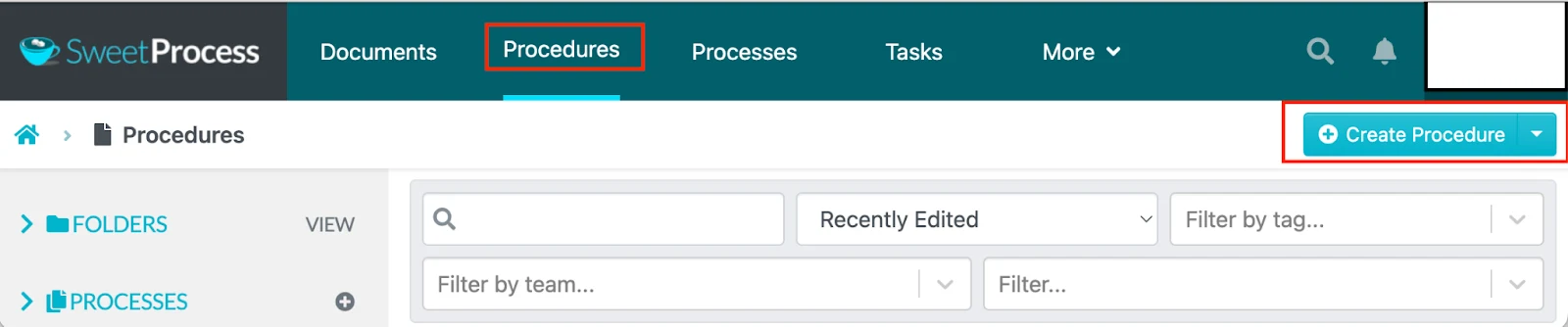
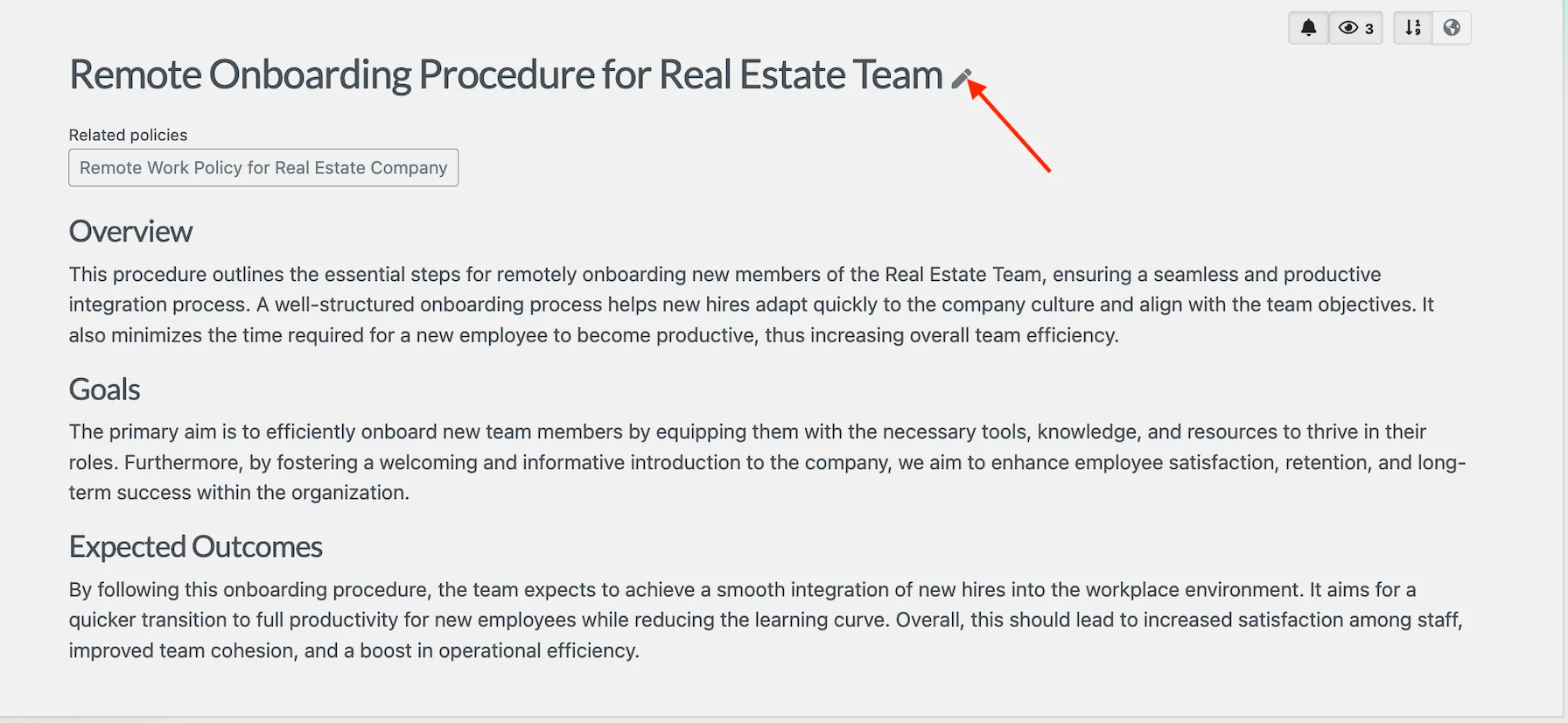
You can draft it manually or expedite the creation process by using SweetAI. Here, you can also assign the procedure to specific teams.
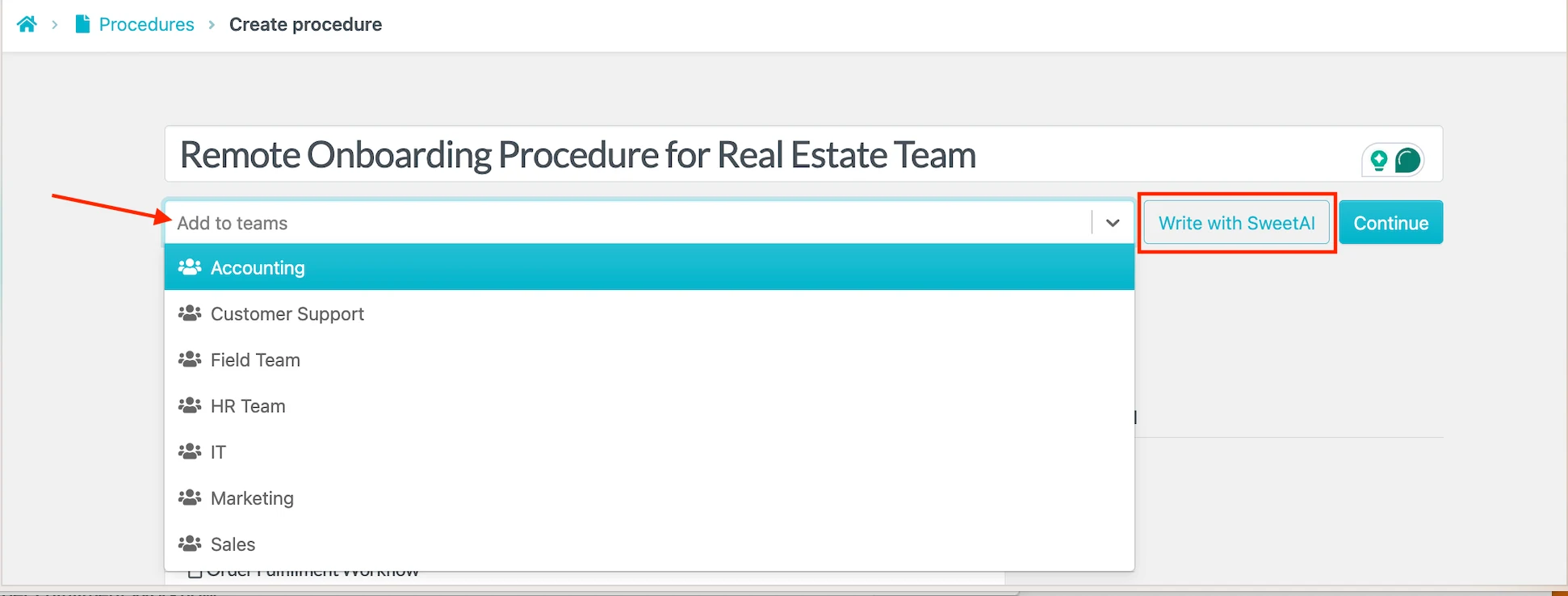
Once SweetAI generates the first draft, you can edit the procedure to reflect your goals.
You can also add steps or decision points either manually or with the help of SweetAI.
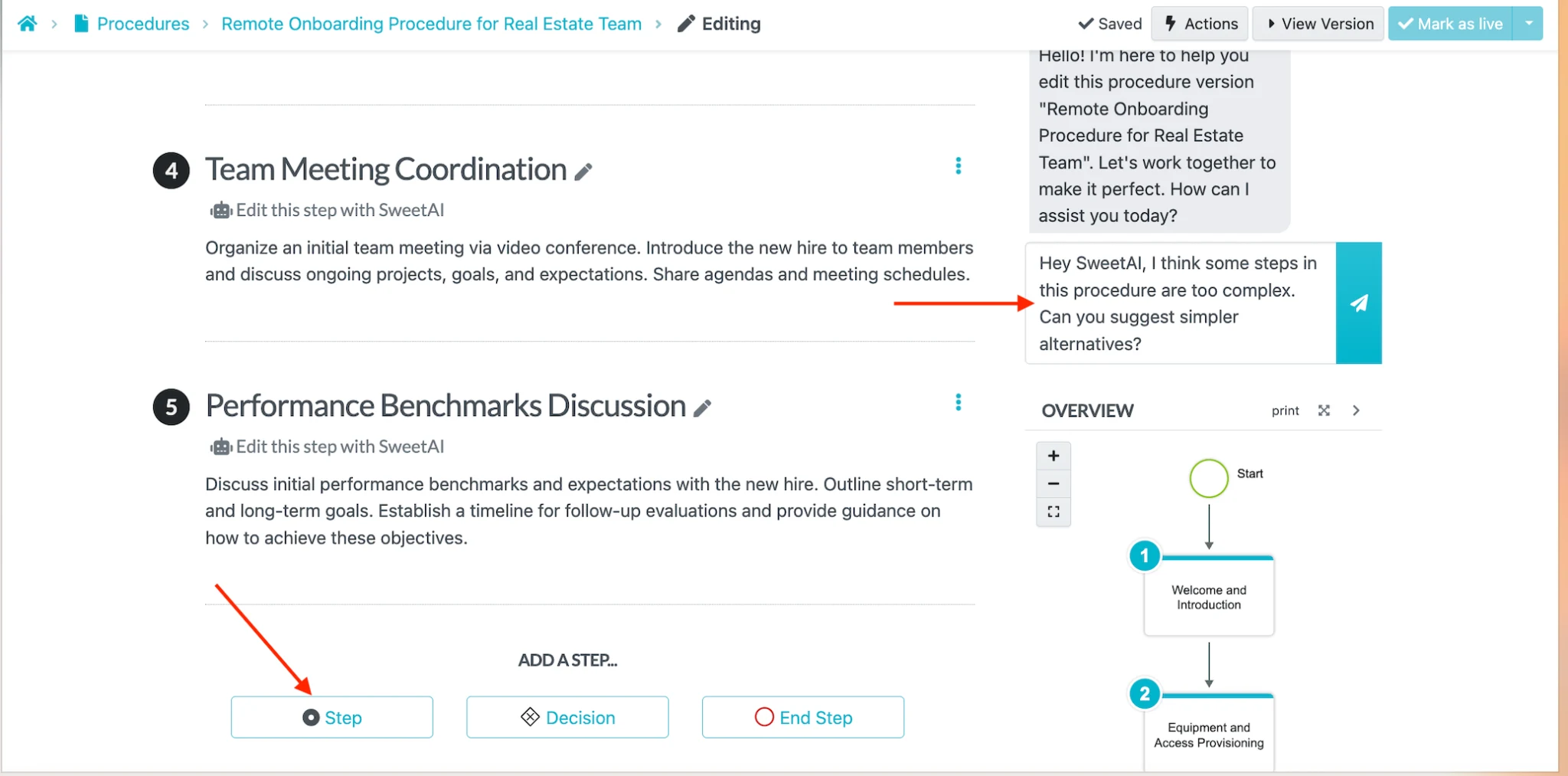
SweetProcess generates a flowchart as you edit your SOP. This creates a visual procedure that your team can follow.

Capturing SOPs
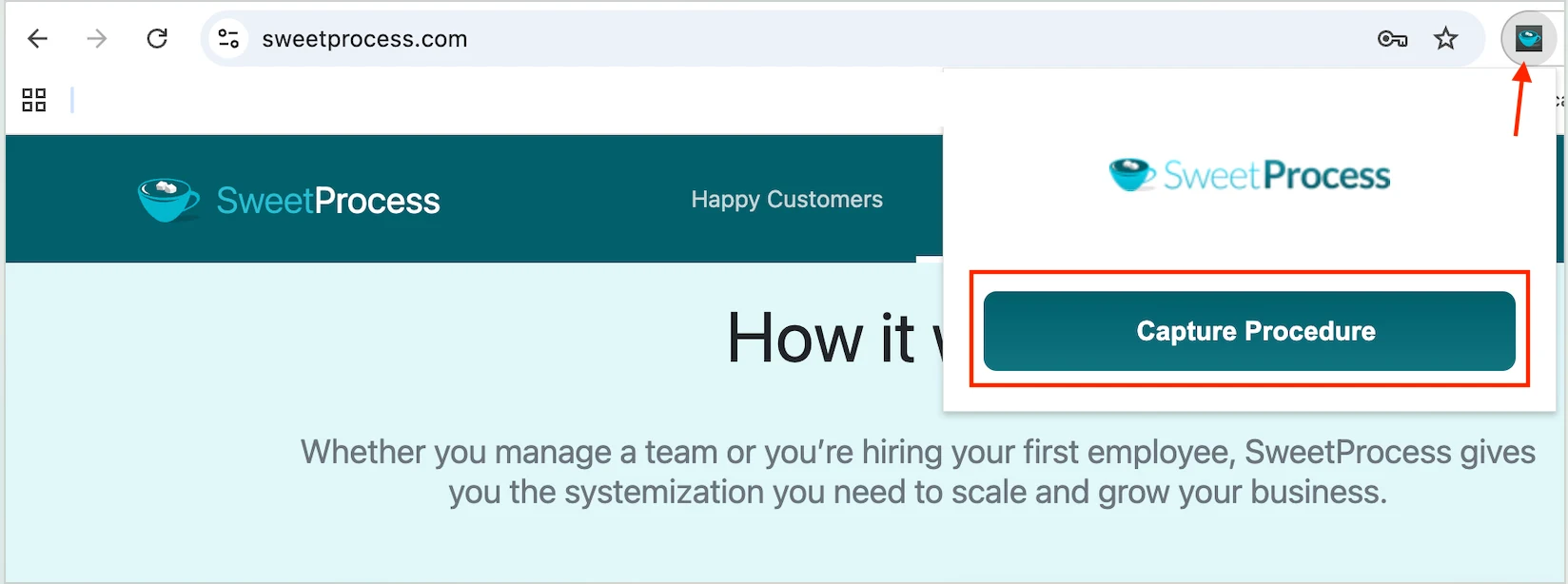
Alternatively, you can use the SweetProcess Chrome extension to capture your SOP before sharing it with the team.
Once the capture is complete, you can add it to your account for a more centralized approach.
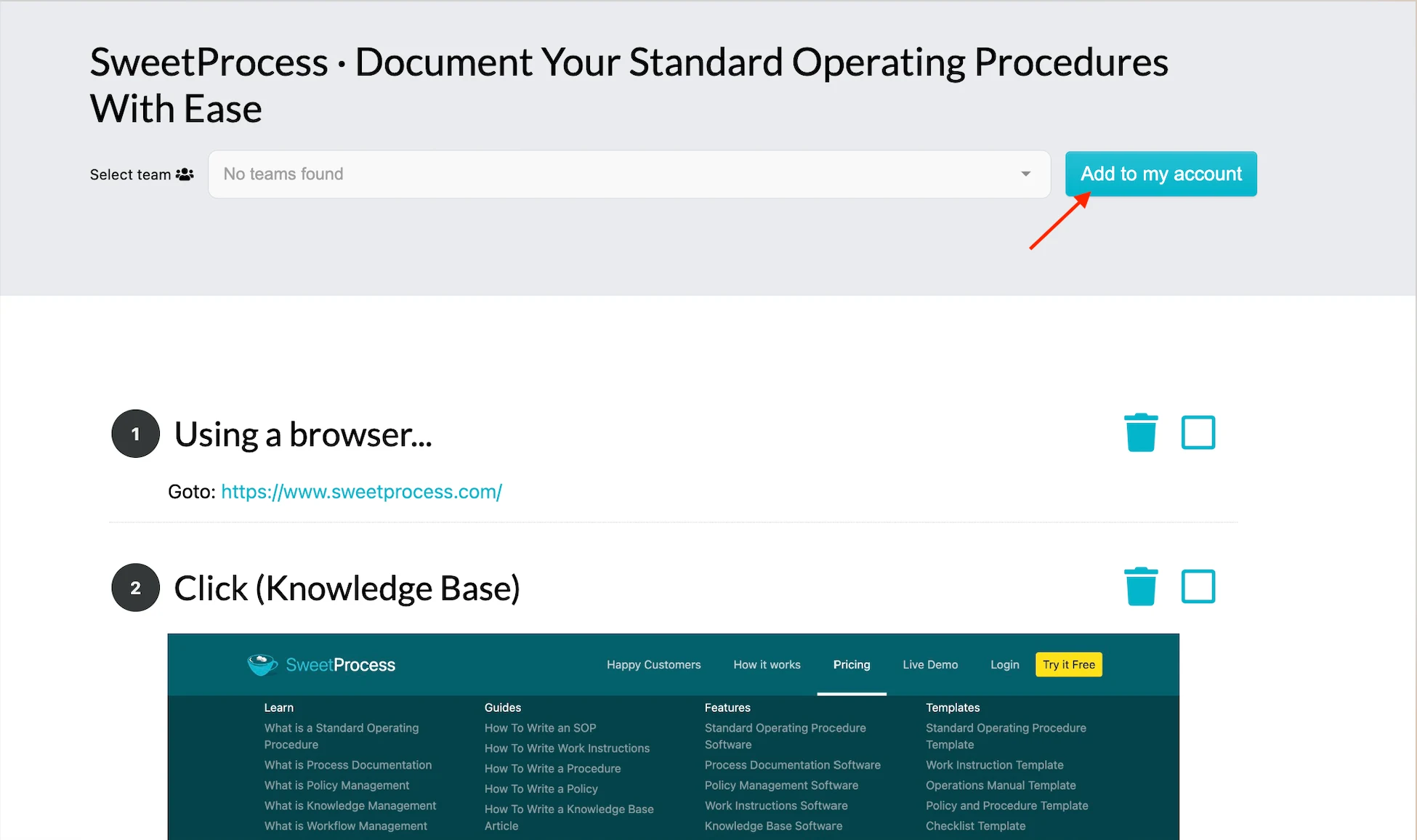
Here, you can edit the steps accordingly and remove what doesn’t represent your work.
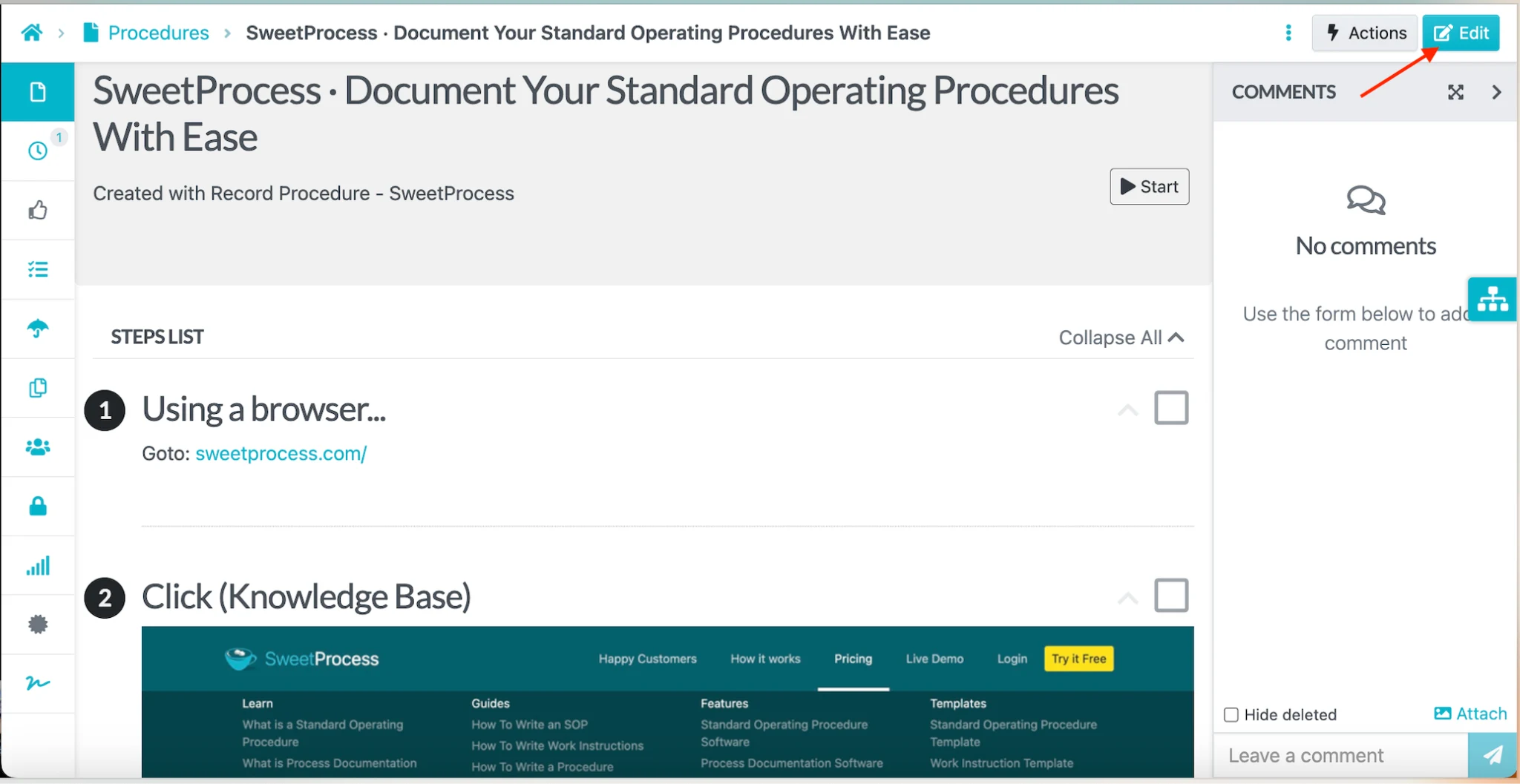
This allows you to add any missing steps of procedures that happen off-screen.
Assign SOPs as Tasks
SweetProcess enables you to assign a procedure as a task to a specific employee or team.
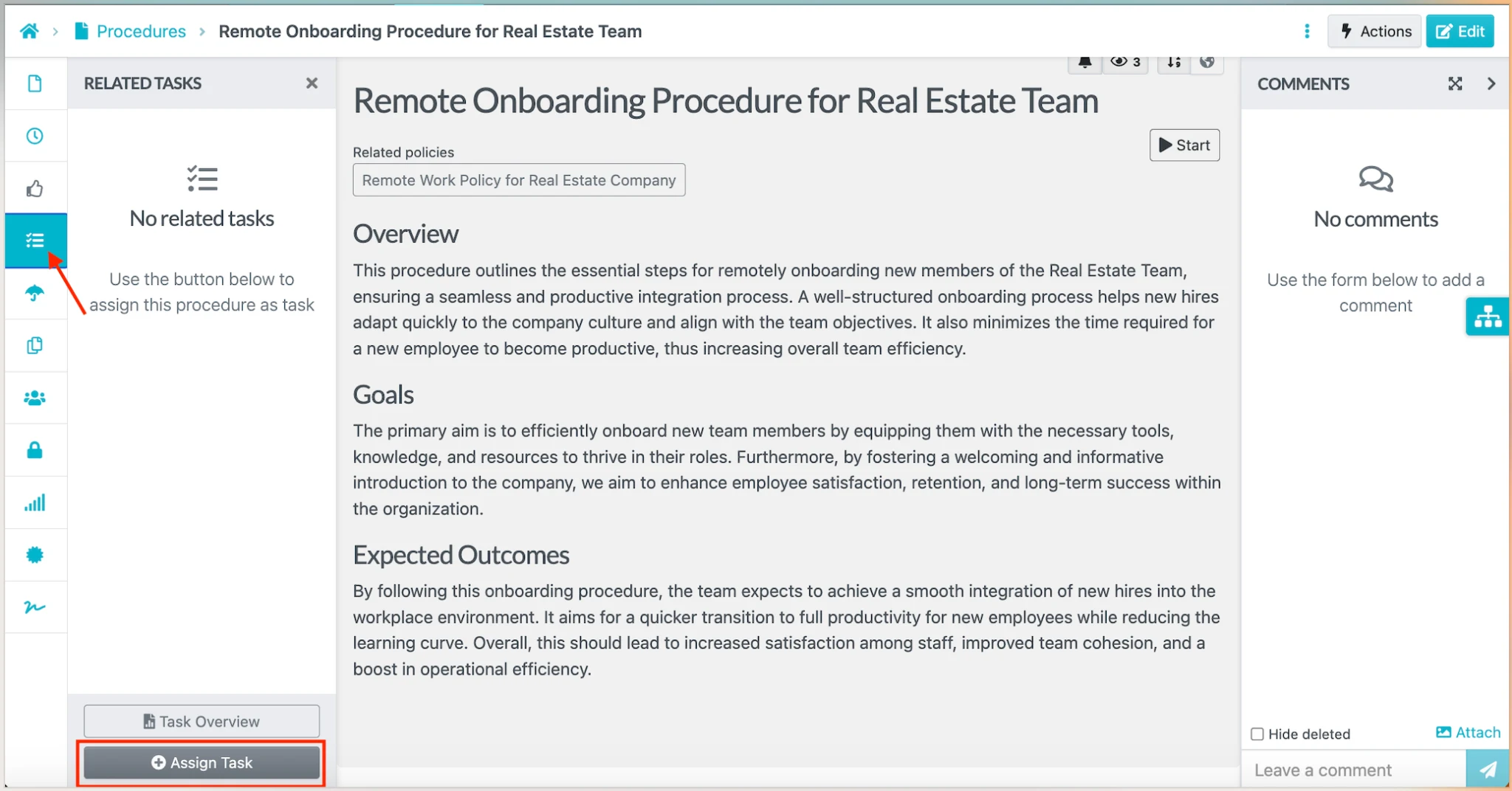
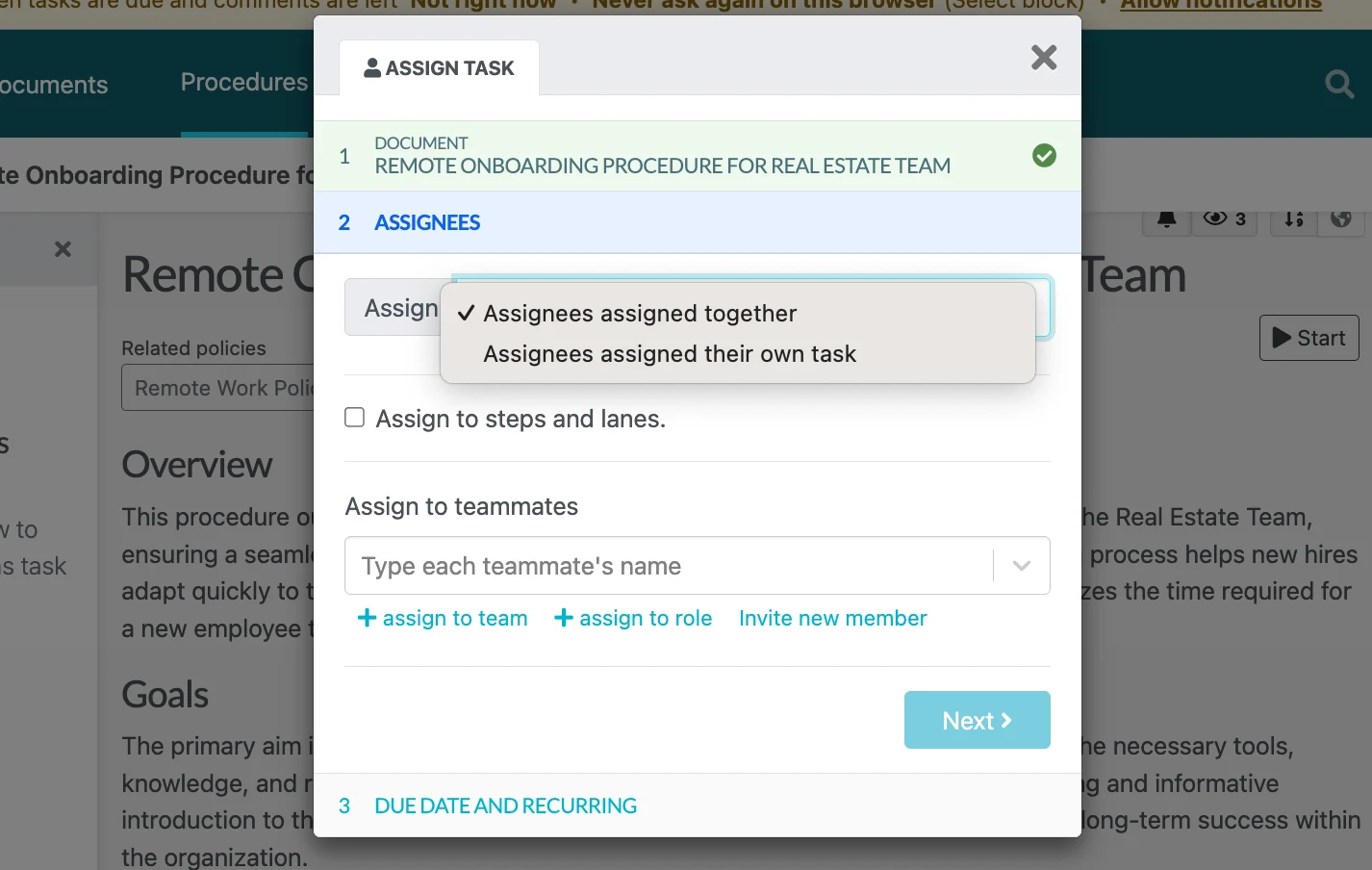
You can choose specific steps to make it easier to track every assignment.
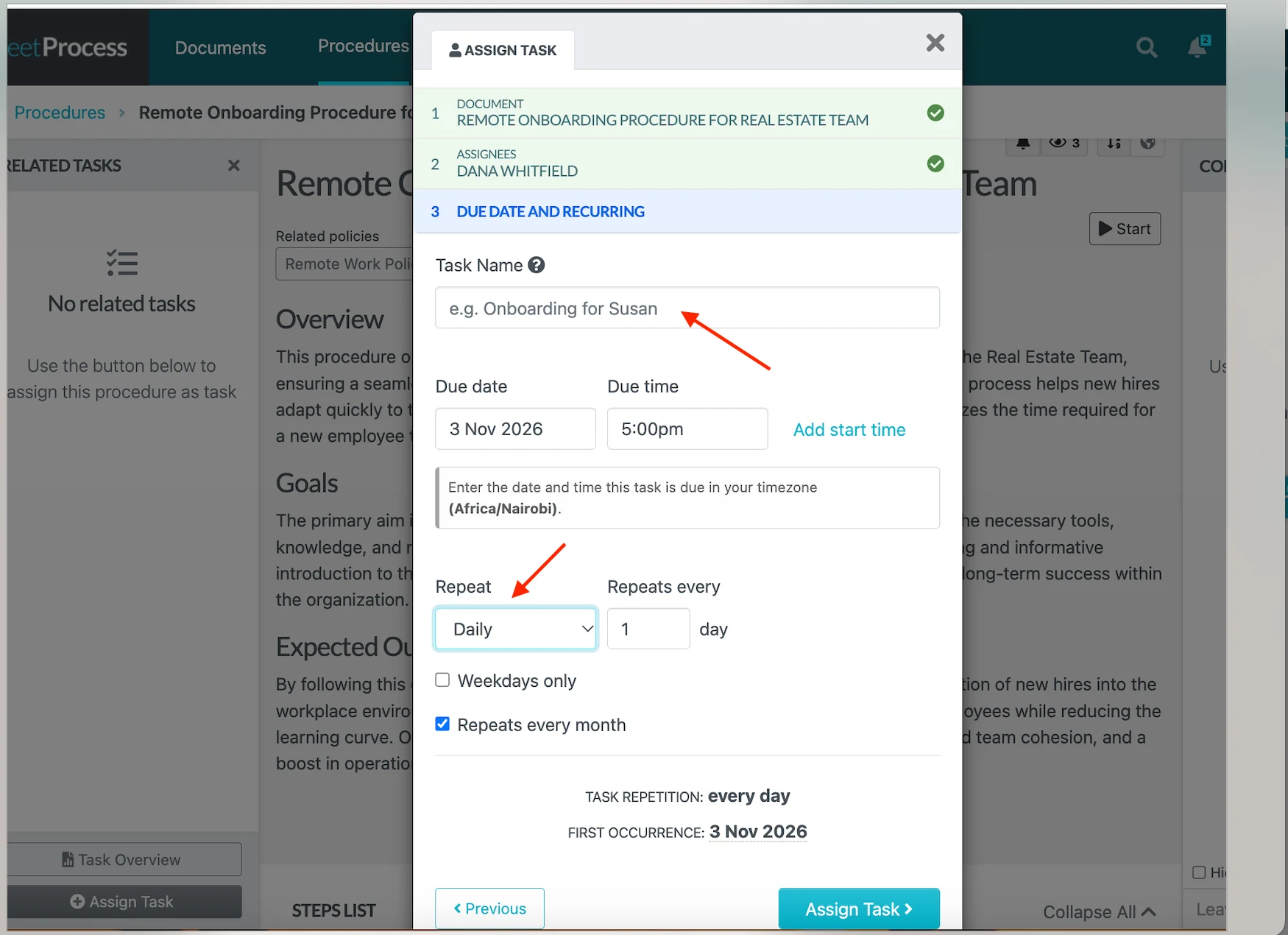
You can also indicate whether the task happens once or keeps recurring. For searchability, add a name to the task.
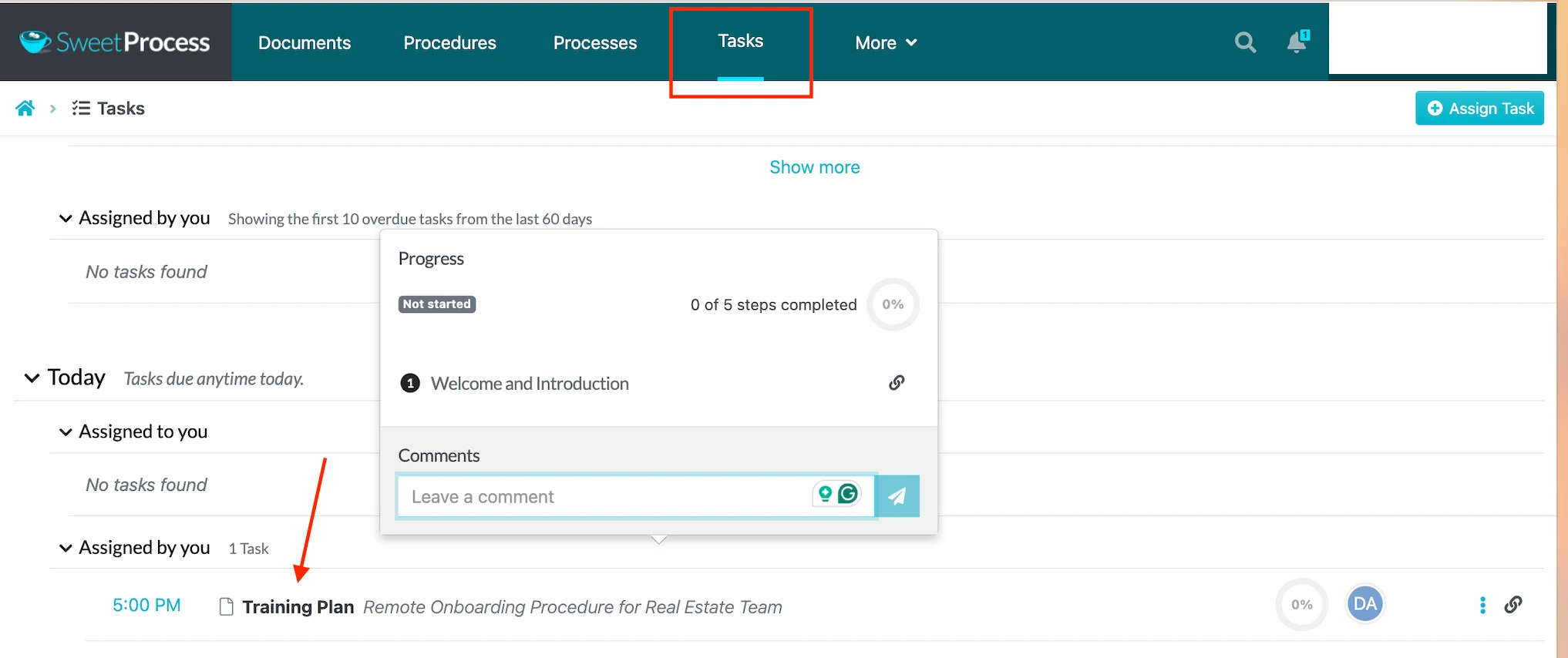
From the “Tasks” menu, you can view what’s pending and what’s completed.
Approvals and Review of SOPs
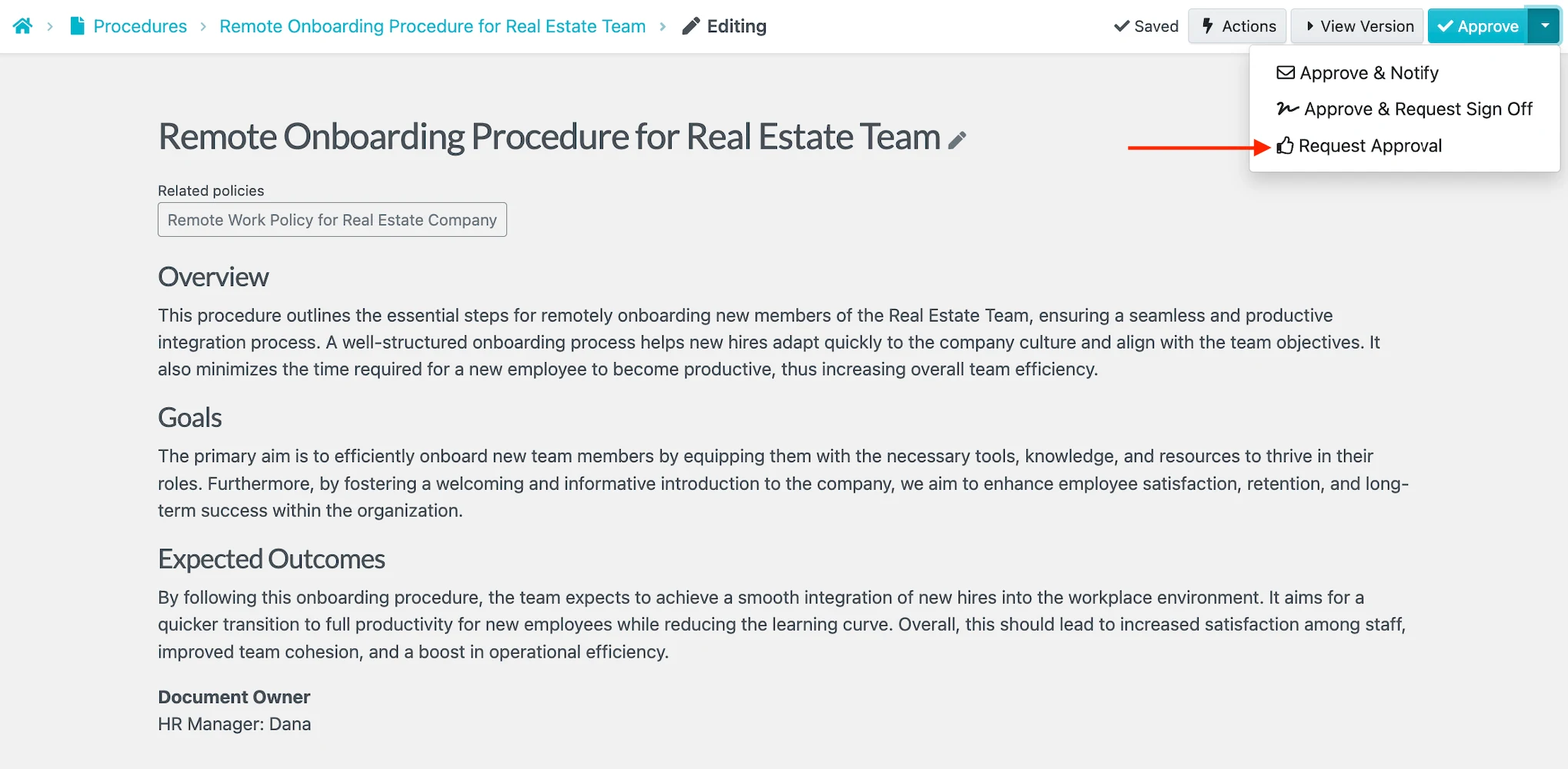
If you need your onboarding procedure to be approved by a manager or supervisor, you can request approval before it goes live.
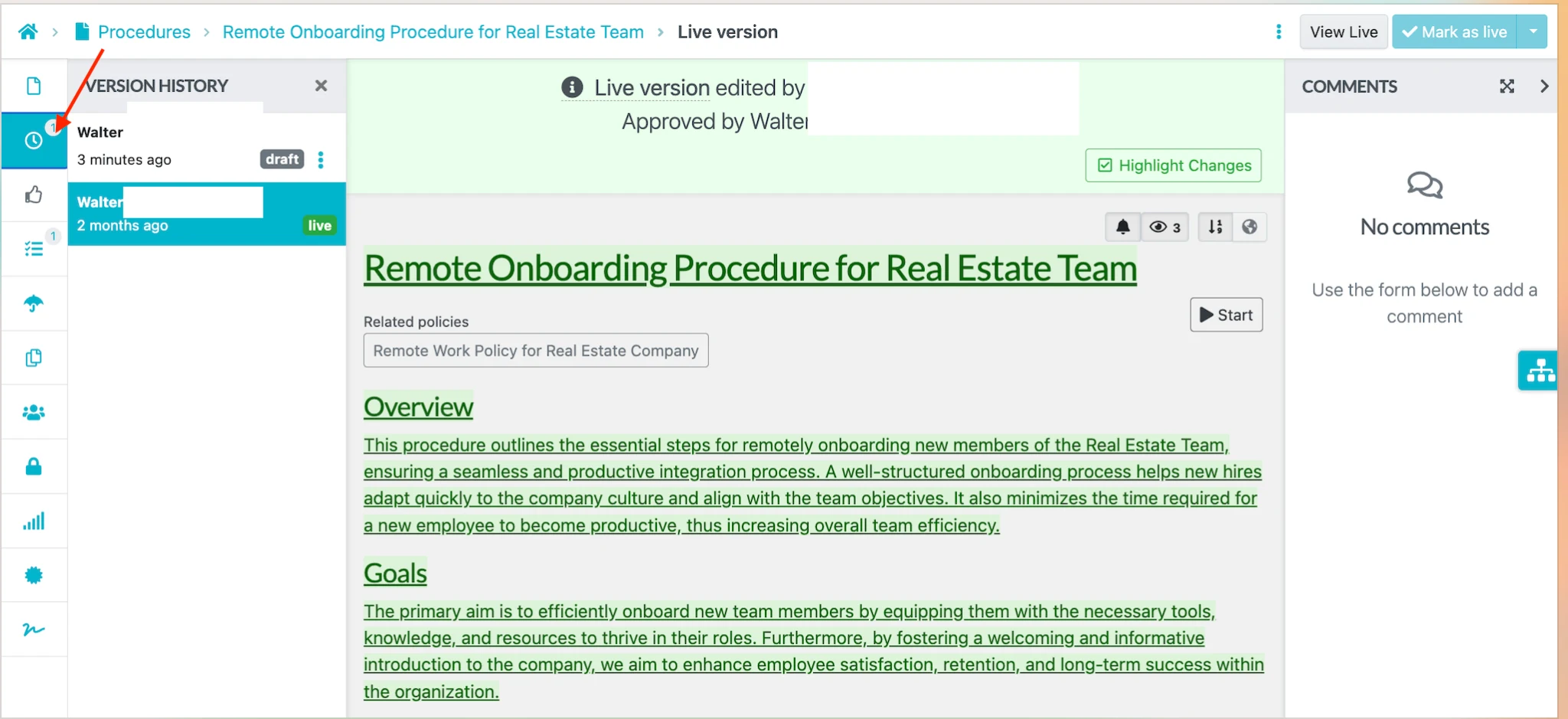
Authorized editors can review version history and restore a prior version when their permissions allow it. Check which roles can revise and approve your procedure before you roll it out.
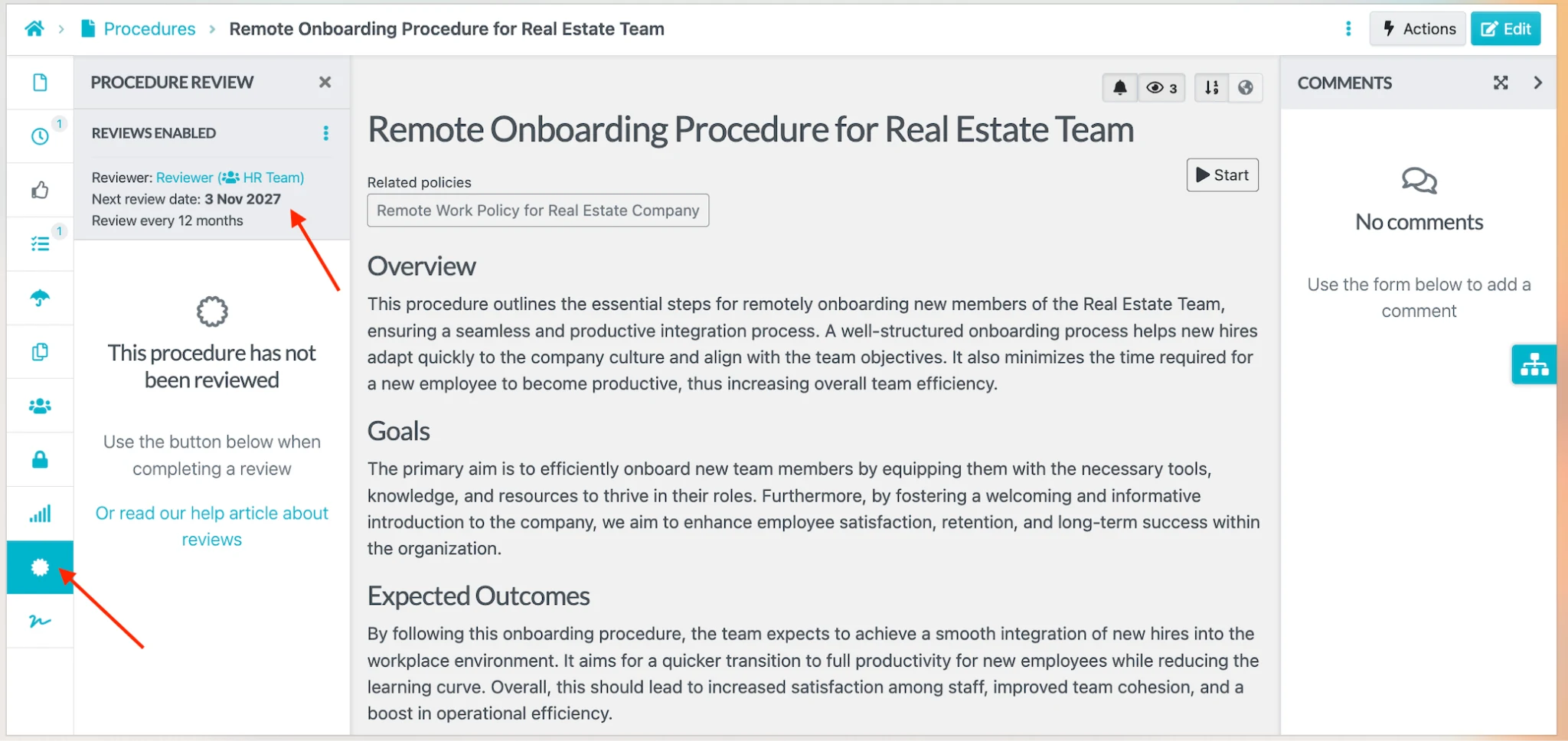
SweetProcess also allows you to schedule reviews so an assigned owner can check whether your SOPs need updates.
For instance, you can assign the onboarding procedure to your HR team to ensure that it reflects the employment guidelines and training requirements for new hires.
SweetProcess Customer Proof
SweetProcess is your accountability partner
Don Houk of Next7 IT had an issue with his team’s accountability. They adopted SweetProcess, which helped them track who completed tasks and when, giving the team and its customers greater visibility into work performed.
According to Don, “Not having the accountability of who did what and when was probably the breaking point.
We saw the need ourselves, and our customers wanted the accountability that comes with having a checklist that has a timestamp date next to it of when things occur.”
SweetProcess helps to enhance customer experience
According to Tom Vranas of Everywhere Wireless, using SweetProcess has helped to ensure that their support team and network engineers are always on the same page regarding their processes.
Having shared access to documented processes reduced the need to search through separate documents and binders when assisting customers.
Tom said, “It gives them a single spot to be able to get all the information they need without trying to look through the documents and binders and all of the mess that it was.
It just makes that customer experience significantly better which is our entire goal of the company.”
SweetProcess aids efficient employee onboarding
Knowledge distribution is one of the greatest challenges you could face in your team as a manager. Developing a standard procedure for a process, improving existing procedures, and setting up company policies for compliance is not easy.
It’s a different thing to do all of these yourself or with an experienced team member until they are ready for deployment.
It’s another thing to make all team members aware of them, study them, and comply with them to ensure that everything goes on smoothly.
However, it’s easier said than done, especially if you’re using the wrong tool. Documented instructions give new and existing employees a shared place to find the steps and ask questions.
The team at Everywhere Wireless shared their experiences on how they improved their employee onboarding. “For us, it had to be a tool that anyone could access.
The idea is that anyone should be able to create, edit and suggest because that’s where the knowledge comes in…Within a minute, anyone who logs into the system can do exactly what they’re needing to do. It really had like the exact feature set.”
SweetProcess offers one-on-one customer support
Tom Vranas’ experience was at a crossroads regarding the best standard operating procedure tool that would be perfect for his organization. According to Tom, “We kept going back.
I’ve had dozens of conversations with Owen through this process, wanting to get it right… Our evaluation was like a three-month long thing. We kept going back and kept asking for a demo and they obliged us. They never pressured us.”
SweetProcess Pricing
SweetProcess costs:
$99 per month for up to 10 members, plus $5 per month for each additional member, if paid monthly.
If you pay annually, $990 per year for up to 10 members, plus $50 a year for each additional member.
For smaller teams of up to five users, it costs $495 annually and $50 per year for each additional member.
SweetProcess advertises a 30-day money-back guarantee for new subscriptions. Renewal cancellations follow its separate refund policy.
Consider SweetProcess if: You want to maintain procedures, assign them as recurring tasks, manage revisions and approvals, and connect all your written documentation with repeatable operational work on the same platform.
SweetProcess may not be the right fit: Your primary need is a highly configurable low-code application, extensive project portfolio planning, or maintenance-specific work orders and asset management.
You’ll need to compare the specialist tools in this list designed for those jobs.
CheckFlow: Best for Checklist-Led Execution
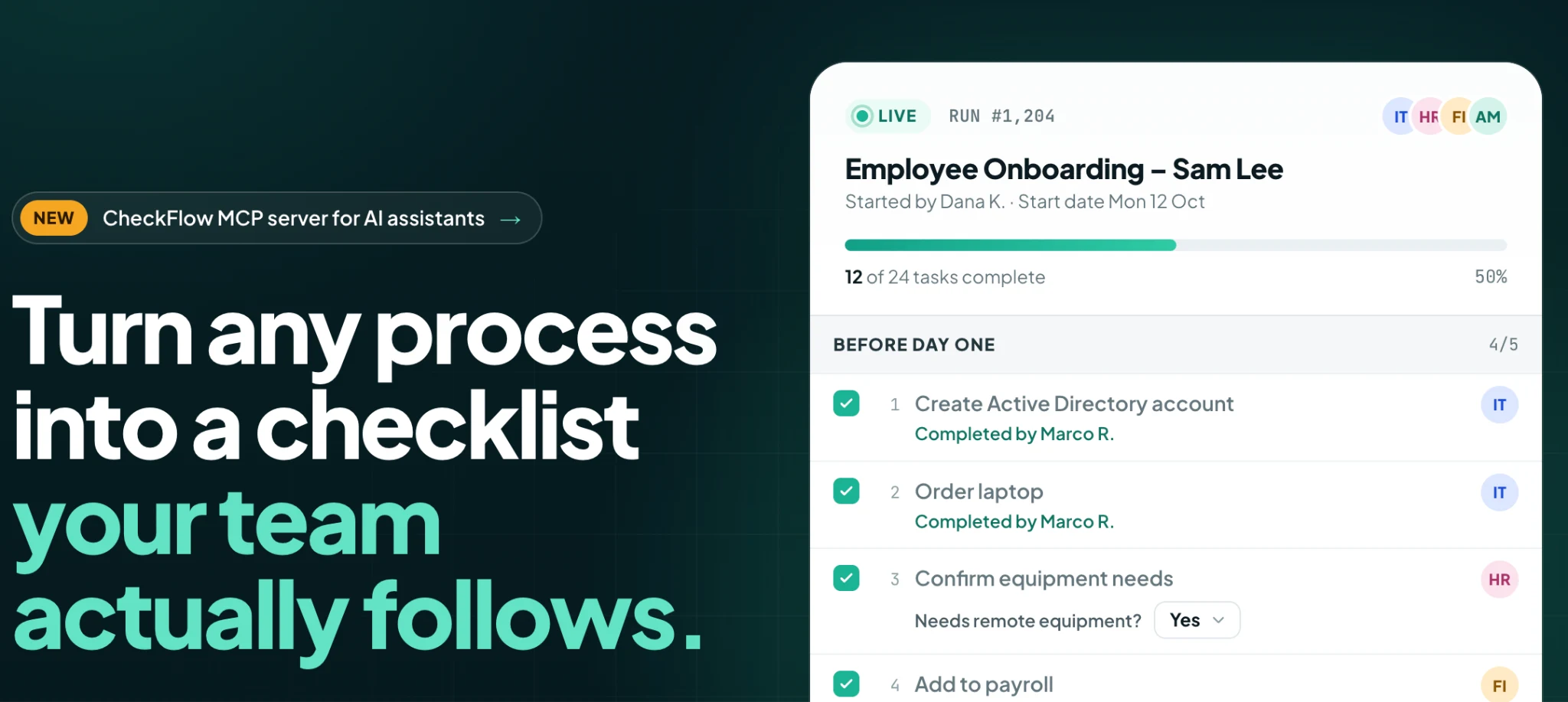
CheckFlow is a Flowster alternative to consider when your team needs structured checklists, task execution, and reusable operational knowledge. You can describe your checklist, and AI will draft the template.
CheckFlow then assigns tasks to your team, keeping track of everyone who has completed the task for easier collaboration. With this tool, your team can follow a sequence to keep operations streamlined.
Features of CheckFlow
-
Process modeling and designing of workflows and templates: CheckFlow allows you to create, edit, review, duplicate, and delete workflows and templates. You can easily add multiple tasks to structure the steps involved in a process.
-
Create, edit, share, and collaborate on your checklists: After creating your checklists, you can make them accessible and editable by many users at a time. The synchronizing feature makes it possible to collaborate on them. You can also share your checklists with anyone using a unique link and users do not need to sign up or log in to access it. This allows you to easily collaborate with clients and is an effective way to collect information.
-
Create dynamic processes using conditional logic: Use conditional logic to create truly dynamic checklists based on if/then logic. CheckFlow allows you to show and hide tasks and controls based on the value entered into a specific control such as a text box or drop-down. This type of responsive checklist gives you more power over your workflows, and you can create multiple conditional logic rules to control exactly how you want your process to behave.
-
Build processes with the drag-and-drop designer: CheckFlow has a simple editor that allows you to create tasks in seconds. Drag-and-drop controls onto each task to capture input or display data. You can control and automate your workflow using many other advanced features.
-
Advanced analytics and reporting: The CheckFlow analytics dashboard provides you with all the data you need to adopt continuous improvement practices within your business. You can view statistics, charts, and raw data on all of your checklists and tasks. This will help you identify projects and tasks that are not performing as expected and make necessary improvements.
-
Powerful automation and collaboration: Automation features such as conditional logic, auto assignments, and checklists help to control your workflow and reduce your workload. CheckFlow’s small business SOP software includes controls and workflow features that allow you to easily build seemingly complex processes.
CheckFlow Pricing
CheckFlow has two pricing tiers. The Business plan costs $10 per user per month billed monthly, or $9 per user per month if billed annually.
The Enterprise option costs $18 per user per month billed monthly, or $16.20 per user per month billed annually, with a five-user minimum. You can test whether this tool is a good alternative using the 14-day trial.
Consider CheckFlow if: Your team relies on recurring checklists, structured task execution, and collaboration with external participants.
If you run daily or weekly checklists with outside participants, look closely at its guest roles, because free guests and anonymous shared participants have different permissions from members.
CheckFlow may not be the best if: Your primary goal is to establish a central system for policies, maintained procedures, approvals, and broader documentation needs.
In that case, consider whether a dedicated SOP management platform better supports your documentation and approval requirements.
Process Street: Best for Structured Workflows With Approvals
Process Street is a workflow management platform that helps teams organize recurring processes into structured steps. You can manage your workflows, complete the steps in order, and send the work through approvals to ensure consistency.
It’s a good alternative if you want to manage recurring tasks and connect them to your day-to-day work.
Features of Process Street
-
Structured workflows: You can organize work into defined steps so people can follow the intended sequence. During a trial, examine how assignments and progress are represented and whether the workflow makes the next action clear.
-
Approvals: Add approval steps to workflows so designated people can review and authorize work before it moves forward. Test who can approve a step, how an approval affects the next stage, and how the record reflects the decision.
-
Due dates and scheduled workflows: Use due dates to clarify timing and scheduled workflows to support recurring activity.
-
Workflows, Pages, Forms, and Data Sets: Process Street combines workflow execution with documentation pages, forms, and structured information. Confirm the features included in the quoted plan and the configuration needed to connect documentation with execution.
-
Logic: Use conditional logic to adapt workflows based on information entered or decisions made during execution. This can help direct employees to the relevant steps instead of requiring everyone to follow an identical sequence.
Process Street Pricing
Process Street’s current pricing structure requires you to request sales quotes for the Startup, Pro, and Enterprise plans.
The Startup plan includes five users, 10 guests, and up to 5,000 Data Set records. If you upgrade to Pro or Enterprise, you can customize the number of users and guests who can use the software to document SOPs and manage work.
Startup eligibility is limited to organizations with fewer than 15 employees and under $2 million in revenue.
Process Street offers a 14-day Pro trial without a credit card. You can use this period to evaluate whether the tool is a good fit for your business.
Consider Process Street if: You need workflows that move through defined steps, include approvals and due dates, and can be scheduled to run repeatedly.
It’s worth testing when several people must contribute to a process, and each handoff needs to be clear, such as client onboarding or a vendor review.
Process Street may not be a good fit if: You need a publicly listed price for immediate budgeting. A sales quote can make comparison harder unless you provide the same requirements to every vendor.
Wrike: Best for Project and Portfolio Coordination
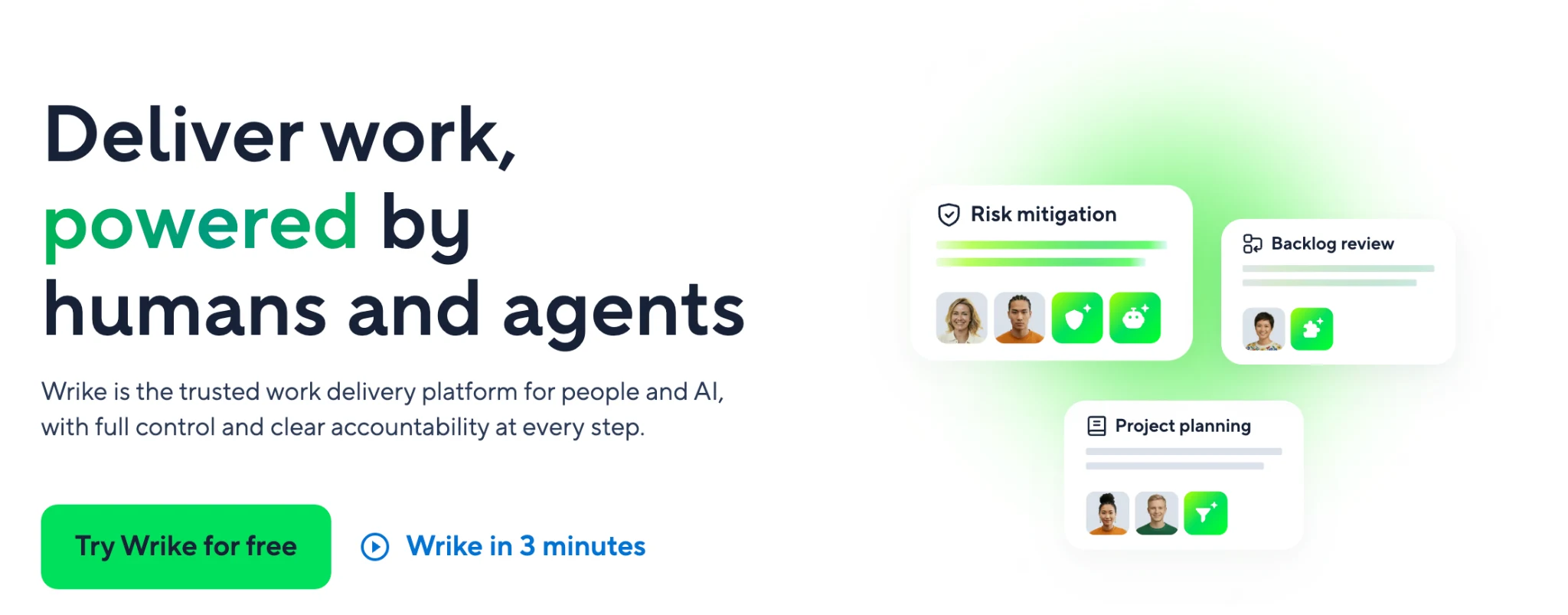
Wrike is a project management software designed to help with project planning and collaboration for teams and businesses. It offers pre-built templates that teams can adapt to recurring activities, projects, folders, and tasks.
These templates help standardize repeatable work by giving employees a consistent starting point. Teams can organize activities by project, assign owners, and set start and end dates to track progress and deadlines.
Features of Wrike
-
Wrike AI capabilities: Team includes AI Essentials; Business adds starter actions for AI agents, with larger allowances on higher plans. Confirm the required tier and usage allowance for the AI work your team needs.
-
File management: For creative teams that need to send and receive different file versions and attachments from time to time, Wrike enables them to have easier access to files and attachments. It also has a versioning feature that provides a way to track the most recent versions of file attachments. This makes it easy for teams to know the latest document versions to work on.
-
Seamless communication: Wrike enables team discussions, and this is built into the same system where the actual work and the creative files reside. Team members can provide their feedback and views on the latest press release, a recently uploaded design mockup, or even ideas for a holiday party, and easily engage their colleagues to learn about their ideas.
-
Collaborative editing: It allows multiple team members to access and contribute updates and feedback to files and documents. Tasks can also be assigned and shared across the team to coordinate responsibilities.
-
Real-time data reporting: Wrike allows you to generate reports from real-time data. These can include timesheets as well as weekly productivity charts that provide data on your team’s output.
-
Customizable workflows: Different companies have different processes they follow to achieve their targets. With Wrike, you can customize the software for your way of working instead of making the team adjust to any platform’s limitations.
Wrike Pricing
Wrike offers five pricing plans. You can use the Free plan to test out the tool. The paid Team plan starts at $10 per user per month for two to 15 users, billed annually.
The Business plan costs $25 per user per month for teams with five to 200 users, billed annually.
For Pinnacle and Apex, you’ll need to contact the sales team to get a quote. Seats are sold in packs, so confirm the purchasable seat count rather than multiplying the rate by any arbitrary headcount.
Wrike Whiteboard is included in Apex and is listed as a $15-per-user-per-month add-on for other plans. Ask the sales team which add-ons your plan needs and what they cost. Wrike Lock is not included in Apex.
Consider Wrike if: You need to coordinate several projects at once and need to manage resource allocation, dependencies, and deadlines across a group of projects.
Wrike may not be a good fit if: Your primary challenge is keeping SOPs current and connecting them to repeatable daily tasks.
In that case, examine whether Wrike’s project structure gives employees the documentation experience they need or whether a dedicated SOP platform would serve them better.
ProcessPlan: Best for Routed Process Steps
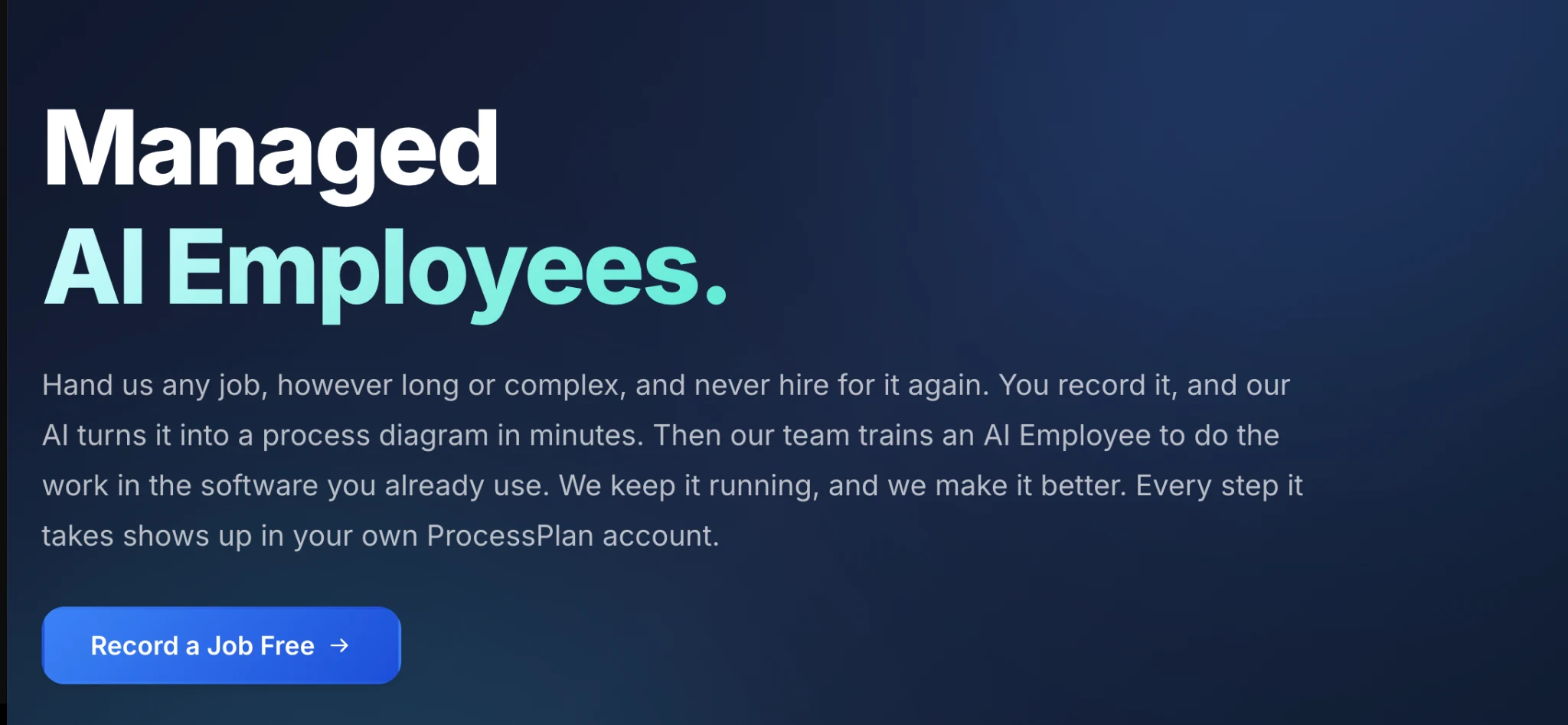
ProcessPlan is an option for teams that need configurable workflows combining automated actions with human steps, approvals, deadlines, and task routing.
With this tool, you can record your SOP, and then use the AI tools to transform it into a process map your team can follow.
This makes it worth considering when a process involves several handoffs or decisions that need to be routed to the right people.
Features of ProcessPlan
-
Workflow automation: As a standard operating procedure tool, ProcessPlan allows you to automate repetitive tasks and processes. This will help in improving efficiency and reducing the risk of errors.
-
Process recording and diagrams: Use process-recording tools to capture how work is performed and create visual diagrams of the workflow. These can help a team document and understand a workflow before deciding how to configure its execution.
-
Human steps and routing: Identify the tasks that require employee input or action within an automated workflow. ProcessPlan can route these steps to the relevant people, helping teams manage handoffs and ensure that work moves to the next stage.
-
AI strategist: The AI Strategist is included with user licenses. With these features, you can assign work to your employees, set goals, update procedures once approved, monitor all processes, and measure the results.
-
AI employees: ProcessPlan offers AI employees that can carry out assigned work by using company documents and interacting with connected systems. They carry additional charges for active work time, workstations, and one-time process fine-tuning.
ProcessPlan Pricing
ProcessPlan charges $29 per user per month for user licenses billed annually, or $35 per user per month billed monthly. The AI Strategist is included.
AI Employees incur separate charges for active work time, a workstation, and one-time process fine-tuning quoted in advance. Recording and process diagrams are free.
Consider ProcessPlan if: You need to model how work moves through people, approvals, deadlines, and automated steps. It may suit an operations lead who wants to formalize a complex process and is prepared to configure and maintain it.
ProcessPlan may not be a good fit if: Your priority is maintaining a central library of detailed written procedures, screenshots, and company policies. In that case, a dedicated SOP management platform may be a better fit.
Kissflow: Best for Low-Code Apps and Workflows

Kissflow is a low-code and no-code platform that allows team members to create automated processes, build task boards, handle case flows, and collaborate on work topics, all in one platform.
It lets your team configure applications with less traditional programming. However, you’ll still require decisions about data, permissions, workflow rules, and ongoing maintenance.
Features of Kissflow
-
No-code automation: Business users can configure workflow steps, forms, and approvals with no-code tools. More complex applications and integrations may require low-code development or technical support.
-
Process approval alerts: Its process approval alerts help to optimize the approval process by sending alerts to the people involved for their input or review.
-
Workflow configuration: You can organize the steps that move a request or process from one stage to another. Test the handoffs, approval rules, and exception paths that matter to your team.
-
Reports: Kissflow offers reporting capabilities that allow you to get all the business insights you may need.
-
Governance features: These matter when applications and workflows need clear ownership, consistent permissions, and appropriate oversight.
-
Mobile access: You can use Kissflow through a mobile browser or Progressive Web App. If offline work matters, confirm support for the specific application and actions your team needs.
Kissflow Pricing
Kissflow’s main pricing page directs buyers to request a quote. A separate official platform-pricing page lists Basic from $2,500 per month and custom Enterprise pricing.
Confirm the applicable package, included services, and contract terms with sales.
Consider Kissflow if: Your business process requires a configurable application, structured data, reporting, and governance, and you have the resources to build and maintain them.
Your team should be prepared to design the forms, define the approval paths, test them, and update applications as business requirements change.
Kissflow may not be a good fit if: Your primary goal is to write and maintain SOPs, assign recurring tasks, and keep instructions accessible, and you need a quote upfront.
A dedicated SOP management platform may offer a more direct solution without requiring you to build and maintain custom applications.
ClickUp: Best for a Broad Work-Management Workspace
ClickUp is an all-in-one productivity platform where teams can plan, organize, and collaborate on work using tasks, docs, chat, goals, whiteboards, and more.
It suits teams looking for a broad workspace for tasks, documents, and project coordination, with an owner to maintain its structure.
Features of ClickUp
-
Task management: Create and organize tasks, assign responsibilities, set deadlines, and track progress from one workspace. Teams can use task updates and activity histories to monitor changes and see the status of ongoing work.
-
Brain AI: This AI-powered workspace understands your workflow from your tasks and conversations and generates output that you can use.
-
Docs: You can easily create and maintain documents alongside related work on the same collaborative platform.
-
Custom fields: Through ClickUp, you can customize your fields, tags, and relationships to align with your business.
-
Team collaboration: ClickUp offers several team collaboration features that enable users to assign multiple people to any task to work on together and comment in threads, or turn them into action items for faster turnaround. Teams can also share updates in real time using the built-in chat view feature.
-
Scheduling: ClickUp has different calendar and planning views to keep project managers organized to finish tasks on schedule. You can schedule work, set up and manage dependencies, and prioritize anything and everything while building a master project timeline.
-
Resource management: With ClickUp dashboards, you can see what team members are assigned to, working on, and what their progress looks like with visual layouts of the information available in the system. Managers can plan and manage resources to get the most out of every team member without overburdening any of them.
-
Reporting: ClickUp helps users track progress with real-time reporting that can be organized into ready-to-use or customizable reports composed of charts, maps, calendars, and more.
ClickUp Pricing
ClickUp offers Free Forever, Core, Business, Enterprise, and MAX plans. The displayed annual rates are $9 per user per month for Core, $17 for Business, and $100 for MAX. Enterprise pricing is custom.
New plans are being rolled out to Workspaces, so confirm the packaging and billing terms available to your team.
You can also pay for add-ons such as AI credits at $10 per 10K credits or request a quote for certified agents.
Consider ClickUp if: Your team needs one broad workspace for tasks, documents, forms, and project coordination. It’s relevant when your team is prepared to configure the workspace around its own work.
ClickUp may not be a good fit if: You don’t want to own the setup, or if you need one clearly maintained source of instructions with a built-in approval record.
Compare the amount of setup required with a dedicated procedure-management platform before settling on a tool.
MaintainX: Best for Maintenance and Asset Operations
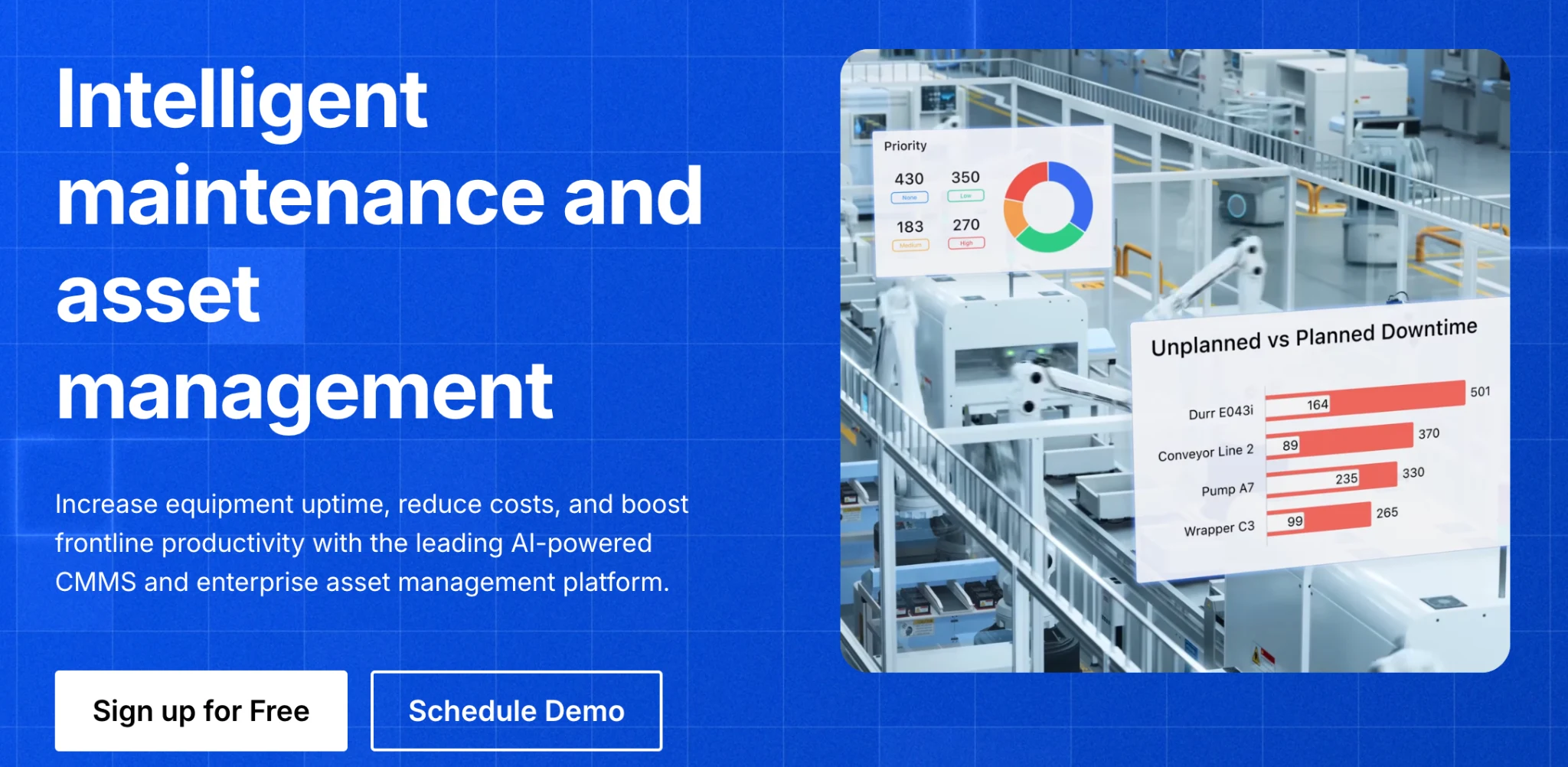
MaintainX is a workflow management platform designed for maintenance operations, work orders, and asset management.
It helps businesses track reactive and preventive maintenance and control daily operations such as safety inspections, quality inspections, and operating checklists.
Its digital records also help track completed work and maintain visibility into maintenance activities.
Features of MaintainX
-
Checklists and inspections: Create checklists for routine inspections, safety checks, and operational activities. Teams can use them to record inspection results and track whether required tasks have been completed.
-
Work order management: Create and assign work orders, add comments, and track their status.
-
Asset management: Maintain records of equipment and other physical assets, including relevant maintenance information and work history. This helps teams monitor asset conditions and organize maintenance activities.
-
Preventive maintenance: Schedule recurring maintenance tasks based on time intervals or equipment requirements. This helps teams plan routine servicing and inspections before equipment problems lead to unexpected downtime.
-
Parts inventory management: Track spare parts, stock levels, and part usage in maintenance work. Check the required plan for your inventory needs.
-
Maintenance procedures: You can document the steps involved in maintenance activities and share them with your team to follow.
MaintainX Pricing
MaintainX offers four pricing options: Basic, Essential, Premium, and Enterprise. The Basic plan is free and includes unlimited procedures, but only two work orders with attached procedures per month and two active repeating work orders.
The Essential plan costs $25 per user per month, billed monthly, or $20 per user per month if billed annually. It allows three work orders with attached procedures per month.
If you opt for the Premium plan, it will cost you $75 per user per month for the monthly payments or $65 per user per month if you pay yearly. The Enterprise plan is customized; you’ll need to schedule a demo to get a quote from the team.
Consider MaintainX if: Your operation depends on maintenance schedules, work orders, assets, and recurring equipment-related tasks.
MaintainX may not be a good fit if: You need a tool for primarily managing office processes such as employee onboarding, administrative procedures, internal policies, and general business workflows.
It’s not automatically a universal replacement for office SOP software.
What Are the Features That Make SweetProcess a Productive SOP Software?
Effective Documentation
Your team needs current instructions it can find and follow. A shared procedure library gives employees a consistent reference and gives managers a place to review changes.
Don Houk of Next7 IT described how procedures help less-experienced staff. He said they can “go do it and get the same result as if that more experienced person had done it.”
Don’s account illustrates how documented instructions can help a less-experienced colleague follow an established method.
Documented procedures let employees check the required steps and ask focused questions when instructions are unclear. Managers still need to review the work and keep those instructions current.
Employee Onboarding and Training
Employee onboarding and training is a continuous business activity. The quality of the onboarding and training is key to employee efficiency. If workers aren’t properly trained, they’ll lack the expertise to be efficient.
SweetProcess lets you share documented procedures and assign them as training tasks. New hires can work through the relevant instructions and refer back to them, while managers check progress.
The time needed still depends on the role and the training required.
The documentation features in SweetProcess make it easy to create comprehensive procedures and processes for self-onboarding.
Sometimes, showing teammates what to do with pictures and video elements beats telling them in text, and SweetProcess comes in handy in that aspect.
According to Don Houk of Next7 IT, “One of the things that’s very common with our types of procedures is the inclusion of screenshots. We mark them up. We make them fancy. We do all these things.
But being able to very quickly and easily add screenshots, it was surprisingly difficult to find a product that would do that very well. That was one of the key features that SweetProcess did a really good job with implementation there.”
While Tom Vranas was disclosing the reason for his choice of SweetProcess for employee onboarding at Everywhere Wireless, he said, “For us, it had to be a tool that anyone could access.
The idea is that anyone should be able to create, edit and suggest because that’s where the knowledge comes in…Within a minute, anyone who logs into the system can do exactly what they’re needing to do. It really had like the exact feature set.”
Consistency in Service Delivery
The ability to deliver good quality products and services, repeatedly, establishes a business as an expert in its industry.
Documenting the steps gives employees a common starting point and gives managers a way to review and improve how the work is done.
In the Next7 IT story, Don Houk connects documented procedures and scheduled work with more consistent service delivery.
Don explains, “it’s very repeatable and that’s one of the keys is having repeatable work.”
SweetProcess provides a shared place for procedures and completed tasks. Managers can use these records to review the work. In the Next7 IT story, Don connects repeatability with more consistent service delivery.
Document Versioning
The use and management of multiple versions of a document are very important in streamlining business operations. It enables team members to differentiate the different document versions needed to execute related tasks.
Since the documents are used for related tasks, there’s a tendency for employees to mix them up, causing setbacks in operations.
According to Eric Burnside of Independent Retirement, versioning was one of the things that they wanted out of their process documentation system.
He employed the services of Adi Klevit, who recommended SweetProcess, and the features ended up catering to all their business process needs.
Task Management
Operations move faster and better when team members are assigned different tasks based on their expertise instead of having everyone working on the same task. Effective task management promotes the division of labor and increases productivity.
When tasks are not assigned, there’s a possibility of employees doubling on the same task since there is no proper coordination. This leads to a waste of time and resources.
SweetProcess allows team leaders to manage tasks effectively by assigning specific tasks to team members and tracking their performance to completion. It offers real-time reporting that shows you how employees are interacting with assigned tasks.
According to Adi Klevit, “SweetProcess can assign procedures and processes to the different teams. It allows you to organize it in a very good way.”
Decentralized Knowledge Base
Existing employees, having spent more time at an organization, tend to be more knowledgeable about work duties than their newer colleagues. This knowledge and experience is evident in their performance and competence.
It’s important to allow your employees to offload such knowledge and competencies so their newer colleagues can easily get up to speed.
Without making use of the knowledge base feature, it could be a drastic loss to your company. When these experienced employees leave the organization, they take all that knowledge along with them to the detriment of the organization.
This was the situation at Everywhere Wireless before Tom Vranas adopted SweetProcess. In his words, “There’s this set of institutional knowledge that existed.
We had people who had been at the company, you know, four, five, six years, and they just know how it works, but we’re onboarding people all the time.”
Tom found the answer to his problem in SweetProcess. He has been able to preserve work-related information in a decentralized system accessible by authorized parties.
How to Choose Flowster Alternatives by Workflow and Total Cost
Once you have shortlisted Flowster alternatives, you need to compare them against the same operational scenario.
A useful comparison looks at:
Run a Workflow
For each alternative, you need to know whether:
-
Your team can find the current procedure and understands each step
-
You can define which employee is responsible for the next action
-
It’s possible to approve the SOPs before sharing with the team
-
Authorized team members can update the procedure and identify the current version
While not every product will approach the workflow in the same way, the point is to determine whether its documented capabilities and plan boundaries support your requirements.
Compare the Total Team Cost
Next, you need to build a cost worksheet for each of these Flowster alternatives. Here, you can evaluate the:
-
Number of paid users and their required roles
-
Number of guests allowed
-
Required templates or workflow limits
-
Monthly versus annual billing
-
Relevant plan-specific features
-
Onboarding or migration charges
-
Any usage-based charges, including applicable AI or automation costs
You can use the vendor’s current published prices where available. For quote-based tools, request a proposal that uses the same team size and requirements as your other comparisons.
For example, the published SweetProcess monthly plan includes up to 10 members for $99 per month, while CheckFlow Business is priced per user. Flowster’s published prices are team prices tied to user and template caps.
These models cannot be compared fairly by looking at the first number alone. You need to calculate based on your business needs and team size.
If five employees need access, calculate the cost for five employees under each applicable plan, then account for any additional requirements.
If your team needs eight people but a plan only includes five users, you’ll need to include the cost and availability of the next suitable tier or request for a quote.
Consider Who Maintains the System
The initial setup is only part of the work. Someone must own the procedure, review it when circumstances change, and ensure the right people can find it.
A configurable platform like Kissflow may require an administrator to maintain its workflows and permissions. A project management tool like ClickUp may require your team to establish a clear structure for SOPs and documents.
You need to define this before adopting a tool.
Choose an Alternative Based on Your Needs
A dedicated procedure platform may be the better fit for maintained SOPs and recurring work, while a project platform may make more sense when resource planning and dependencies are the main problem.
Look beyond the features and choose the product that fits the work your team performs.
Pilot and Migration Checklist
If you are considering migrating from Flowster to any of these alternatives, here’s a step-by-step process to follow before making the switch:
Inventory the Current Material
List the procedures, templates, checklists, policies, forms, images, and supporting files you need to move.
Record where each item currently lives, who owns it, the employees or roles who need access, the related templates or files, and the information that must be retained. You can retire the procedures nobody uses.
Sample Transfer
Move two or three real processes first that reflect the complexity of your real work. The sample should ideally include a recurring run, an assigned owner, supporting media, an approval, and an exception such as missing information.
If the team relies on guest access or integrations, you can include those requirements in the pilot. This way, you have a clear picture of whether the new tool will be a better fit.
Test Editability
Once you migrate the procedure, verify whether you can edit the document without requiring the input of an administrator. Verify whether you can add visuals, if necessary, and links to your resources.
Confirm Permissions
You also need to test the roles your team needs. Confirm who can create or revise instructions, who can perform assigned tasks, who can approve a step, and who can view the final record.
If you work with external stakeholders, you should also verify if they can access the documentation.
Test Exceptions
As you migrate the SOP, leave out a key part of the procedure that occurs in real work. Test the handoff to see whether the new platform requires employees to leave the workflow to send messages or track unresolved issues.
Completion Evidence
After a run finishes, you should see which employee completed each step and when. With this information, you can decide whether that record is enough for your needs.
Revise One Instruction
You can then change an instruction in the sample procedure, such as updating the person responsible for a step or changing the information employees must collect.
This step allows you to confirm whether an authorized team member can make the change and that the rest of the team can identify the current version.
Test Export
Before committing to any platform, you can compare them against a real process and confirm how you retain the information you need if you leave. Check the available export formats and the content they preserve.
If you rely on images, tables, attachments, or other media, inspect the exported result.
Conclusion
The best Flowster alternative depends on the job your team needs to manage. If you want to manage procedures, policies, and recurring work together, start with SweetProcess. If you mainly run checklists, CheckFlow and Process Street are a good fit.
If you coordinate projects, look at Wrike or ClickUp; Kissflow if you plan to build custom apps, and MaintainX for managing work orders.
If your priority is to keep procedures, policies, approvals, and recurring tasks together, SweetProcess is a practical place to start.
Choose one recurring process, document the instructions, assign the work, and test an exception and a later revision. Start your 14-day SweetProcess trial to see whether the workflow fits your team.
No credit card is required.
FAQs
Is Flowster still available?
Yes. Flowster is still available. It helps teams create interactive workflows that can be used to execute repetitive tasks.
However, if Flowster is not ideal for your team and you are considering a switch, first confirm whether your current Flowster setup meets your needs.
Review its current plan, user and template limits, and the specific workflow issues you want to solve. If the platform is working well for your team, you may not need to migrate.
Which Flowster alternative fits SOPs and recurring tasks?
SweetProcess fits when you want maintained documentation and recurring execution in one system, with approvals and version history on the same record.
It’s worth considering if your team needs a shared source of instructions connected to repeatable operational work.
CheckFlow and Process Street are also ideal alternatives if you want checklist runs, logic, and approvals. To get the best match, run the same process through your top two choices and compare how each handles edits, ownership, and exceptions.
How do users, guests, and template limits change the price?
Pricing depends on the product’s billing model and the access your team needs. Flowster’s published plans are team-priced and have different user and template limits.
SweetProcess charges $99 per month for up to 10 members under monthly billing, with an additional-member charge beyond that allowance.
CheckFlow Business is priced per user, while its guest and anonymous participant permissions differ from those of paid members. It’s important to compare each tool on the same basis.
Can existing SOPs be moved?
You can plan a migration by exporting or transferring a representative sample and checking the result in the new platform.
However, do not assume that every workflow, permission, integration, image, or template will transfer automatically or without loss. Start with an export and import of two or three real processes.
Check text, steps, images, attachments, and permissions. Look for what a transfer drops, such as formatting or links between documents, and rebuild.
Which alternative fits project work or maintenance?
Wrike and ClickUp are relevant when the main need is project coordination, task tracking, deadlines, and broader work management.
Wrike includes project-oriented features such as Gantt charts and resource planning, while ClickUp combines tasks, Docs, forms, and automations in a broad workspace.
MaintainX may be a better fit when the work centers on equipment and maintenance schedules rather than general office procedures.
These tools serve different purposes, so you should compare them against the work your team actually performs instead of assuming they will automatically replace a dedicated SOP system.
What should the team test before switching?
Choose one representative process and test it from start to finish. Confirm that the instructions are editable, the right person owns each step, a missing-information exception can be handled, required approvals work, and the process can run again.
Check that completion evidence is retained and that the team can identify the current version after an instruction changes. Test the permissions for members and guests, along with the export or rollback options you need.
Finally, calculate the total cost and make the decision only after the pilot meets your acceptance criteria.