Last Updated on October 13, 2026 by Owen McGab Enaohwo
SweetProcess helps business owners document procedures, policies, and processes in one place. However, if you are evaluating whether another tool might suit you better, there are several SweetProcess alternatives that solve different problems. Some are stronger at employee training, others in workflow execution, some at frontline work management, while others excel more at capturing work from your screen.
You might be switching because you want to spend less, need work enforced and tracked beyond documentation, want to capture screen-based work faster, or need more structured training. This article separates those reasons, breaks down the pricing for each tool, explains what it takes to move your procedures out of SweetProcess if you decide to leave, and offers an honest take on where each tool, including ours, falls short.
Key Takeaways
-
This article is published by SweetProcess. We compare our product with seven alternatives, explain our selection method, and identify where a competitor may fit your needs better.
-
Teams may compare alternatives for pricing, advanced workflow controls, capture scope, or dedicated training administration. SweetProcess already supports browser capture, task assignment, and tracking, so assess the specific gap before switching.
-
Among these tools, Trainual and Process Street do not publish plan prices on their websites, while MaintainX, IT Glue, ProcedureFlow, Scribe, and Tallyfy publish pricing you can check before contacting sales.
-
If you decide SweetProcess is still the right fit after reading this, a 14-day free trial with no credit card is the fastest way to see it for yourself. Start your free trial here.
SweetProcess Alternatives At a Glance
| Tool | Best For | Starting Price | Not The Right Fit For You If |
|---|---|---|---|
| SweetProcess | Documenting and standardizing procedures, processes, and policies in one place | $99 per month for up to 10 users | You need a permanent free plan. SweetProcess offers a 14-day trial, then requires a paid subscription. |
| Trainual | Structured employee training and onboarding | Subscription by quote; one-time $1,000 implementation fee. | You want a number before you book a call with the sales team |
| Process Street | Turning recurring procedures into enforceable, trackable workflow runs | Not publicly listed; you have to request a quote. 14-day trial on the Pro plan | You need a published number to budget against up front. |
| MaintainX | Maintenance, asset tracking, and frontline work orders | Basic is free forever; Essential plan starts at $20 per user per month billed annually, or $25 billed monthly | Your work is primarily general-purpose documentation rather than maintenance. |
| IT Glue | MSP and IT documentation with password management | Basic plan costs $29 per user per month, on a 36-month term with a five-user minimum. | You are not an IT-focused team, or the multi-year contract does not fit how you buy software. |
| ProcedureFlow | Visual, flowchart-style guidance for frontline teams | Enterprise plan costs $33 per seat per month, billed annually | You need a lightweight documentation tool without a more structured visual-flow model. |
| Scribe | Fast, automatic capture of software workflows into step-by-step guides | Basic is free. Pro Personal starts at $25 per seat per month billed annually, or $35 monthly. | Your procedures need more than captured screens and step-by-step guides. |
| Tallyfy | Lightweight workflow automation for coworkers and clients | Light Seats cost $100 per year; Full Seats with template authoring cost $300 per year. | You want to document procedures without turning each process into a trackable workflow. |
Product details and pricing were checked on October 6, 2026.
Table of Contents
Our Disclosure and Method
We publish SweetProcess, so we have a commercial interest in this comparison. We selected these seven products by their stated use cases, documentation and workflow features, and published pricing. The list is not a ranking. We explain where each alternative may fit better, and distinguish listed prices from plans that require a sales quote.
To select the seven alternatives, we used these criteria:
-
Similar use case: Each tool has to do at least one of the four jobs people leave SweetProcess for, whether workflow management, task tracking, or training.
-
Ease of use: We looked for platforms that your team members could use without requiring a systems integrator.
-
Pricing: We checked the current prices for every software and clearly indicated which websites do not list a price.
We also left out products that do not fit the intent of this page closely enough. For instance, a general project management tool is not automatically an alternative to process documentation software like SweetProcess.
Why You Might Be Considering Alternatives to SweetProcess
If documenting standard operating procedures is your biggest concern right now, SweetProcess is a strong fit. That said, based on our experience working with business owners over the years, you may be considering a different type of product.
Here are the four common reasons, along with the tools on this list that match each need.
SweetProcess Pricing and the Cost of Switching
SweetProcess pricing: $99 per month or $990 per year covers up to 10 users. Each additional user costs $5 per month or $50 per year. The annual-only Small Team plan costs $495 per year for up to five users, plus $50 per year for each additional user. All plans include the same feature set, and billing counts users on the team rather than whether they recently logged in.
For 20 users, the standard monthly total is $99 plus 10 additional users at $5, or $149. The same calculation gives $199 for 30 users and $299 for 50 users. Standard annual billing saves about 16.7 percent compared with 12 monthly payments. A vendor quote is still needed before comparing these totals with Trainual or Process Street.
Not right for you if: You need a permanent free plan. SweetProcess offers a 14-day trial, then requires a paid subscription.
SweetProcess does not have a permanent free tier. We offer a 14-day free trial, after which you need a paid subscription to continue using the platform. The paid subscription costs $99 per month for up to 10 users or $990 if you choose to pay annually.
We also offer SOP software for small businesses with an alternative payment option that caters to your needs. Our plan costs $495 per year for up to five users. Every additional user will be charged $50 per year. This is ideal for business owners on a tight budget.
If you cannot spend anything after a trial, a product with a free tier may be a better fit. MaintainX and Scribe both offer free plans, although their free tiers are designed around different jobs. MaintainX’s free plan covers work orders and procedures, while Scribe’s Basic plan covers browser-based how-to guides.
You Need Enforcement and Tracking
SweetProcess lets teams assign and track tasks from documented procedures. If you need complex conditional routing or strict step-by-step enforcement, compare those specific workflow controls with Process Street, MaintainX, and Tallyfy.
Process Street and Tallyfy are stronger fits when your process itself needs to run as a sequence of assigned work.
MaintainX is also a good fit when the work being tracked is frontline maintenance, work orders, or inspections.
You Want To Capture Screen-Based Work Faster
If your procedures are mostly things people do inside a browser or desktop application, recording the work could be faster than manually writing every step.
While SweetProcess has a Chrome extension for recording browser-based work, a capture-first tool like Scribe is built around this use case. It captures your work and turns it into step-by-step guides that your team can follow.
You Need Training and Onboarding
SweetProcess can support onboarding and training through storing procedures, knowledge bases, assigning tasks, creating quizzes, and managing sign-offs. However, if you need a dedicated training-management system with structured training paths and extensive training administration, Trainual deserves a closer look.
Trainual’s current plans include training paths, training time estimates, video hosting, e-signatures, organizational roles, completion nudges, and SCORM support, depending on the plan. Its implementation support includes migrating and organizing existing content and helping with rollout.
ProcedureFlow is another good option when employees need guided visual flows to find the information they need while working.
We built SweetProcess for teams that want to document procedures, processes, and tasks in one place so they can focus on work that drives business growth. Sign up for a 14-day free trial to see how it works.
Top 7 SweetProcess Alternatives and Competitors
If you search Google for “SweetProcess alternatives,” you’ll probably get hundreds of options.
While those might work as alternatives to our tool, here are the top alternatives to our software based on our experience and research.
-
Trainual
-
Process Street
-
MaintainX
-
IT Glue
-
ProcedureFlow
-
Scribe
-
Tallyfy
Let’s go over what each alternative does well. We’ll also cover their pros, cons, and how they compare to our tool.
Trainual
Trainual is a documentation software for onboarding and training new employees. With it, you can ensure that your staff’s onboarding and reference materials are the same and easily accessible globally.
If training new employees is your biggest bottleneck right now and you’re looking for a SweetProcess alternative, then Trainual is a good fit.
Pros of Trainual
-
Track and manage employee training seamlessly: You can create basic, easy-to-understand modules, making it effective training and tracking software. It also makes it easy to scale your employee training program as your business grows, ensuring consistent tracking and progress monitoring across your team.
-
Organize and search for employee training easily: As an employer, you can easily organize your training documents on Trainual. Employees can find the topics and training modules they need using the built-in search functionality.
-
Powerful automation features: Trainual supports integration with other apps. This lets users connect with other software directly in the platform. For instance, it has a Loom integration, which makes recording training videos for employees easy.
Cons of Trainual
-
Implementation cost: Trainual states that new customers pay a one-time $1,000 implementation fee. Include that cost and the work of organizing your training content in the rollout budget.
-
Features vary by plan: Core includes testing, tracking, reporting, and gamification. Individual training paths and completion nudges are listed in Pro, so check the plan that covers your accountability requirements.
-
History and integration limits: Core lists 30 days of version history, Pro lists 90 days, and higher plans offer unlimited history. API access and custom integration support are listed in Enterprise.
Trainual Pricing
Trainual lists Core, Pro, Premium, and Enterprise plans, with subscription pricing available by quote. Its pricing page also states that a one-time $1,000 implementation fee applies.
Source: Trainual pricing.
Not right for you if: You want to see a number before you talk to sales. Every plan here requires a call.
If you’d like to learn more about how our tool compares to Trainual, check out this in-depth Trainual vs SweetProcess blog post.
Process Street
Process Street is a process documentation software that helps companies document their processes so employees can complete them without missing key steps. With it, you can ensure consistency in your team when working on clients’ projects.
That way, your team can execute efficiently and effectively, and nothing will fall through the cracks.
Pros of Process Street
-
Repeatable process creation for team members: With Process Street, you can document your company’s processes through a series of steps and turn them into checklists. This makes it easy to create a repeatable process that everyone on your team, regardless of department, can follow.
-
Task automation and reporting features: Process Street’s automation features make employees’ tasks seamless. For instance, you can set a task to recur, customize email reminders, ping an employee on Slack, or automatically notify the next team member to complete a task.
-
Conditional logic feature: With this feature, you can hide or show elements of the process based on the options/outcomes you choose. This is helpful if you have a complex workflow and want employees to see different processes depending on their roles.
Cons of Process Street
-
A quote is needed: Process Street lists Startup, Pro, and Enterprise plans without public subscription prices. Obtain a quote for your team and required features before comparing total costs.
-
Automation allowances vary: Startup lists 100 automation actions and 50 public API calls per month. Pro uses custom allowances, so check the volumes your recurring workflows will need.
-
Workflow setup takes planning: To benefit from conditional logic, enforced task order, approvals, and permissions, you need to define those rules. Pilot a real process and decide who will maintain its logic as the work changes.
Process Street Pricing
Process Street lists Startup, Pro, and Enterprise plans. Subscription prices require a quote from sales. New accounts receive a 14-day trial of Pro with no credit card required; continued use after the trial requires a paid plan.
Source: Process Street pricing.
Not right for you if: You need a published number to budget against before a sales call.
For a direct comparison, see our Process Street and SweetProcess comparison.
MaintainX
MaintainX is a workflow management software that helps industrial and frontline workers know what to do and how to do it.
It’s great for inventory management and preventive maintenance tracking. It also solves communication errors when reporting maintenance issues from the rest of the team to the maintenance team. If you’re looking for a SweetProcess alternative to manage your asset maintenance program, MaintainX could be a good fit.
Pros of MaintainX
-
Intuitive, easy-to-use mobile application: MaintainX has a mobile app with an intuitive user interface. This makes onboarding for team members quick and requires minimal hand-holding.
-
Real-time work order tracking: With MaintainX, you can automatically track work orders created on the platform and show the maintenance team key metrics. This helps you see the work orders completed in different locations in real time.
-
Single access point to the entire company: You can join several functions in your company with one MaintainX account. That way, team members can easily communicate and collaborate with colleagues and stay informed about what’s happening across the company.
Cons of MaintainX
-
Procedure usage is limited on lower plans: Basic includes two work orders with attached procedures per month, and Essential includes three. Premium lists unlimited work orders with attached procedures.
-
Advanced features change the price: Unlimited advanced analytics, parts inventory, purchase orders, and open REST API access are listed in Premium. Compare the plan that covers your actual maintenance workflow.
-
Imports need the right permissions: Administrators can import asset data from CSV or Excel in the web app. Supported fields, other import types, and bulk-update options vary, so test a representative file before migration.
MaintainX Pricing
MaintainX lists a free Basic plan. Essential costs $20 per user per month billed annually, or $25 billed monthly. Premium costs $65 per user per month billed annually, or $75 billed monthly. Enterprise has custom pricing. Requester accounts are free.
Source: MaintainX pricing.
Not right for you if: Your work is primarily office-based documentation rather than physical assets, inventory, or maintenance.
IT Glue
IT Glue is a documentation software that serves as a centralized location for managing your customers and captures all the information you need to run your business.
With it, you can keep documentation organized, manage passwords, review procedures, and restrict access to external vendors.
Pros of IT Glue
-
Structured IT documentation: IT Glue organizes documentation around IT organizations, assets, and relationships. This can help an MSP or internal IT team connect the information needed to support its systems.
-
Password management: IT Glue includes tools for storing and sharing credentials with access controls. Set permissions for the people and organizations that need access, and review those permissions as responsibilities change.
-
Comprehensive search feature: IT Glue offers a quick, easy-to-use search feature. This means that you can easily find documentation, passwords, and other sensitive information from a central repository.
Cons of IT Glue
-
Long contract commitment: The displayed per-user prices are based on a 36-month term. Confirm the subscription commitment before choosing it for a short project or an uncertain team size.
-
Minimums and onboarding affect cost: Basic, Select, and Enterprise list a five-user minimum at their headline rates, with separate Enterprise options for one to four users. A one-time onboarding fee also applies.
-
Integration scope varies by plan: Basic lists one integration and Select lists two, with different sync options. Check the PSA, RMM, and other connections your team needs; IT Glue also offers Network Glue for automated documentation.
IT Glue Pricing
IT Glue lists Basic at $29, Select at $38, and Enterprise at $44 per user per month. These headline rates have a five-user minimum and a 36-month term. Enterprise also offers one-to-four-user options at $49 to $102 per user per month. A one-time onboarding fee applies; obtain a quote for the total.
Source: IT Glue pricing.
Not right for you if: You are not an MSP or IT-focused business, or a 36-month contract does not fit how you buy software.
ProcedureFlow
ProcedureFlow is knowledge management software that helps companies equip new employees with the knowledge they need to succeed in their new roles. Aside from being a great option for new hire training, it can help you document the organization’s processes quickly and concisely.
If you’re searching for a SweetProcess alternative to familiarize new and existing employees with your company’s operations, then ProcedureFlow could be a great choice.
Pros of ProcedureFlow
-
Great for creating procedural flows: With ProcedureFlow, you can create easy-to-follow flows for your complicated processes. It also provides a visual representation of the steps involved in completing a procedure or process.
-
Seamless employee training: ProcedureFlow helps you substantially reduce training time by creating a simplified roadmap. With it, team members can quickly find the information they need and follow the desired process.
-
Social collaboration feature: You can simultaneously engage team members and offer them suggestions using inline feedback. This helps you save meeting time and focus on improving the process further.
Cons of ProcedureFlow
-
A structured editing process: Procedureflow uses draft change requests and approval before updates go live. Contributors are instructed to save changes before closing the canvas, so test that workflow and recovery behavior with your team.
-
Offline copies have administrative requirements: Procedureflow can export groups of flows as a read-only HTML backup. Organization or entry-point administrators manage these backups, and someone must keep the offline copy current.
-
Rollout support may add cost: Procedureflow lists implementation and knowledge optimization services separately, with a standard rate of $300 per hour. It offers a pilot program rather than a standard free trial.
ProcedureFlow Pricing
Procedureflow lists Enterprise at $33 per seat per month, billed annually, and Enterprise+ by quote. Standard implementation services are listed at $300 per hour. Ask which services your rollout needs before comparing the subscription alone.
Source: Procedureflow pricing.
Not right for you if: You want a lightweight documentation tool without a structured visual flow and implementation model.
Scribe
Scribe captures actions and screenshots as you work and turns them into step-by-step guides. You can edit the resulting instructions and share them with team members, clients, or vendors. This differs from recording a video walkthrough that the viewer must watch from start to finish.
Scribe might be a good choice if you’re looking for a SweetProcess alternative for creating help documentation and onboarding materials for your team members.
Pros of Scribe
-
Intuitive and easy to use: Scribe turns a captured screen-based procedure into a guide that you can edit and share. Test it with the applications and instructions your team uses before choosing a plan.
-
Great for visual learners: It shows the steps in a process that might seem long or complicated. With it, you can build visual guides/step-by-step tutorials with little effort and share knowledge with the whole team quickly and easily through a knowledge management platform.
-
Guide creation for training: Scribe captures a screen-based procedure as a sequence of steps and screenshots. Employees can refer to individual steps while learning how to use a product or complete a task.
Cons of Scribe
-
Some capture and export features require a paid plan: Basic focuses on browser capture. Desktop capture, screenshot editing, and PDF, HTML, and Markdown export are listed in Pro, so price the capture and sharing modes you need.
-
Pro billing applies to a whole team: When a team upgrades to Pro, every member becomes a paid Pro seat. You cannot mix Basic and Pro seats within that team, and Pro Team starts at five seats.
-
Advanced governance depends on the plan: Scribe supports folders and subfolders, but features such as SSO, SCIM, and some multi-team controls are listed under Enterprise. Verify those requirements instead of assuming a folder structure provides the same governance.
Scribe Pricing
Scribe lists a free Basic plan. Pro Personal is $35 per seat per month on monthly billing or $25 per seat per month billed annually, starting at one seat. Pro Team is $17 per seat per month on monthly billing or $13 per seat per month billed annually, starting at five seats. Enterprise pricing is customized.
Source: Scribe pricing.
Not right for you if: Your main need is a broader system for maintaining policies, procedures, processes, and knowledge rather than quickly capturing screen-based work.
Tallyfy
Tallyfy is workflow automation software that makes it easy to automate tasks with coworkers and clients. It sends the right info to the right people on your team and helps them start their tasks without waiting for additional instructions.
If you’re looking for a SweetProcess alternative that might help automate tasks, Tallyfy could be a good choice.
Pros of Tallyfy
-
Handle your business processes in one place: Tallyfy is great for documenting steps and automating them. It can be a single place to keep all your company’s business processes. Plus, it helps you go through them seamlessly with an easy-to-use checklist.
-
Collaboration with team members: It includes tools such as real-time chat, document sharing, and comment threads. This makes it easy for your employees to collaborate and work together effectively.
-
Customization features: With Tallyfy, you can customize workflows and tasks to meet your business’s specific needs. For instance, you can add custom fields, tags, and notifications. That way, your team members can work together.
Cons of Tallyfy
-
Annual billing is a commitment: Tallyfy states that annual subscriptions run for 12 months and are non-refundable once the billing period begins. Compare that commitment with a monthly subscription if your requirements may change.
-
Light Seats do not design templates: The lower-cost Light role is intended for people carrying out work. People who create and edit templates need Full Seats, so calculate the mix your team actually needs.
-
The Data Feed add-on costs extra: Tallyfy lists its analytics Data Feed at $20 per seat per year and applies it to all committed seats. Include that add-on when comparing a setup that needs a feed to a separate BI platform.
Tallyfy Pricing
Tallyfy lists Full Seats at $300 per year and Light Seats at $100 per year on annual billing, with a one-seat minimum. Full Seats can create and edit templates; Light Seats are for people carrying out assigned work. Compare the seat types your team needs before calculating the total.
Source: Tallyfy pricing.
Not right for you if: You want to document procedures without turning each process into a trackable workflow.
What Users Love About SweetProcess
The examples below show how customers organize their work with SweetProcess. Read more in our customer success stories.
Now that you know about the alternatives to SweetProcess and their pros and cons, let’s talk about why users love SweetProcess.
The goal is to show you some of our platform’s features and use cases that users rave about that you might not find in some of our alternatives.
AI Capabilities
SweetProcess can generate draft procedures and policies with SweetAI. It does not know your business or your obligations, so someone who does must review and correct what it produces before employees rely on it.
All you need to do is share the type of procedure or policy you want to create, and it’ll do so for you in seconds.
This is great if you’re just starting to create procedures and policies from scratch and don’t want to start from a blank page.
Let’s say you want to create a procedure that shows your Virtual Assistants (VAs) how to design a blog post featured image in Canva.
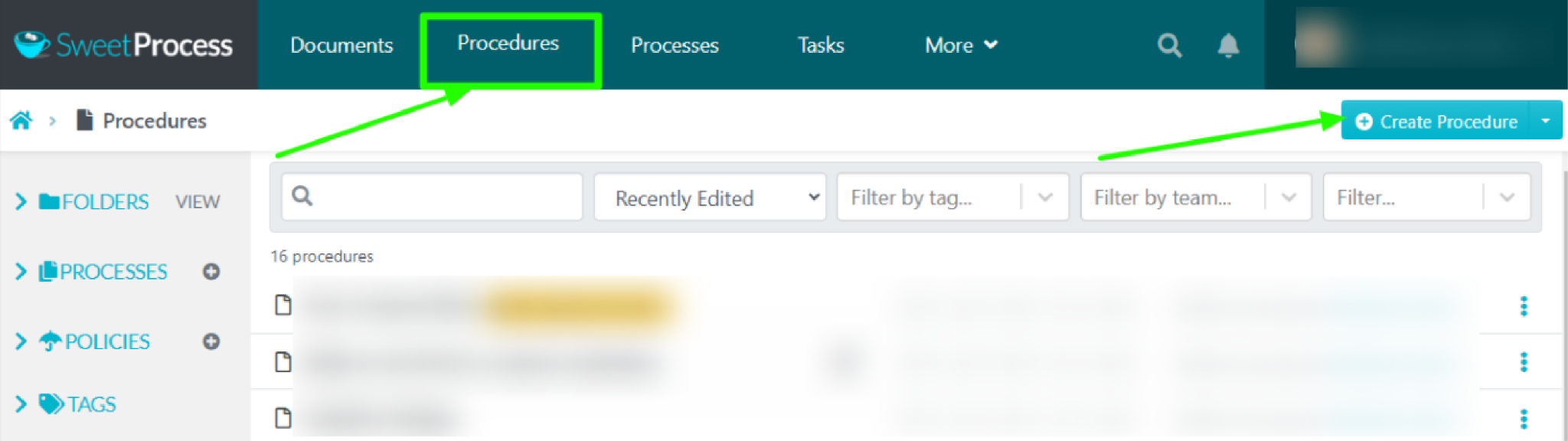
The first step is to navigate to the “Procedures” tab on your SweetProcess dashboard and click “Create Procedure.”
The next step is to enter the title of your procedure and click “Write with SweetAI.” The generated draft still needs review by someone who knows your business and obligations.
Here’s what that looks like:
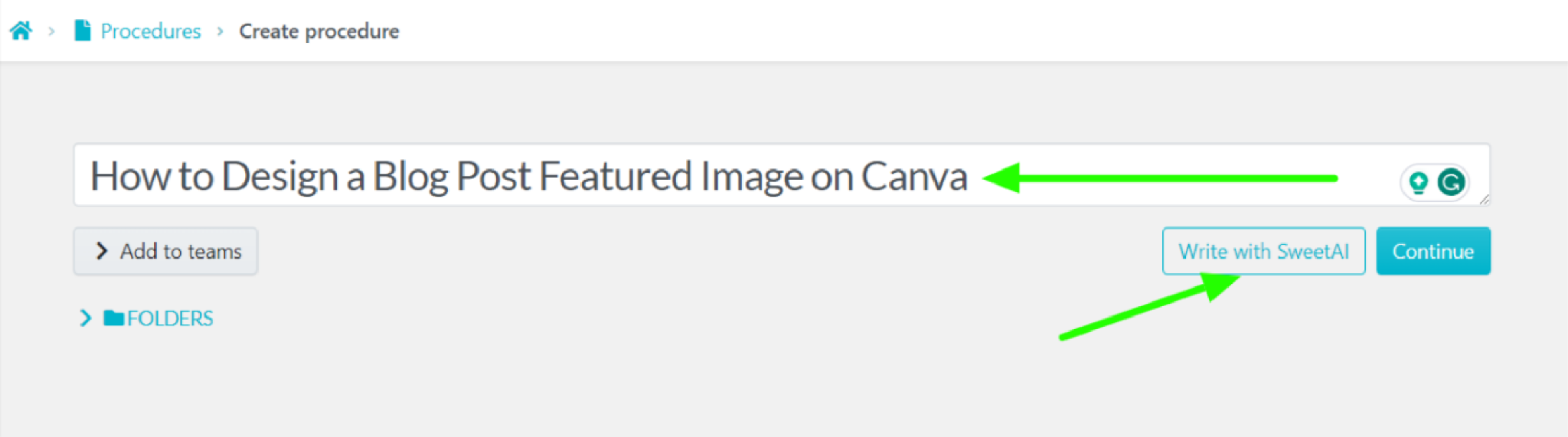
SweetAI generates a draft procedure from your title. Here is an example of the output, which needs review and correction by someone who knows your business and obligations before use.
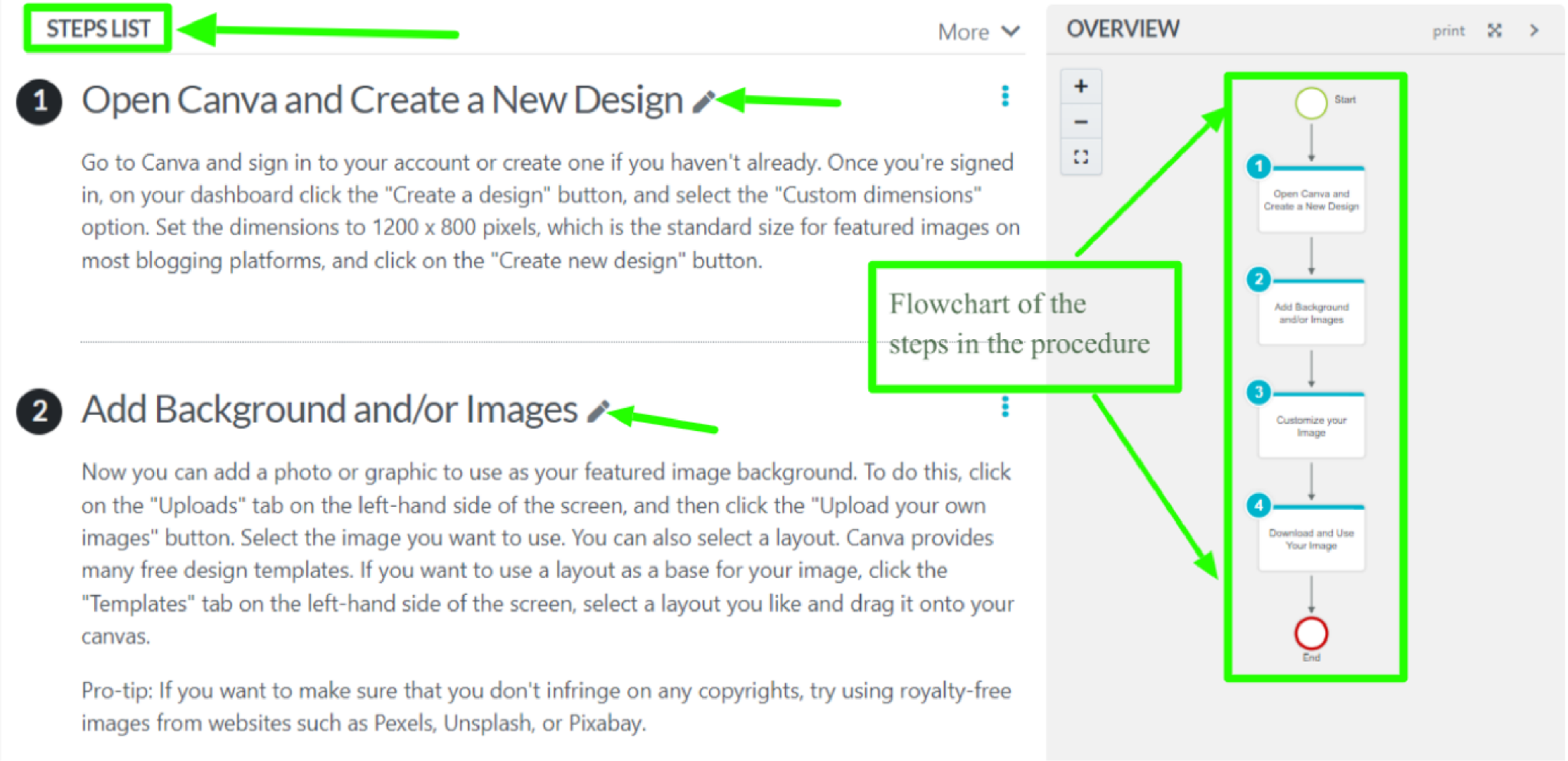
As you can see, the steps in the procedure are detailed and show the VA exactly what they need to do to design a blog post featured image on Canva. You can also edit the generated procedure or add steps if you feel they aren’t adequate.
This feature saves you more time than creating your company’s procedures and policies from scratch.
Create a Knowledge Base for Employees and Customers
Jacob Syrytsia, CEO at AEJuice, described how his team uses a centralized knowledge base:
“For every department, we have a separate knowledge base and there’s a manager for each department. Either the manager or I keep it up to date. Whenever someone asks ‘How do I use this tool?’ I just send them a link and it saves me about an hour of explaining.”
Knowledge base software is great for sharing specific information with internal and external stakeholders.
For new employees, it’ll help them get started quickly without asking team members the same questions over and over.
For customers, reducing the number of tickets your customer support team receives is essential. With it, customers can find answers to all the frequently asked questions (FAQs) about your products or services.
With SweetProcess, you can quickly and easily create a knowledge base for your employees and customers.
You can do all this within a few minutes, even if this is your first time.
And you don’t need to watch many online tutorials to figure out how it works.
Here’s how to create a knowledge base using SweetProcess:
The first step is to navigate to the “More” column from your dashboard and click on the “Knowledge Bases” tab.
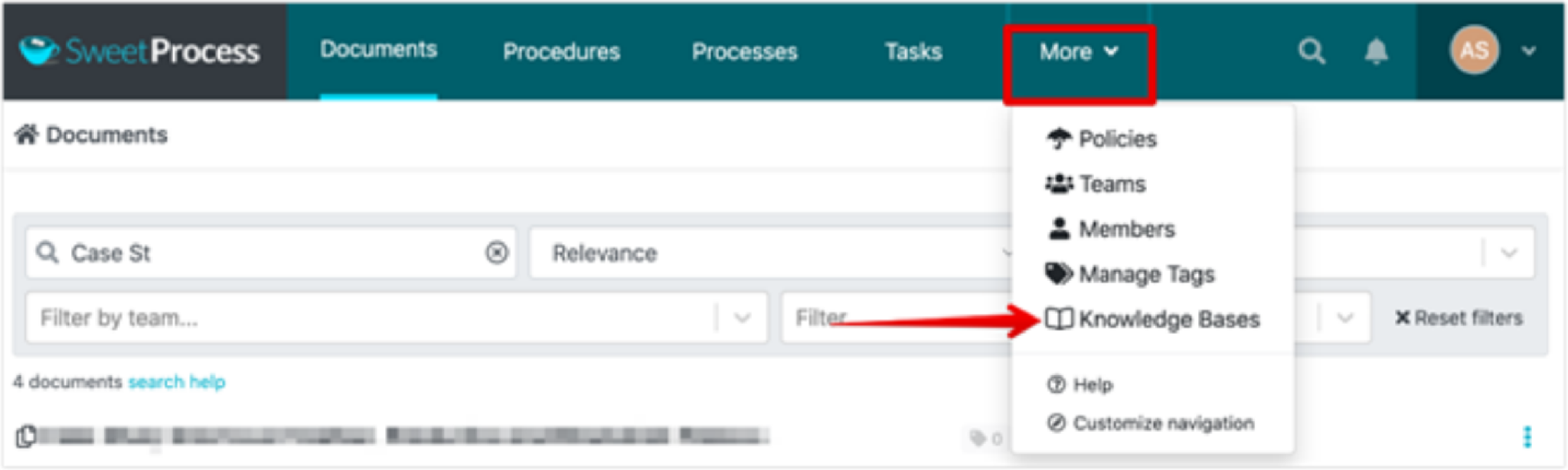
After clicking on the “Knowledge Bases” tab, you’ll be redirected to a new page that looks like this:
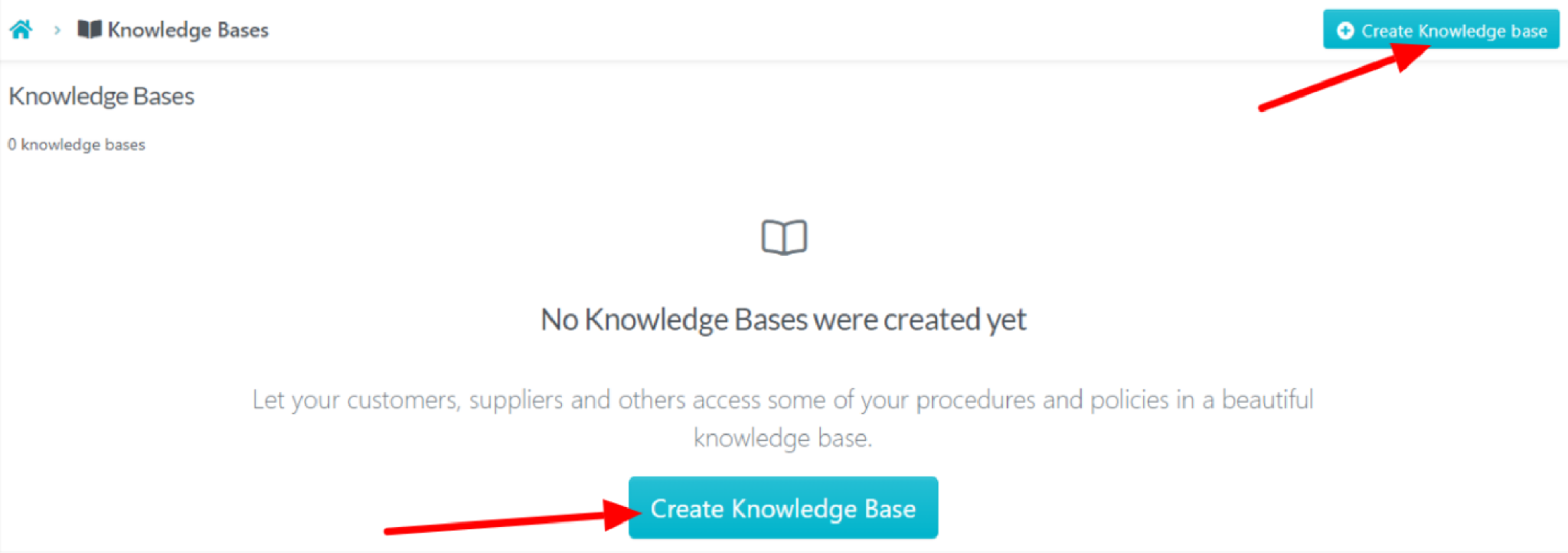
Once you click on the “Create Knowledge Base” button, you’ll be redirected to a page where you name it.
For the example below, we titled it “SweetProcess Knowledge Base.”
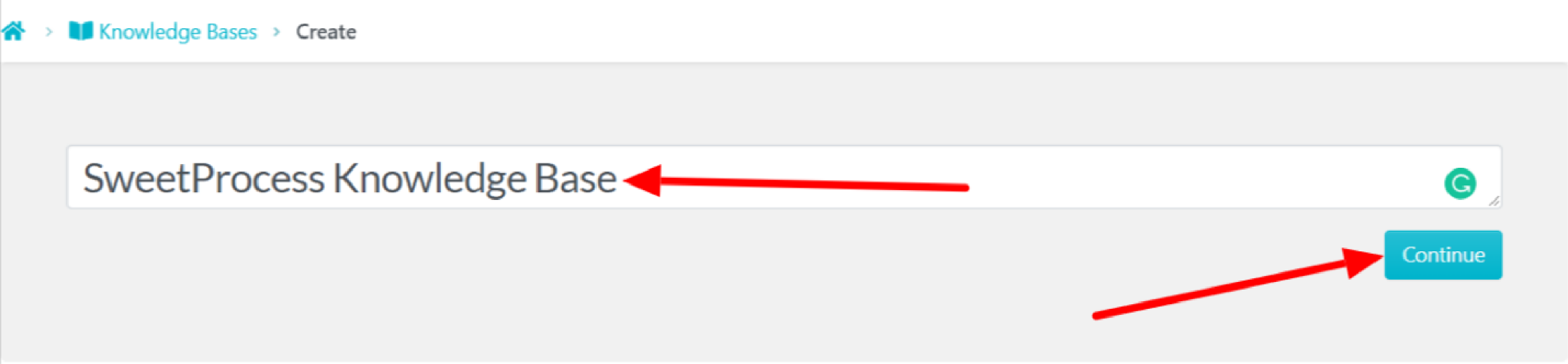
Once you’re done, you can set your knowledge base to public or private.
You can make it private if it’s a knowledge base for employees. If you created it for customers, you can make it public.
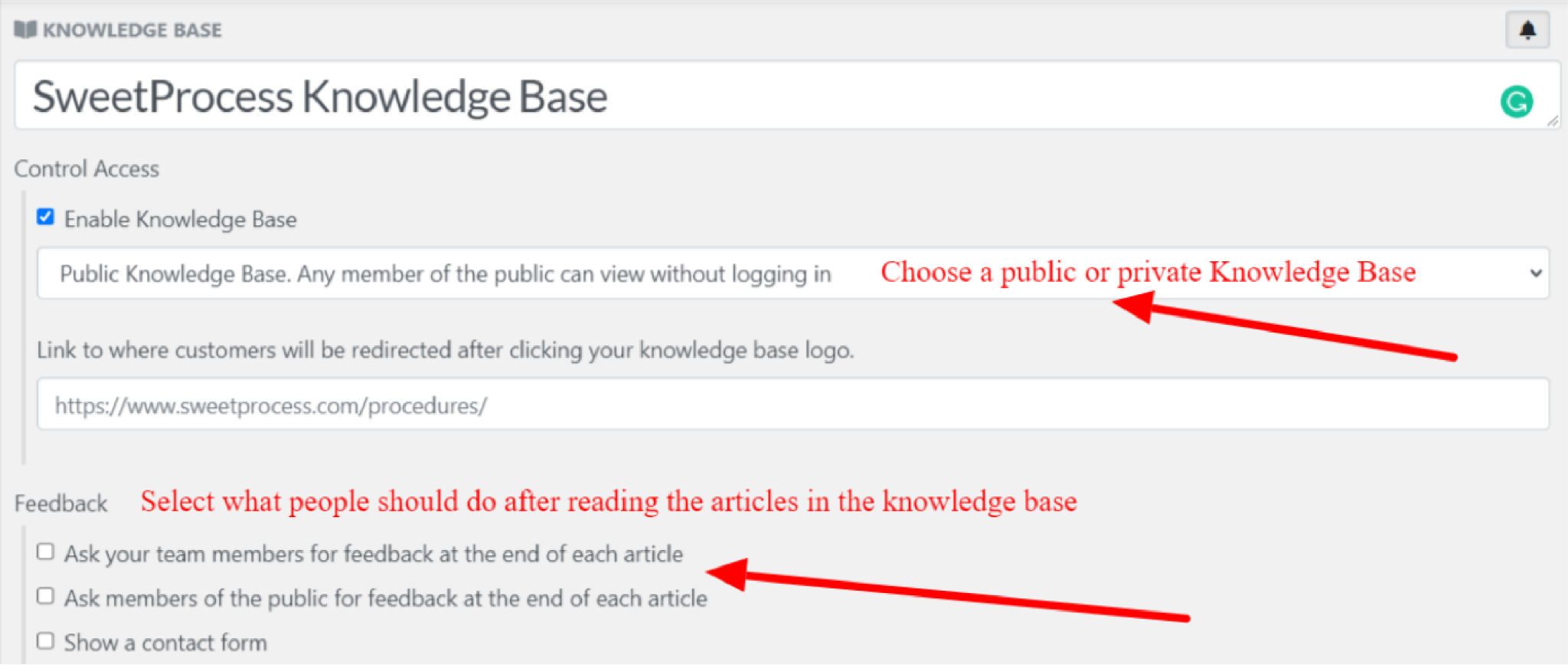
The next step is to name the categories for each knowledge base. This depends on the common questions that your employees or customers have.

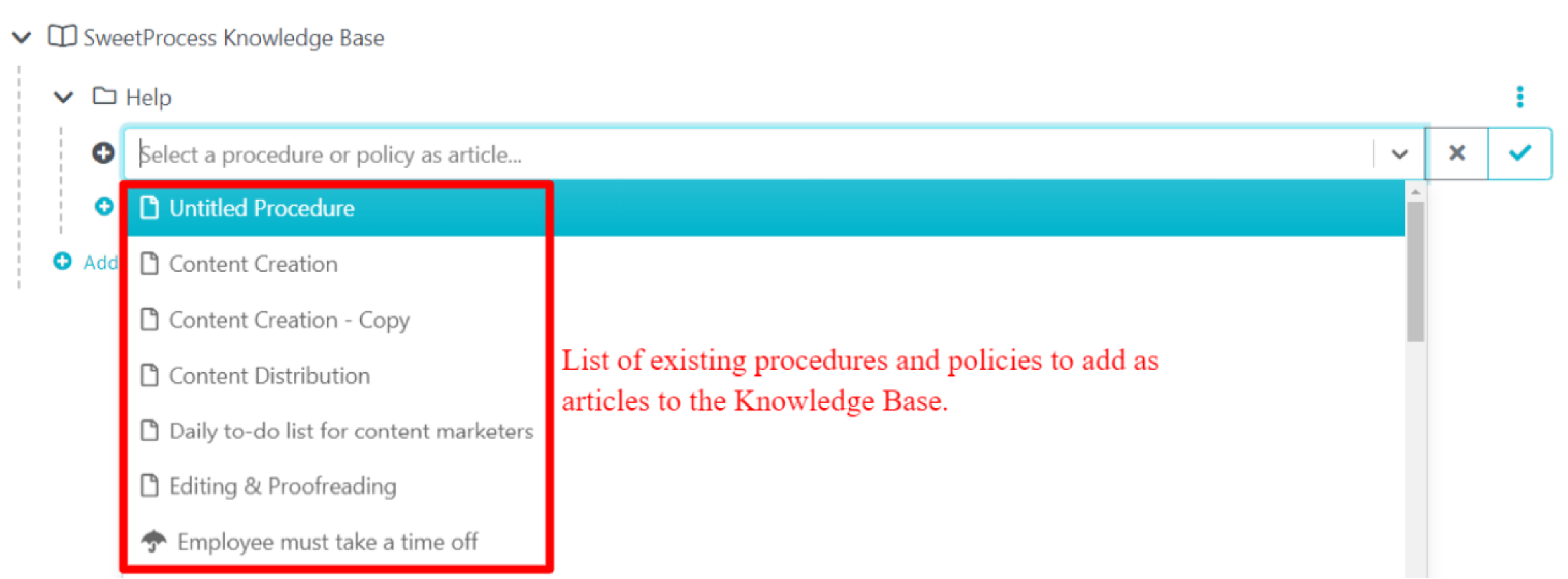
You can add as many categories as you want to your knowledge base. You can also add subcategories under a category. To add articles to a category, all you need to do is click on it, and it’ll prompt you to choose the procedure or policy you want to add as an article.
After adding the policies and processes to the knowledge base, this is what it looks like:
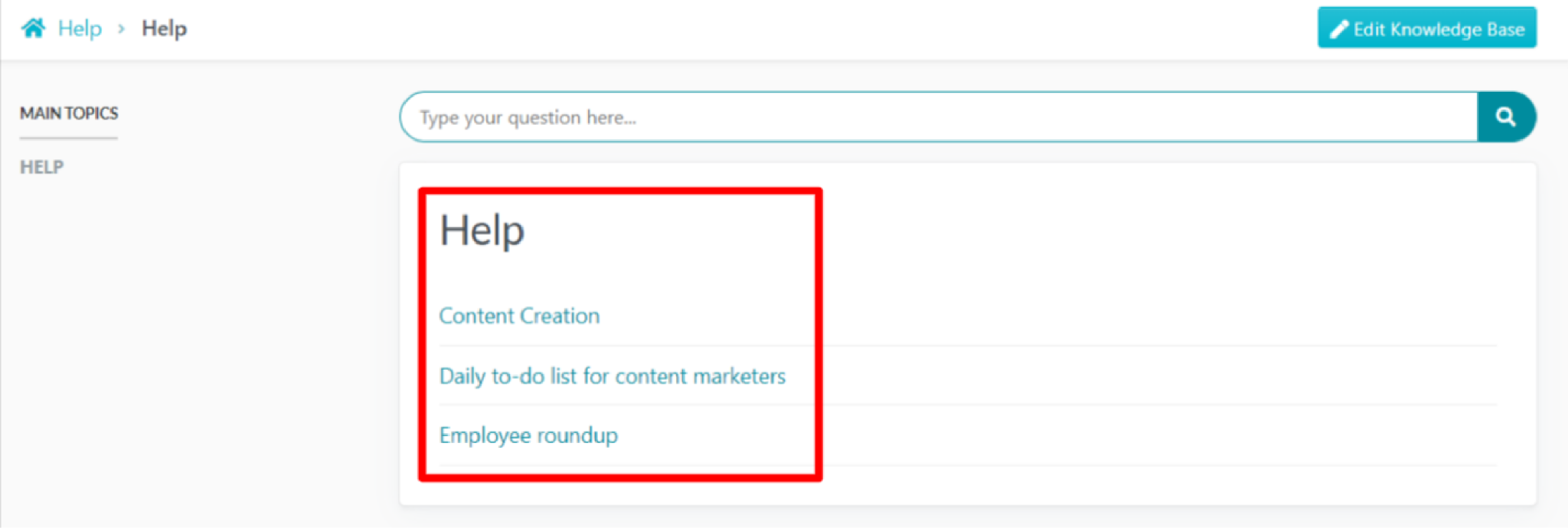
As you can see, with a few steps, you can create a knowledge base successfully on SweetProcess.
A searchable knowledge base gives employees a consistent place to find approved instructions. Keep ownership and review responsibilities clear so the answers remain useful as your work changes.
Intuitive and Easy-to-Use
“The main difference with SweetProcess that appealed to me is the ease of use… There’s a lot that you can also do with the content. You can add videos and photos and links to more information; and not only that, but you can also run it as tasks and on the backend.”
Florinela Serban, head of operations at Onogo, described that experience in the company’s published SweetProcess customer story.
With SweetProcess, you can create process documentation and onboarding training for your employees quickly and easily.
They can learn everything with minimal supervision, even if they’ve never used the tool.
Once you sign in to the platform, here’s what the dashboard looks like:
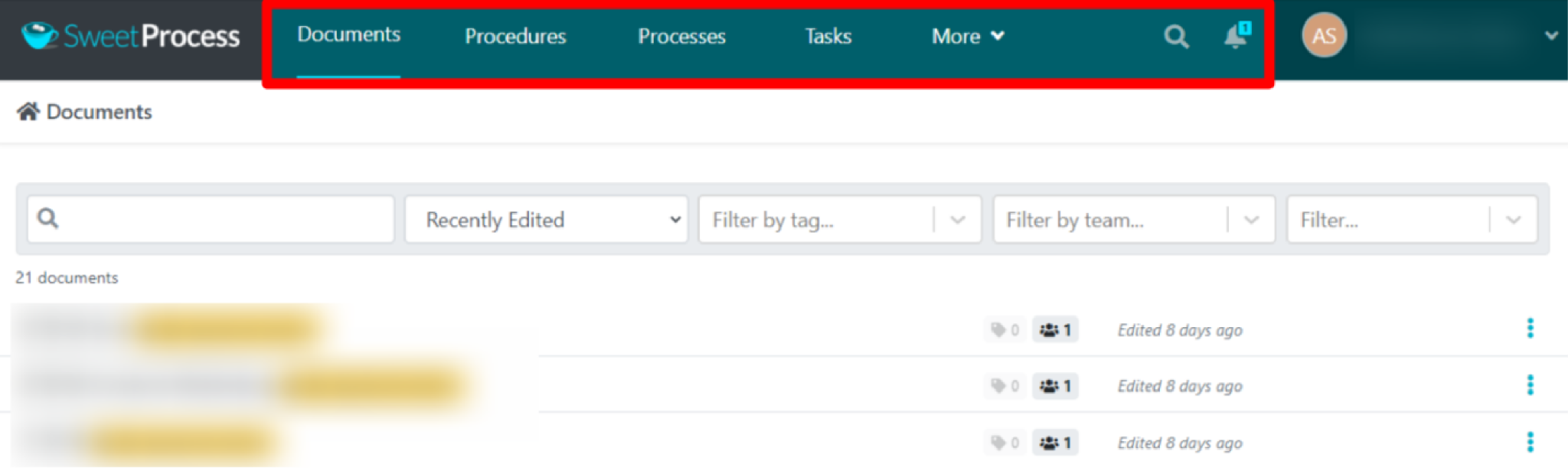
From here, you can easily navigate to all the company’s procedures, processes, policies, and knowledge bases, all in one place.
For example, if a new employee wants to know the steps required to complete a specific procedure assigned to them, all they need to do is click on the “Procedures” tab.
Once you do, here is an example of what you’ll see.
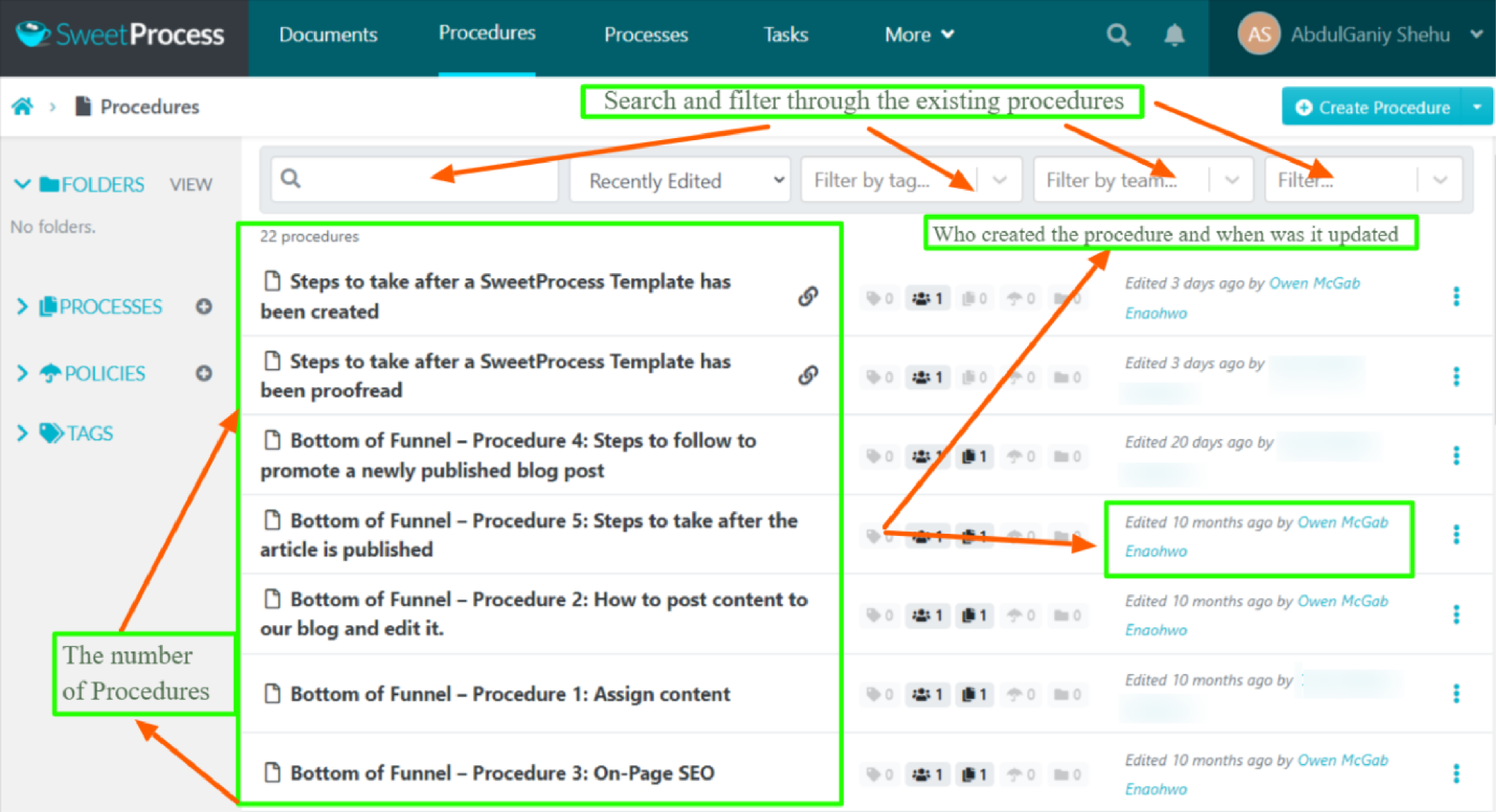
This is an example from the procedure we created for the content marketing team at SweetProcess.
From here, you can get an idea of:
-
The total number of procedures (already created)
-
Who created the procedure
-
When it was last updated
You can also search for specific procedures and filter them using different criteria.
Let’s say we hired a new member for our content marketing team, and they don’t know how to post content on our blog.
They can easily come into this dashboard and click on the procedure on
“How to post content to our blog and edit it.”
And immediately, they have access to all the steps they need to do this easily and quickly.
Here is what that looks like:
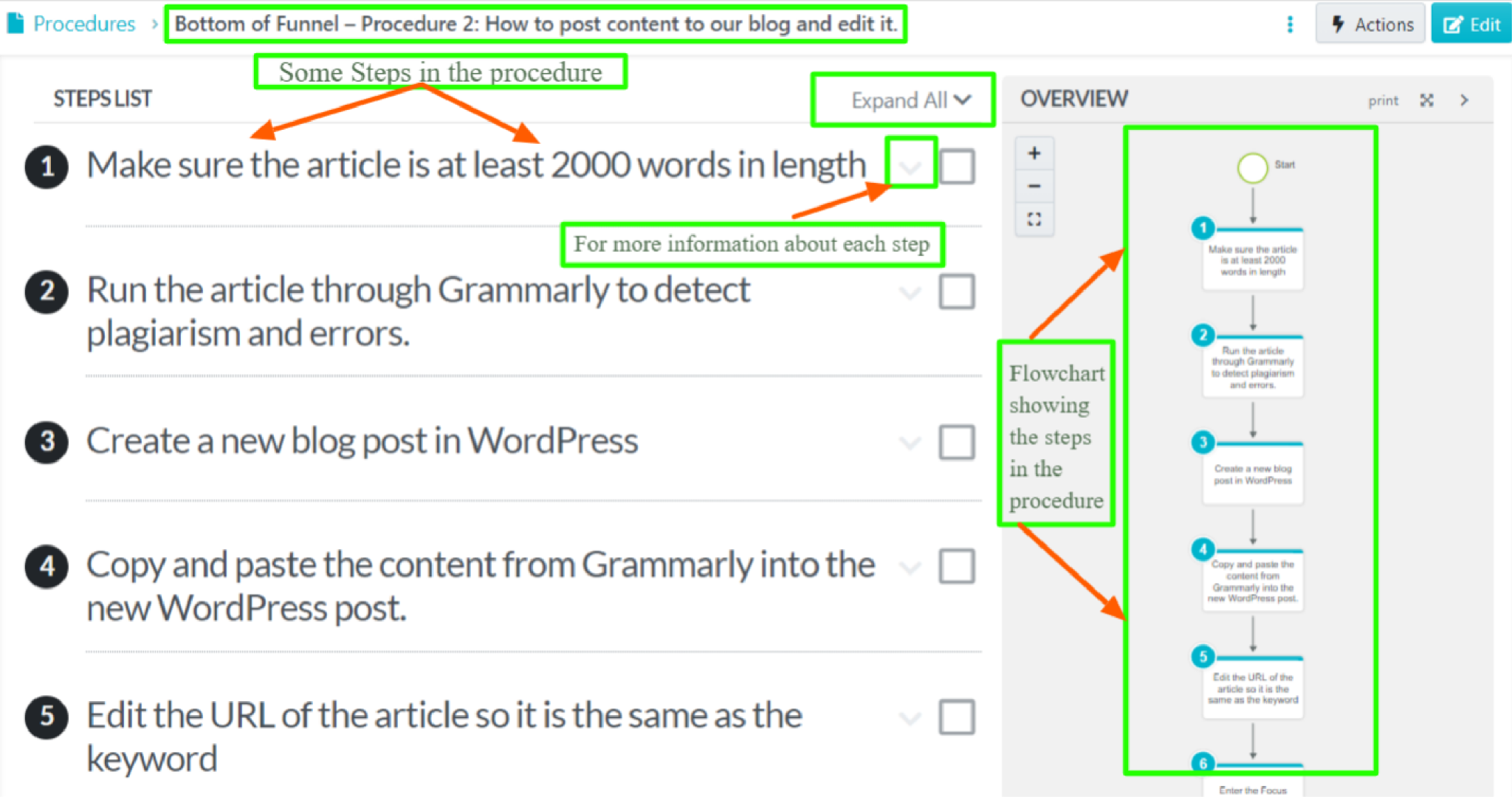
As you can see, this highlights the specific steps to take before completing a procedure.
It also includes an automatically generated flowchart that visually represents all the steps in the procedure.
From here, you can also expand on a specific step or all the steps for more information on what you are expected to do for each one.
As you can see, the process is seamless and easy to understand. Just as you can do this with the procedures, you can do the same with the policies, processes, tasks, and knowledge bases.
Aside from these, here are other reasons why users love and use our tool for documenting procedures and processes.
-
Import existing documentation: SweetProcess supports importing procedures from Microsoft Word documents. Check a representative import for formatting, images, and links before moving the rest of your library.
-
Supports document version history: With SweetProcess, you no longer have to worry about whether an existing document or procedure has been updated. You can see exactly which version you’re viewing and when it was last updated.
-
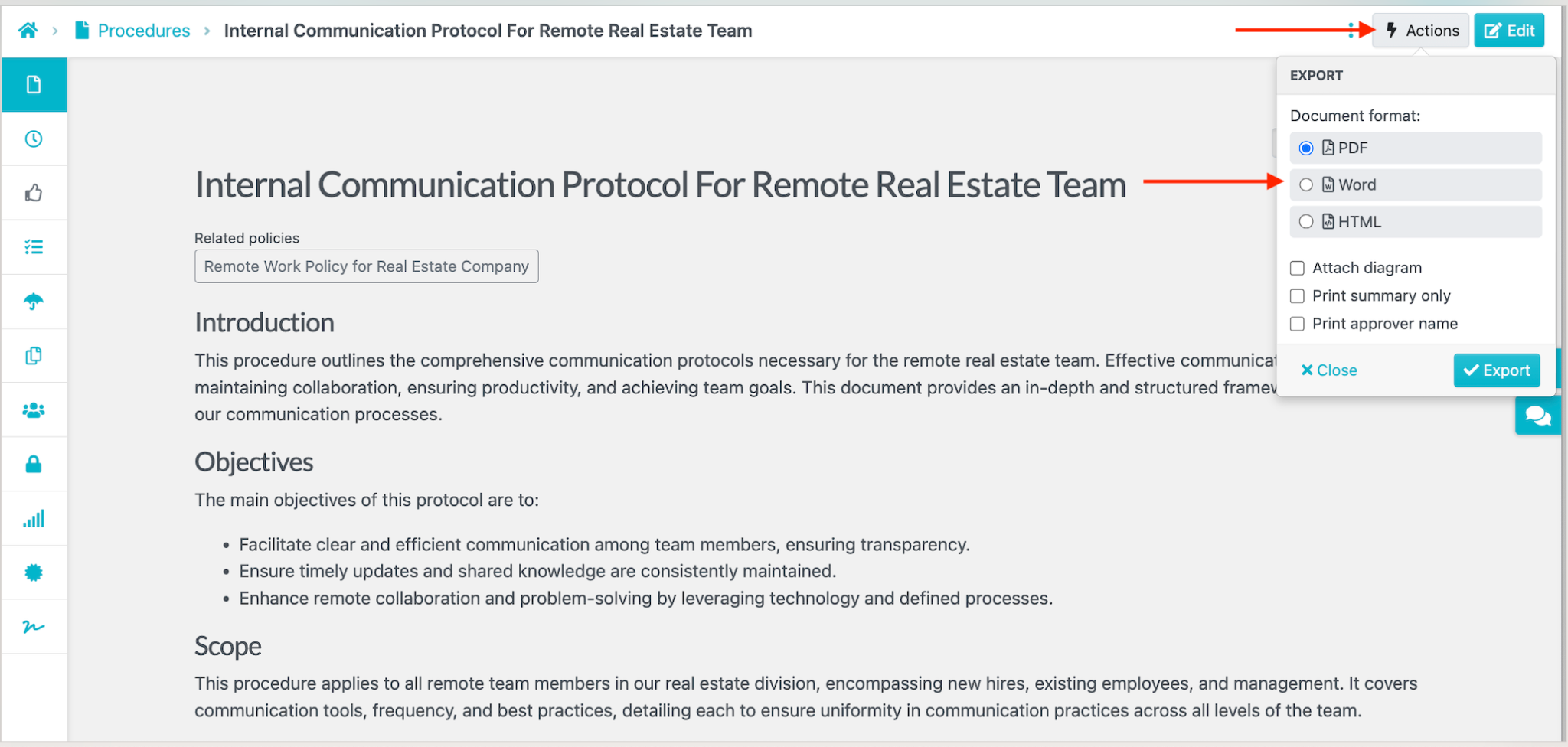
Export documents in different formats: Once you’ve created your procedure on our platform, you can export it to different formats, such as PDF and Word documents. This is great if you want to view the document offline.
-
Integrations with other apps and software: If you use existing tools in your team, you can bring them into the software. We have an API that you can use to do this seamlessly. You can also use our Zapier integration for this purpose.
-
Browser access: SweetProcess is web-based. Check how the procedures and task screens your team uses work on their actual devices before rollout.
-
Chrome Extension: SweetProcess has a Chrome extension that makes it easy to record how you complete a specific task directly in Chrome and turn it into procedures and processes for your company.
How to Move Your Procedures Off SweetProcess
If you’ve decided to switch from SweetProcess to another tool on this list, you need to start with your content. Here’s what you need to know before migrating your procedures.
-
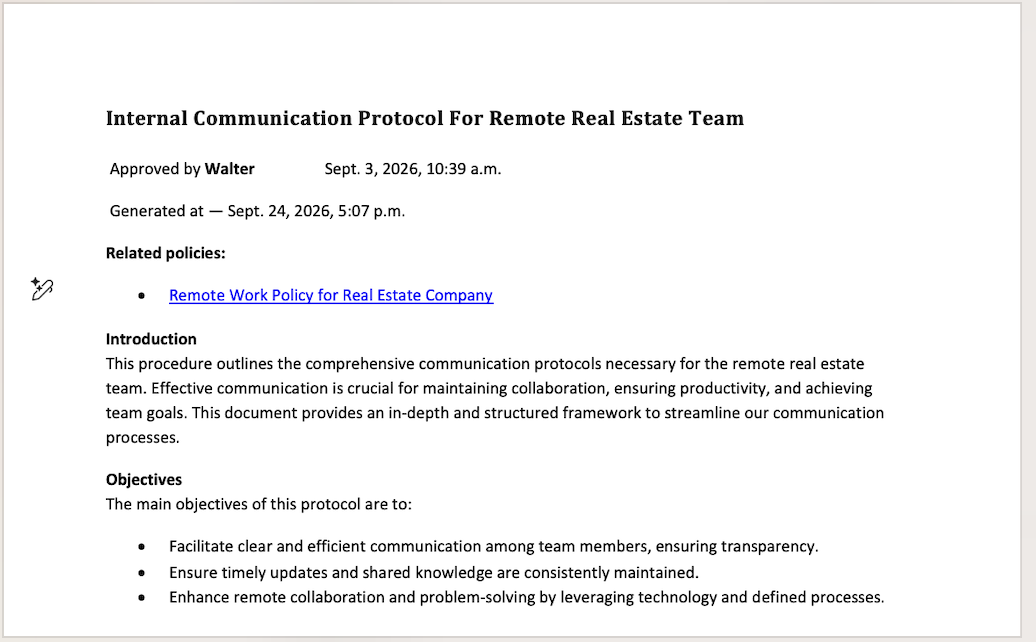
Content formats: The export menu shown below offers PDF, Word, and HTML for the selected document, with options to attach a diagram, print a summary, and print the approver name. Start with a representative procedure and check its text, images, links, and diagram in the destination tool.
-
Records and settings: Do not assume a document export transfers your full version history, task assignments, sign-off records, team permissions, or knowledge base structure. Inventory the records you must retain and confirm their export or retention path separately. A printed approver name is not a substitute for a complete history of changes and approvals.
-
What you need to rebuild: If your destination tool organizes knowledge differently, you might have to recreate the knowledge base instead of importing it directly.
-
Estimate the work with a pilot: Choose several documents with different lengths, images, links, and diagrams. Time the export, import, cleanup, and review. Use those results to plan the rest of the library, assign an owner, and leave time to rebuild permissions and navigation. There is no reliable single migration duration for every library.
Should You Switch to Any of These SweetProcess Alternatives?
While we’d love you to use our tool to document your procedures and processes, we understand it might not be a good fit, especially if you’re just starting out and not fully ready to invest in SOP software. Or maybe you’re a team of one and haven’t figured out if you really need process documentation software for your business.
If cost is important, we have a pricing plan for small businesses before you need to leave entirely. If enforcement is your priority, Process Street is built for that job. Scribe is better suited for businesses that need faster screen capture. For structured training, Trainual and ProcedureFlow do that better.
And finally, if you’re an MSP or in the construction industry, tools like MaintainX or IT Glue might be the perfect fit for you. We recommend evaluating the pros, cons, and pricing of each tool above before deciding.
If, after reading this, SweetProcess still looks like the right fit for documenting your procedures, processes, and policies, you can try it free for 14 days, no credit card required.
FAQs
What is better than SweetProcess?
It depends on what you are looking for. Process Street and Tallyfy focus more on executing and tracking workflows. Scribe is designed for fast screen-based capture. Trainual focuses heavily on employee training and onboarding. MaintainX focuses on frontline maintenance and work orders. There is no single alternative that is better for every use case.
How much does SweetProcess cost?
SweetProcess costs $99 per month or $990 per year for up to 10 users. Each additional user costs $5 per month or $50 per year. A Small Team plan costs $495 per year for up to five users. Annual billing saves about 16.7 percent compared with paying the monthly rate for a full year.
Is there a free SweetProcess alternative?
Yes. MaintainX and Scribe offer free plans. MaintainX’s free Basic plan is ideal for maintenance and asset tracking, while Scribe offers a free Basic plan for capturing screen-based guides. Neither replaces full procedure, process, and policy documentation, so evaluate whether the free tier covers your actual use case before committing to it long term.
Can I export my procedures out of SweetProcess?
Yes. The document export menu shown in this article offers PDF, Word, and HTML, with an option to include a diagram. Test a representative export and confirm separately how you will retain history, approvals, task records, and permissions before closing the old system.
Does SweetProcess do training and onboarding?
Yes, SweetProcess can support training and onboarding by providing a platform to create and manage the procedures, processes, policies, and knowledge bases your team needs. You can create quizzes and assign tasks to new and seasoned employees during these training sessions. However, if your primary need is training, Trainual is a good alternative.